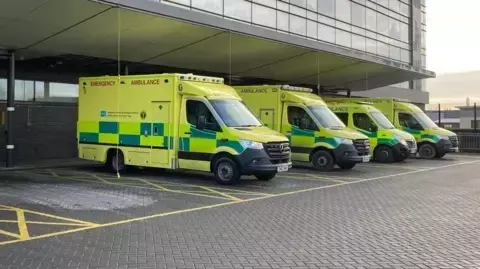


The healthcare system in Northern Ireland is currently experiencing unprecedented pressure, particularly in emergency departments (EDs). Prof Mark Taylor from the Northern Ireland Confederation for Health and Social Care (NICON) described the situation as a "perfect storm," citing immense strain on resources and an influx of flu cases. The lack of efficient patient flow within hospitals has led to serious consequences, including delays in treatment and increased mortality rates. Over 500 medically fit patients could not be discharged due to insufficient community support, while ambulances were trapped outside EDs, unable to offload critical patients. This crisis has prompted calls for immediate reform and transformation within the healthcare system.
Critical Strain on Emergency Services in Northern Ireland
In the heart of this challenging period, Northern Ireland's emergency departments have faced a series of obstacles that have severely impacted patient care. On a recent Saturday morning, there were 532 individuals who were medically ready to leave the hospital but could not be discharged into the community. This bottleneck has created a domino effect, trapping ambulances outside EDs and delaying critical treatments for patients with acute conditions like heart attacks and strokes. According to Prof Taylor, the situation was slightly better on Saturday night compared to the previous weekend, but the numbers remained alarming: 640 people in EDs, over 200 waiting more than 12 hours, and 284 decisions to admit.
Pat Cullen, former chief of the Royal College of Nursing, emphasized that the NHS had become a victim of its own success. Medical advancements have extended life expectancy, but the system has not evolved to handle the growing number of patients. Cullen called for rapid implementation of the Bengoa report recommendations, which outlined the need for health transformation in 2016. She stressed the importance of investing in acute care at home and social care, both of which require substantial funding. Finance Minister Caoimhe Archibald has allocated a significant portion of the budget to health, but challenges persist.
Prof Taylor highlighted the complexity of the issue, noting that it extends beyond the Health Minister's responsibility and involves the entire executive. He also pointed out that Northern Ireland's intermittent government has exacerbated the problem. Last week, the deputy chair of the British Medical Association in Northern Ireland warned that EDs were reaching a breaking point, with nearly one-third of ambulance crews waiting outside hospitals early Friday morning.
From a journalist's perspective, this crisis underscores the urgent need for systemic reform in Northern Ireland's healthcare sector. The current strain on emergency services not only affects patient outcomes but also places immense pressure on healthcare workers. It is clear that without comprehensive changes, the system will continue to struggle under the weight of increasing demand. Immediate action is necessary to prevent further deterioration and ensure that patients receive timely and effective care.
