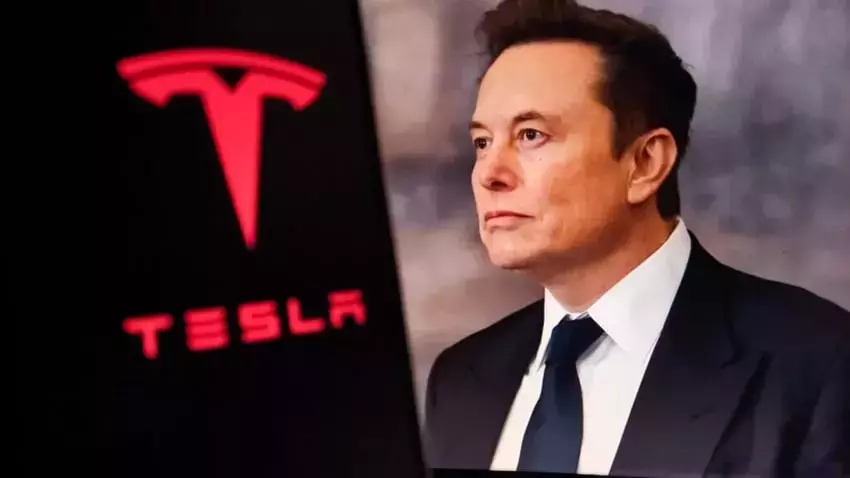
Elon Musk, the visionary leader behind Tesla, has consistently painted a bold picture of the company's trajectory, extending far beyond terrestrial automotive manufacturing. His recent declarations underscore a profound belief in Tesla's capacity to transcend conventional industry boundaries, venturing into extraterrestrial industrialization and advanced robotics. This forward-looking perspective, while inspiring, arrives amidst a challenging period for Tesla's market performance in certain regions, prompting a blend of optimism for future growth and immediate concern over current sales trends.
Musk's confidence is not solely rooted in grand concepts but also in the strategic evolution of Tesla's core capabilities, particularly in artificial intelligence and robotics. The development of the Optimus humanoid robot stands as a testament to this, envisioned as a pivotal tool for humanity's expansion into the cosmos. Despite these innovative pursuits, the company faces the imperative of balancing long-term aspirations with short-term market realities, where investor confidence is tested by fluctuating sales figures and competitive pressures.
Tesla's Ambitious Lunar Vision and Investment Outlook
Tesla's chief executive, Elon Musk, recently articulated a bold prediction: the company will establish operational manufacturing facilities on the moon within the next two decades. During a recent interview, Musk expressed his conviction regarding Tesla's expansive future roadmap, assuring shareholders that retaining their TSLA stock would prove highly lucrative. This declaration builds upon his prior assertions about off-world industrialization, envisioning a future where Tesla's operational footprint extends beyond Earth's atmosphere. He views this as a cornerstone of a prosperous and exceptionally bright future for the automotive and technology giant, signaling a significant shift in the company's strategic focus toward space-based ventures.
Musk's long-term vision includes not only lunar factories but also the concept of a 'Mass Driver,' a theoretical propulsion system designed to accelerate payloads using magnetic levitation for efficient transport in space. This innovative approach would circumvent the traditional reliance on rockets for transporting goods, potentially revolutionizing space logistics and making lunar manufacturing more feasible. The consistent emphasis on future technological breakthroughs and extraterrestrial expansion serves to reinforce Musk's bullish stance on Tesla's stock, framing current investments as a gateway to unprecedented future value. This perspective aims to instill confidence among investors, encouraging them to overlook short-term market volatilities in favor of long-term, transformative growth opportunities that position Tesla at the forefront of space exploration and industrialization.
Optimus and Tesla's Evolving Market Dynamics
Complementing Tesla's lunar ambitions is the transformative role envisioned for its Optimus humanoid robot. Musk predicts that Optimus will be instrumental in colonizing other planets, serving as a "von Neumann probe"—a self-replicating machine capable of utilizing local resources to create copies and expand humanity's presence across the cosmos. This futuristic application underscores Tesla's commitment to robotics and artificial intelligence as central pillars of its long-term strategy. The company's conviction in this direction is further evidenced by its decision to repurpose the Fremont facility, previously used for Model S and Model X production, for manufacturing Optimus robots, with an ambitious target of one million units annually.
Despite these forward-looking initiatives, Tesla is concurrently navigating challenges in its traditional automotive market. The company recently reported a 17% year-over-year decline in European sales in January, leading to a reduction in its market share to 0.8%, a drop from 1.0% in the previous year. These figures highlight the immediate pressures on Tesla's operational performance, juxtaposed against its long-term strategic goals. While Benzinga Edge Rankings indicate positive momentum and a favorable long-term price trend for TSLA stock, the dip in sales necessitates a careful balance between pioneering innovation and addressing current market demands to maintain investor confidence and ensure sustained growth.
