
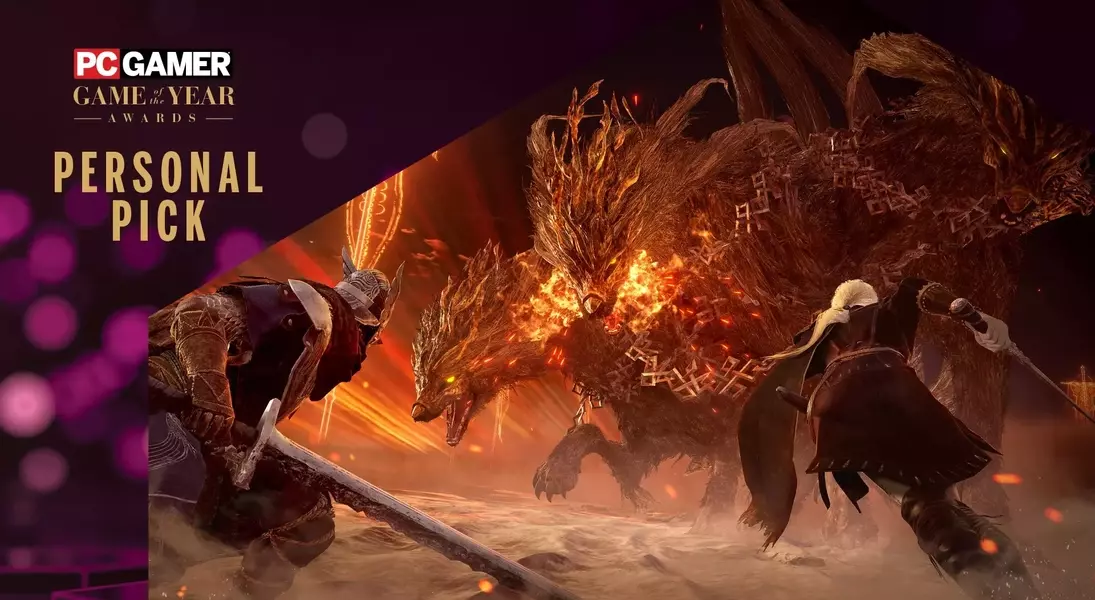
Initially met with skepticism, Elden Ring Nightreign has emerged as a surprisingly engaging multiplayer roguelike experience, particularly for enthusiasts of FromSoftware's challenging titles. The game's design, which emphasizes cooperative play and strategic communication, transforms a potentially frustrating endeavor into a deeply rewarding one when played with friends. While its lack of integrated voice communication presents a clear hurdle, players who overcome this by coordinating externally unlock the full potential of its dynamic gameplay. Nightreign adeptly recontextualizes familiar elements from the broader Elden Ring universe, blending them with roguelike mechanics to create a chaotic yet captivating adventure that resonates strongly with a dedicated fanbase.
The journey into Nightreign might begin with hesitation, especially for those accustomed to the solitary grandeur of FromSoftware's previous works. The concept of an Elden Ring spin-off heavily reliant on multiplayer was initially met with resistance. A significant design choice that stands out is the absence of in-game voice chat. This means that without external communication tools like Discord, interactions are limited to basic tagging, often leading to frustrating scenarios with uncoordinated teammates. Indeed, the game's community forums are rife with tales of challenging runs hampered by communication gaps.
However, the experience undergoes a dramatic shift when played with a cohesive team. The ability to strategize in real-time, coordinate gear sharing, and adapt to evolving situations transforms Nightreign into a far more enjoyable and manageable game. This crucial aspect underpins the author's strong recommendation: the game truly shines when shared with fellow FromSoftware aficionados who are willing to invest in effective communication. Success in Nightreign, much like its predecessors, often demands perseverance through intense boss battles, earning every victory with effort and strategic planning.
Nightreign operates on a core loop where players assume the roles of Nightfarers, each possessing unique abilities and attributes. They are dropped into procedurally generated maps dotted with various landmarks. The primary objective involves collecting runes to enhance character levels and acquiring gear to augment combat prowess. As each 'night' progresses, a deadly circle gradually closes, culminating in a confrontation with a powerful night-end boss. Surviving two such nights leads to a climactic battle against a formidable Nightlord. While individual character deaths can be recovered, a complete party wipe against a night boss or Nightlord results in a definitive game over.
Embodying the essence of a FromSoftware multiplayer game, Nightreign presents a duality of positive and negative traits. Much like its acclaimed predecessors, many game mechanics and systems are not explicitly detailed, encouraging players to discover nuances through experimentation. This includes understanding passive skill interactions and their cumulative effects, which often remain a mystery until experienced firsthand. While not as overtly imbalanced as the initial release of Elden Ring, Nightreign still features its share of quirky mechanics. For instance, certain weapon skills might deal unexpectedly high damage, leading to amusingly overpowered builds. The game also embraces a degree of 'jankiness,' such as a character's ultimate ability that summons a rock players can clip through, offering inconsistent protection—yet, this contributes to the chaotic fun that many FromSoftware fans appreciate.
Nightreign can be seen as a celebratory homage to Elden Ring. It masterfully reuses existing assets, including bosses, enemies, weapons, and environmental designs, but ingeniously repackages them within a roguelike framework. For players intimately familiar with Elden Ring's lore and mechanics, this reinterpretation offers a unique satisfaction, allowing them to apply their extensive knowledge to new, unpredictable challenges. The inclusion of Dark Souls bosses, Nightlord invasions, random in-game events, and the constantly shifting Earth—which alters the map layout—provides a deep well of content for dedicated players to explore.
This year, Nightreign has deeply resonated with players craving a genuine FromSoftware experience. While the market has seen a surge of quality Soulslike titles like Lies of P's Overture DLC and The First Berserker: Khazan, many fans yearn for a full-fledged entry from FromSoftware itself. Nightreign fills this void, offering a potent dose of the studio's signature blend of challenge, mystery, and emergent gameplay. It caters perfectly to those who relish uncovering game secrets and mastering intricate combat systems.
Furthermore, FromSoftware has diligently supported Nightreign with substantial post-launch content. The introduction of the Everdark Sovereigns, enhanced versions of Nightlord bosses with new mechanics, provided fresh and demanding encounters. The endgame mode, Deep of Night, was added, offering progressively harder challenges and new powerful passives and relics to customize loadouts. A particularly inventive modifier in this mode removes all map markers, forcing players to rely solely on their knowledge of the environment and line of sight. The recent Forsaken Hollows DLC, though not featuring the anticipated Shadow of the Erdtree weapons, brought a new map, two engaging Nightlord bosses, and two new Nightfarers, enriching the game's character roster and tactical options. With this wealth of content, Nightreign stands in its most polished state, making it an ideal choice for Elden Ring enthusiasts seeking a cooperative, challenging, and endlessly re-playable adventure this holiday season.
