This article explores a unique experiment by YouTuber mryeester, who ventured into creating an edible thermal paste alternative using gold leaf and honey. The experiment aimed to test the thermal conductivity of these unusual components on a CPU and compare their performance to conventional thermal paste. While the results were surprisingly decent, the article underscores the importance and efficacy of purpose-built thermal compounds for optimal PC cooling, advising against replicating such experiments due to potential risks and the superior performance of standard products.
Unconventional Cooling: A Sweet and Gilded Thermal Solution
Exploring the Concept of Edible Thermal Paste
Many have pondered the possibility of consuming thermal paste, though it's strongly discouraged. Inspired by this curiosity, a content creator embarked on a project to develop the world's first ingestible thermal paste. The chosen ingredients for this peculiar endeavor were gold leaf and honey, combining a highly conductive metal with a natural, viscous substance.
The Role of Gold Leaf in Thermal Conduction
Gold is renowned for its excellent heat-conducting properties. Given an ample supply of 24-carat gold leaf, the YouTuber selected it as the primary element for thermal transfer in their edible concoction. While edible gold is a delicacy found in high-end cuisine, its application here was purely experimental, focusing on its physical attributes rather than culinary appeal.
The Necessity of a Binding Agent: Honey's Surprising Contribution
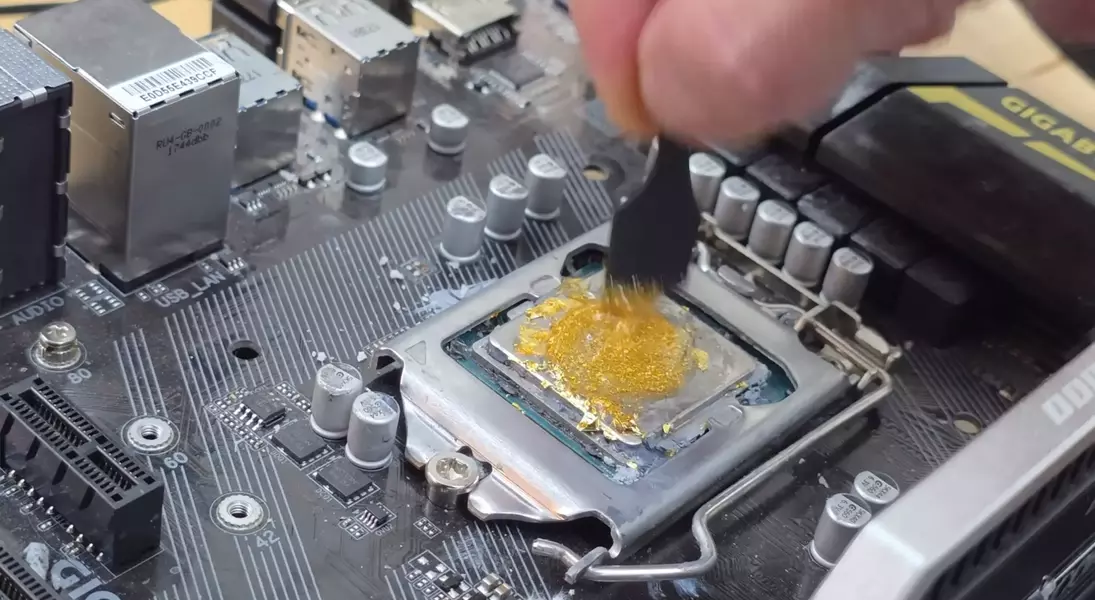
Simply placing gold leaf on a CPU isn't sufficient for effective heat transfer, as thermal paste needs to fill microscopic air gaps between components. For this, honey was chosen as a liquid bonding agent, beating out other unconventional options like mayonnaise and mustard. The mixture of gold and honey was then applied to a test CPU, forming a shimmering, golden paste designed for maximum thermal contact.
Initial Performance on a Test Chip
Upon application to a test chip paired with a compact air cooler, the gold-and-honey paste delivered unexpected results. The CPU registered a peak temperature of 53 °C under sustained full load, a remarkably low figure for such an experimental compound. This initial success hinted at the potential, albeit unorthodox, effectiveness of the edible mixture.
Testing on a High-Performance Gaming PC
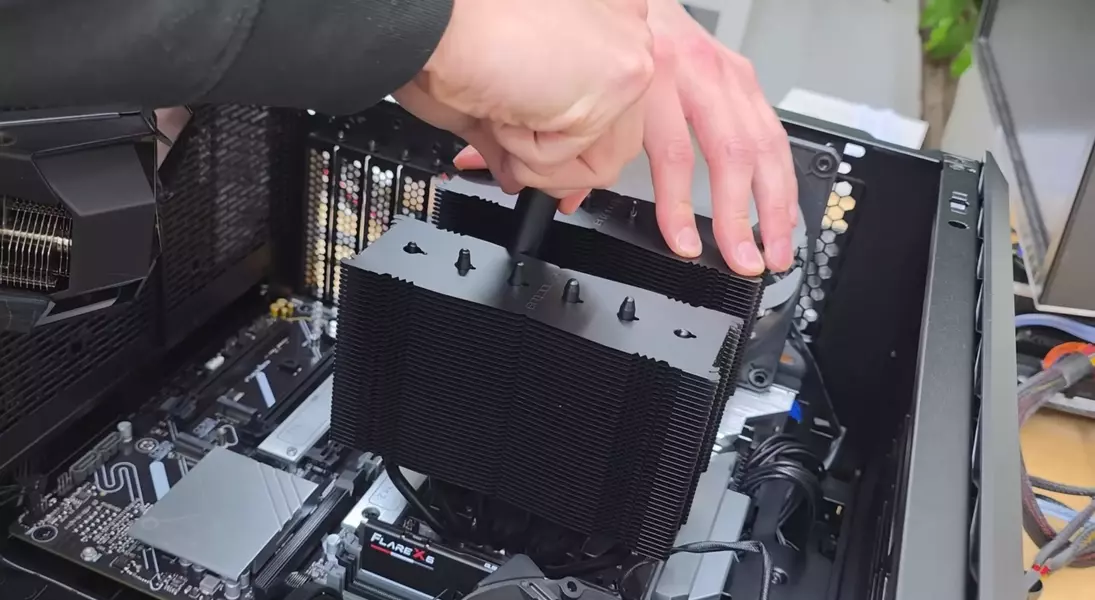
The experiment escalated to a more demanding setup: a high-end gaming PC featuring an AMD Ryzen 7 9850X3D, a top-tier processor. With traditional thermal paste, this CPU maintained a peak temperature of 70 °C during a Counter-Strike 2 session. The real challenge was to see how the edible paste would fare under similar conditions.
Application Challenges and Taste Testing
Applying the honey-gold mixture to the expensive gaming CPU proved nerve-wracking, as precise, pea-sized amounts are crucial for optimal thermal paste application. Despite using a more generous quantity than recommended for standard pastes, the setup was completed. A taste test confirmed the honey's familiar sweetness, while the gold remained flavorless.
Gaming Performance with Edible Thermal Paste
After a brief scare with the power supply, the gaming PC booted successfully. During a 10-minute Counter-Strike 2 gaming session, the CPU with the edible thermal paste reached peak temperatures of 77-78 °C. Although slightly warmer than with conventional paste, these temperatures remained within acceptable operating limits, with no thermal throttling observed.
Concluding Thoughts and Practical Advice
The experiment ultimately demonstrated that while edible thermal paste might function, traditional thermal compounds are vastly superior and more reliable. The honey's perishable nature and potential consistency changes over time make it unsuitable for long-term use. The article strongly advises against using food items for PC components, emphasizing that proper thermal paste offers optimal performance and peace of mind for computer builders.
