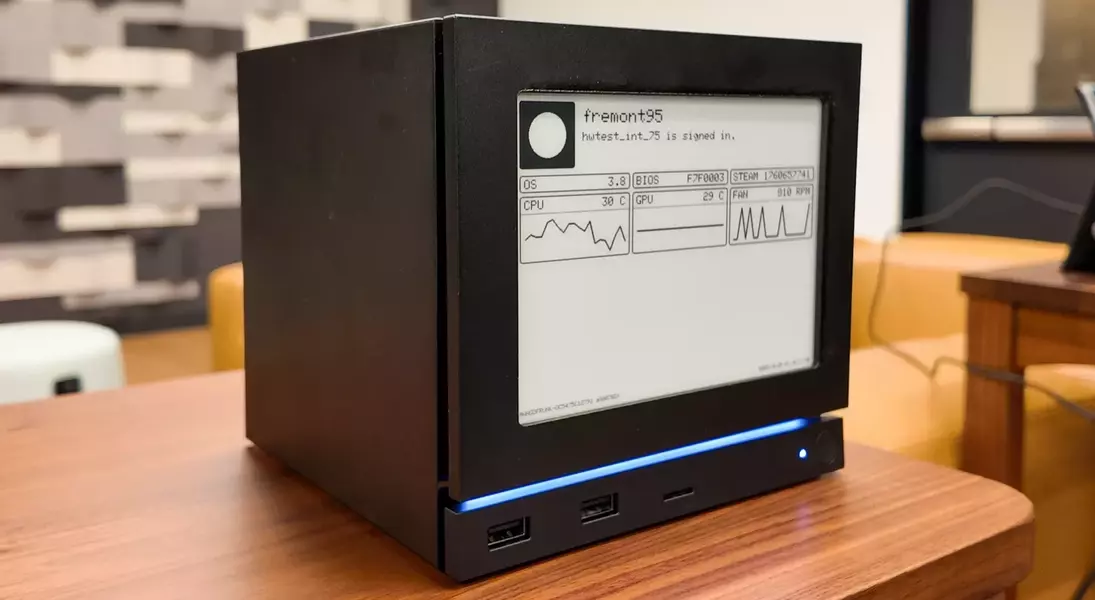
Initially showcased by Valve, the promise of E-Ink faceplates for Steam Machines is now being realized by Jsaux, a peripherals company from Shenzhen. This third-party venture offers enthusiasts the chance to personalize their gaming systems with innovative E-Ink displays. While Valve encourages a do-it-yourself customization route by releasing CAD files, Jsaux is stepping in to provide pre-made solutions, fulfilling a demand for distinct aesthetics in the gaming hardware community.
This initiative by Jsaux underscores a shift in how hardware customization is approached. Instead of relying solely on official channels, the gaming community and third-party manufacturers are taking the lead in developing unique accessories. This trend caters to gamers who desire to express individuality through their devices, pushing the boundaries of what’s available on the market beyond standard offerings.
Jsaux Leads the Way with E-Ink Steam Machine Customization
Despite Valve's earlier demonstrations of customizable Steam Machine faceplates, the company has indicated no immediate plans for mass production, opting instead to provide CAD files for users interested in DIY projects. This vacuum has been filled by Jsaux, a Shenzhen-based brand, which is now actively developing and preparing to launch E-Ink faceplates for Steam Machines. Gamers eager for a personalized touch can anticipate options including color E-Ink, monochrome E-Ink, and color dot matrix designs. While specific pricing and release dates are yet to be disclosed, Jsaux has opened a channel for interested customers to sign up for updates, signaling a strong move towards fulfilling a previously unmet demand for aesthetic hardware customization.
Jsaux's introduction of these E-Ink faceplates marks a significant moment for Steam Machine owners looking to differentiate their devices. Historically, the 2TB Steam Machine model offered exclusive options like red fabric and solid walnut faceplates, setting a precedent for unique designs. However, Valve's subsequent decision to support community-led customization through the release of hardware CAD files and its 'inkterface' project demonstrated a lean towards empowering users to create their own solutions. While this DIY approach offers unparalleled freedom, it also presents technical challenges for those without specific expertise. Jsaux’s initiative bridges this gap, providing accessible, professionally manufactured customization options that expand the aesthetic possibilities for Steam Machine users without requiring advanced technical skills, thereby enhancing the overall user experience.
Community-Driven Customization and Market Dynamics
The emergence of Jsaux's E-Ink faceplates for the Steam Machine highlights a dynamic where third-party manufacturers are responding to market desires that official developers might not prioritize. Valve's decision to share CAD files for the Steam Machine casing, alongside its 'inkterface' project, fosters a culture of DIY hardware modification. This approach, while empowering for technically inclined users, leaves a segment of the market looking for more straightforward, ready-to-use customization solutions. Jsaux is stepping into this space, providing a diverse range of E-Ink faceplates that cater to those who prefer purchasing finished products over embarking on complex fabrication projects, showcasing how market gaps are filled by innovative enterprises.
This scenario also brings into focus the challenges and opportunities within the hardware accessory market. Previous attempts by brands like Dbrand to introduce unofficial accessories, such as a Companion Cube-inspired case, faced setbacks due to intellectual property concerns and lack of official authorization. In contrast, Jsaux's current venture into E-Ink faceplates, while specific details about licensing are not publicly detailed, suggests a navigation of these complexities to bring consumer-demanded products to life. The demand for unique hardware customization remains strong, driven by a desire for personal expression in gaming setups. This interaction between official developer strategies, community innovation, and third-party product development creates a vibrant ecosystem for hardware enthusiasts, continuously pushing the boundaries of personalization in gaming.
