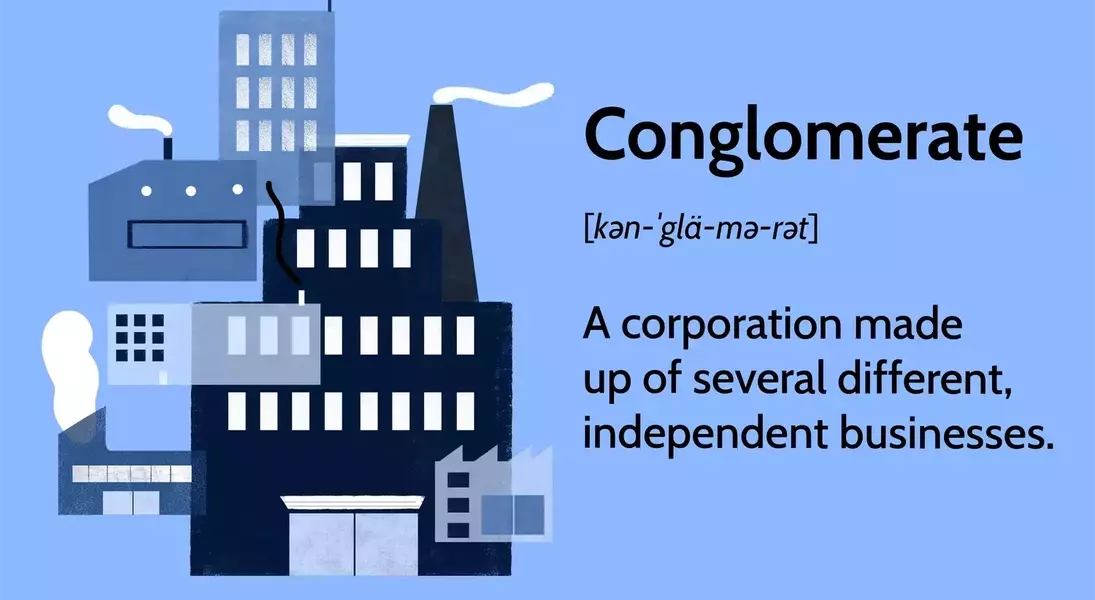
A conglomerate is a business entity that comprises several varied and often unrelated companies operating under the umbrella of a single parent corporation. The primary company maintains a controlling interest in these smaller, independent businesses, each of which conducts its operations autonomously. This corporate structure has seen significant evolution, driven by economic factors and strategic decisions, offering both opportunities and challenges for growth and management.
Historically, the rise of conglomerates, particularly in the 1960s, was propelled by favorable economic conditions such as low interest rates, which facilitated leveraged buyouts. This period saw a surge in mergers and acquisitions as companies sought to capitalize on perceived synergies by combining diverse businesses, products, and markets. The peak of this trend was around 1968, with thousands of mergers occurring and a significant portion of large companies adopting the conglomerate model. However, this boom eventually waned as interest rates adjusted to inflation, making such expansive strategies less financially viable.
Conglomerates are typically established through acquisitions, where one company purchases another, or through expansions, involving corporate restructuring and the creation of a parent entity to oversee multiple smaller ones. For example, Google Inc. transformed into Alphabet, with Google becoming a subsidiary. Another method is through extensions, where a single-sector business broadens its operations into new industries, much like Berkshire Hathaway evolved from textile mills into a diversified holding company under Warren Buffett's leadership.
Operating as a conglomerate offers distinct benefits, such as diversifying business risk across various markets. The success of one sector can offset the underperformance of another, balancing cyclical and non-cyclical businesses. Parent corporations can achieve cost efficiencies by sharing resources among subsidiaries, and the internal capital markets within a conglomerate can provide a ready source of funding for growth. This structure can also offer some protection against hostile takeovers.
However, conglomerates face inherent challenges. Economists have observed a "conglomerate discount," where the combined market value of individual companies within a conglomerate often exceeds the market value of the conglomerate itself. This phenomenon suggests that vast and complex corporate structures can become inefficient and cumbersome to manage, potentially eroding shareholder value. Managing a highly diversified portfolio of businesses can be difficult for both internal management and external analysts, leading some conglomerates to divest underperforming assets and refocus on core operations.
Modern examples illustrate the diverse nature of conglomerates. LVMH, originally a luggage and leather goods maker, expanded through mergers to become a holding company for 75 subsidiaries across six luxury sectors, including jewelry, cosmetics, and media. Berkshire Hathaway, under Warren Buffett, holds stakes in over 50 companies, spanning industries from manufacturing to real estate, with Buffett granting significant operational autonomy to its subsidiaries while managing capital allocation. Internationally, Japan’s "keiretsu" like Mitsubishi, and South Korea’s "chaebol" such as Samsung and Hyundai, represent different models of corporate conglomeration, often characterized by cross-shareholdings and family-controlled leadership, respectively. Samsung, as of early 2025, stands as one of the largest global conglomerates by market capitalization.
In essence, conglomerates are dynamic corporate structures that integrate various businesses under a central ownership. They can emerge through acquisitions, expansions, or extensions into new markets, aiming to leverage diversification and internal efficiencies. Despite the potential for a conglomerate discount, successful examples demonstrate that effective management and strategic capital allocation can lead to sustained growth and market leadership across diverse industries.
