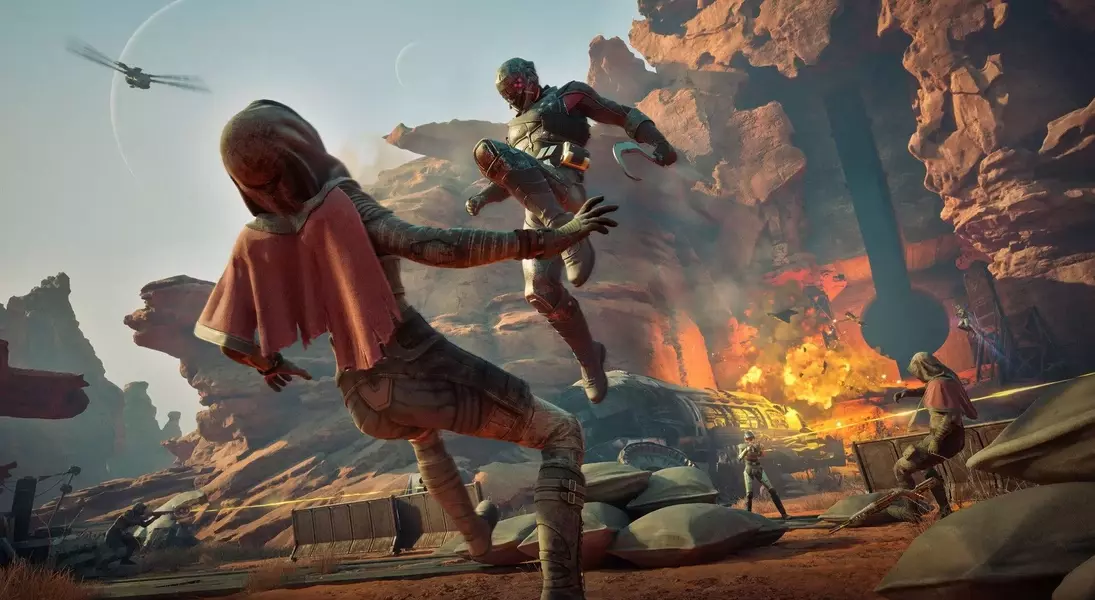
Funcom, the creators behind the online multiplayer survival title Dune: Awakening, have announced a significant change in their development approach, prioritizing Player-Versus-Environment (PvE) gameplay. This pivot stems from internal data indicating that the vast majority of players, exceeding 80%, exclusively engage with PvE content. Consequently, the studio is moving away from its initial emphasis on Player-Versus-Player (PvP) elements, particularly within the challenging Deep Desert regions, to better align with player preferences and enhance the game's overall appeal.
This strategic realignment means that while PvP will remain an available option for those who enjoy competitive interactions, it will no longer be a mandatory component for game progression. The upcoming patch 1.3.20.0 introduces several key modifications: all PvP zones in Hagga Basin will be deactivated on official servers, and players will have the choice between dedicated PvE and PvP instances within the Deep Desert. The PvE instance offers a pure survival and exploration experience without player-on-player conflict, while the PvP instance maintains the high-stakes environment with increased rewards for resource gathering to compensate for the added risk.
The player community has largely welcomed these forthcoming adjustments. Many have advocated for reduced PvP focus since the game's beta phase, citing issues such as glitches and unfair play that detracted from their experience. This shift aims to recapture players who may have disengaged due to the previous PvP requirements, especially as broader interest in the Dune universe experiences a resurgence. Dune: Awakening is currently available on Windows PC, with versions for PlayStation 5 and Xbox Series X slated for release later in the year, offering an expanded audience the opportunity to explore Arrakis under this refreshed gameplay philosophy.
By listening to its player base and adapting its game design, Funcom demonstrates a commitment to fostering a more inclusive and enjoyable gaming environment. This evolution reflects a positive trend in game development, where player feedback directly shapes the direction of virtual worlds, ultimately leading to more engaging and sustainable experiences for everyone involved.
