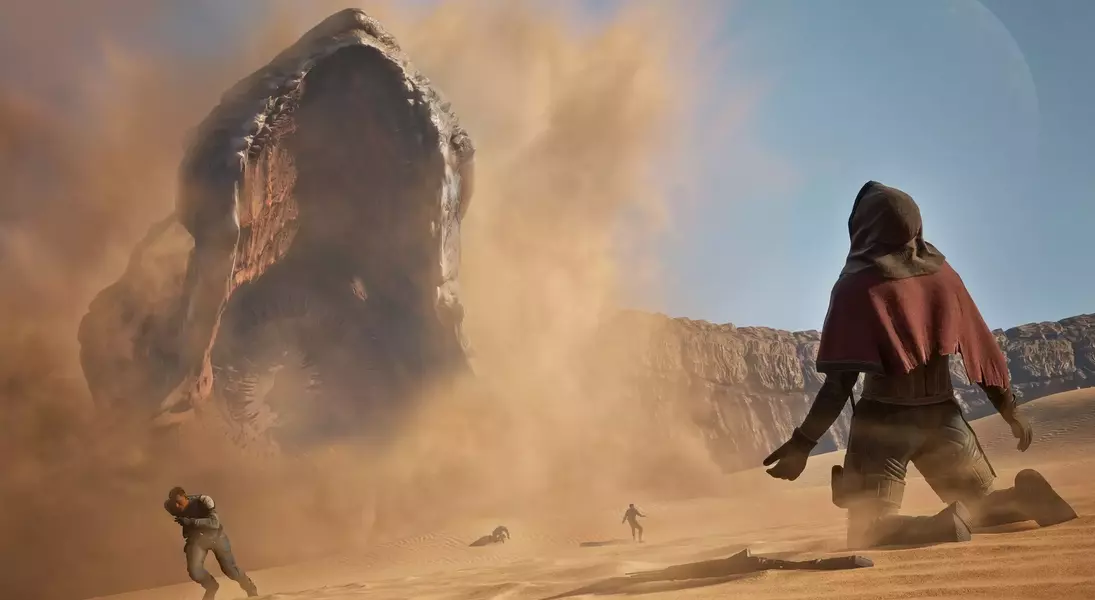
Defining game genres can be a complex and often frustrating task, as acknowledged by seasoned writers and even game developers themselves. The lines between categories like strategy and RPG blur, leading to ongoing debates. This challenge is particularly evident with Funcom's upcoming title, Dune: Awakening, which its director, Joel Bylos, now suggests transcends the traditional Massive Multiplayer Online (MMO) label.
The debate over genre definitions within the gaming industry is a persistent one, often causing internal discussions even among development teams. Joel Bylos, the director of Dune: Awakening, has recently indicated that the game might not fit neatly into the MMO category. This shift in perspective highlights the evolving nature of game design, where titles often incorporate elements from various genres, making precise classification difficult. Bylos's experience with games like The Secret World and Conan: Exiles, both of which blend MMO and survival elements, underscores the nuanced understanding required to categorize such hybrid experiences.
The Evolving Identity of Dune: Awakening
Joel Bylos, the director behind Dune: Awakening, reveals a nuanced perspective on the game's genre, moving away from its initial classification as an MMO. He explains that the game's design, which emphasizes a vast, interconnected world and significant player interaction within a survival framework, pushes beyond the conventional boundaries of an MMO. This re-evaluation stems from the game's unique progression system, where the focus shifts from traditional item-level grinding to a more crafting-centric endgame. The challenge, according to Bylos, lies in accurately conveying this innovative blend to players who often hold rigid preconceptions about genre labels.
Bylos's career, spanning titles like The Secret World and Conan: Exiles, provides him with a deep understanding of the complexities inherent in hybrid game genres. He notes that while Dune: Awakening features a large, persistent world conducive to many players, its core mechanics, particularly the crafting-driven progression, distinguish it from typical MMOs. Instead of endless gear score pursuits, players will find themselves engaging with a system that rewards resourcefulness and creation. This design choice, though challenging to articulate, aims to offer a fresh experience that diverges from established MMO paradigms, encouraging a re-thinking of what a large-scale online game can be.
The Broader Challenge of Game Genre Classification
The re-assessment of Dune: Awakening's genre mirrors a larger industry trend where developers struggle to define games that fuse diverse mechanics. This phenomenon is not limited to indie titles but extends to major releases, as seen with Pearl Abyss's Crimson Desert. Despite developer assertions, the community often perceives such games through the lens of established genres, leading to internal and external debates about their true nature. The fluid boundaries between categories like RPG, action, and survival create an environment where traditional labels often fall short, complicating both marketing and player expectations.
The difficulty in categorizing games like Crimson Desert, which some view as an action RPG and others as a unique hybrid, highlights the inherent limitations of genre classification. Developers, aiming to innovate, often create experiences that defy simple labels, integrating elements from multiple sources. This creative freedom, while beneficial for innovation, can lead to confusion among players and critics alike. The ongoing discussions around what constitutes a "roguelike" versus a "roguelite," or an "MMO" versus a "survival crafting game," underscore the need for more flexible descriptive frameworks that can accurately capture the multifaceted nature of modern video games.
