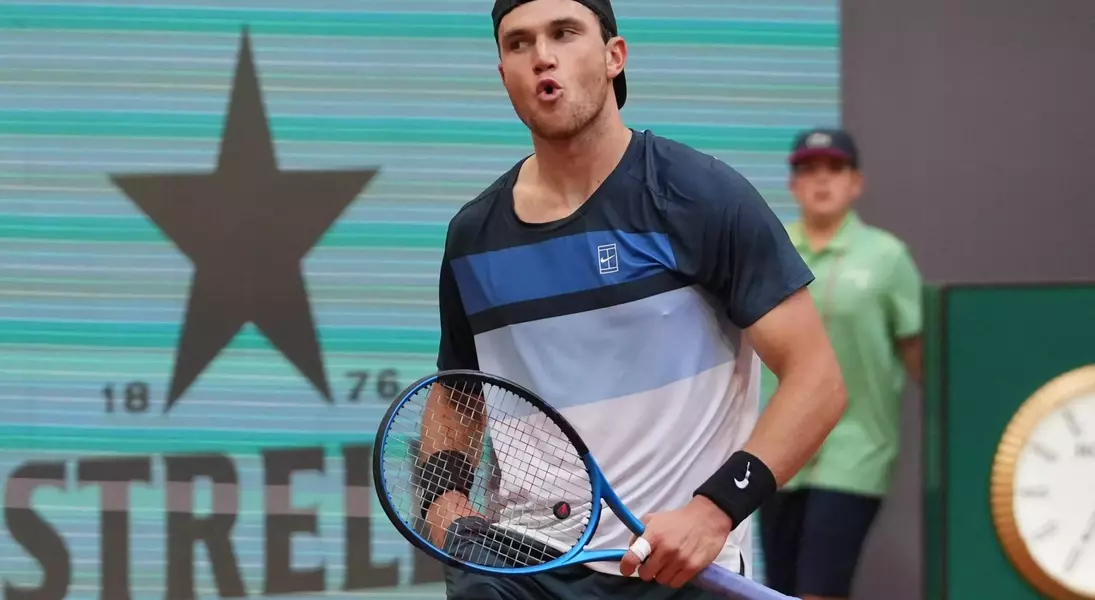
Jack Draper's recent triumph at the Queen's Club Championships has sent ripples through the tennis world, significantly impacting the upcoming Wimbledon seeding. His quarterfinal win not only marks a personal best in his career ranking but also secures him a coveted top-four seed, fundamentally altering his potential path through the Grand Slam. This strategic positioning means Draper will navigate the early rounds of Wimbledon with greater ease, avoiding clashes with the sport's current powerhouses until the later stages of the tournament. The implications extend beyond Draper, as American star Taylor Fritz finds himself on the less fortunate side of this shake-up. His unexpected early departure from the Queen's Club event has led to a reduction in his ranking points, consequently pushing him down in the Wimbledon seedings and setting him on a more challenging course, potentially forcing him to confront one of the top seeds far sooner than anticipated.
This shift underscores the critical importance of pre-Wimbledon tournaments in shaping the dynamics of the sport's most prestigious grass-court event. Draper's ascendancy and Fritz's setback illustrate how every point and every match in the lead-up can have profound consequences on a player's Grand Slam prospects, influencing not just their seeding but also the psychological advantage they carry into such a high-stakes competition. The altered landscape promises an intriguing Wimbledon, with new narratives emerging from these crucial pre-tournament performances.
Draper's Ascent and Wimbledon Advantage
Jack Draper's impressive run at the Queen's Club Championships culminated in a crucial quarterfinal victory, solidifying his status as a top contender and securing a significant advantage for Wimbledon. This success propels him to a career-high ranking, allowing him to enter Wimbledon as the 4th seed. This elevated seeding is a game-changer, as it strategically places him in a position to avoid the top three players—Jannik Sinner, Carlos Alcaraz, and Alexander Zverev—until at least the semifinals, thereby enhancing his prospects for a deeper run in the tournament. His meticulous performance and tactical victories in the lead-up have effectively carved a more favorable path for him on the prestigious grass courts.
The meticulously calculated progression saw Draper capitalize on every opportunity to climb the rankings. Starting the week as World No. 6, his precise execution and mental fortitude were key to surpassing the necessary thresholds. By reaching the semifinals at Queen's Club, he not only secured his best-ever ranking but also gained invaluable momentum and confidence. This strong showing indicates his readiness to challenge the established order at Wimbledon, with the benefit of a kinder draw that could see him conserve energy and build rhythm without facing immediate, high-stakes encounters against the sport's giants. His journey reflects a strategic build-up, ensuring he is peaked for one of tennis's most anticipated events.
Fritz's Setback and Seeding Implications
Conversely, Taylor Fritz experienced a significant setback at the Queen's Club Championships, with his unexpected first-round defeat directly impacting his Wimbledon seeding. His loss meant a failure to defend crucial ranking points from the previous year, resulting in a 100-point deficit. This decline in points, coupled with the absence of Novak Djokovic from the week's competitions, created the opening for Draper to advance. For Fritz, this means a diminished seeding at Wimbledon, altering his tournament trajectory and increasing the likelihood of an earlier, more challenging encounter against a top-four seed in the quarterfinal stage.
The ripple effect of Fritz's early exit is profound. Having aimed to maintain or improve his standing, his inability to secure points left him vulnerable. His lower seeding at Wimbledon could lead to a 'death group' scenario, where he might face formidable opponents like Jannik Sinner, Carlos Alcaraz, or Alexander Zverev much earlier than he would have preferred. This strategic disadvantage necessitates a more arduous campaign, potentially depleting his energy reserves and mental fortitude prematurely. The contrasting fortunes of Draper and Fritz highlight the high stakes and razor-thin margins in professional tennis, where every match can dramatically reshape a player's immediate future on the grandest stages.
