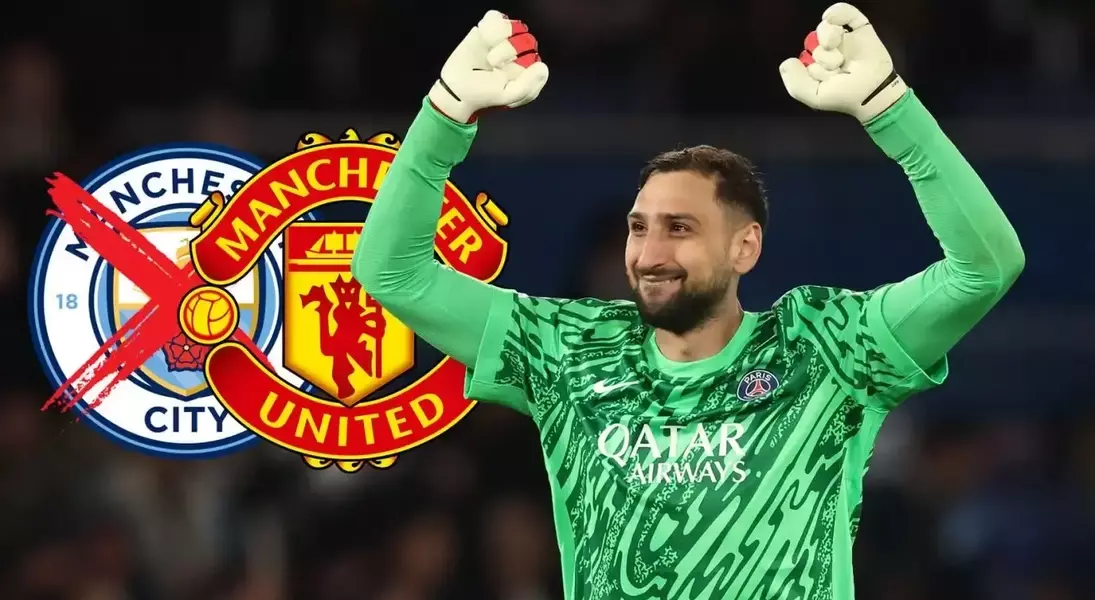
Gianluigi Donnarumma's unexpected availability has stirred the transfer market, prompting a reevaluation of his potential destination among top European clubs. Despite strong interest from Manchester City, an in-depth analysis suggests that Manchester United would be a far more logical and beneficial move for the Italian international. This assessment stems from the distinct goalkeeping philosophies of both Manchester clubs: City's tactical emphasis on a ball-playing custodian under Pep Guardiola, and United's pressing need for a reliable shot-stopper, a role Donnarumma excels in. The narrative explores why a goalkeeper of Donnarumma's traditional attributes, emphasizing shot-stopping and aerial dominance, would integrate more effectively into the tactical framework at Old Trafford, offering a solution to their defensive vulnerabilities, rather than attempting to adapt to Guardiola's unique, possession-centric system at the Etihad, which already boasts a suitable profile in Ederson and emerging talent in James Trafford.
Donnarumma's current predicament at PSG highlights a pivotal moment in his career. The French champions' decision to acquire Lucas Chevalier and subsequently omit Donnarumma from the UEFA Super Cup final squad signals a clear shift in their goalkeeping strategy. Coach Luis Enrique explicitly stated his preference for 'a different profile' of goalkeeper, directly challenging Donnarumma's traditional style. This development, despite his status as a Champions League winner and his agent Enzo Raiola's efforts to secure a favorable renewal, has compelled the Italian to seek opportunities elsewhere. With reports indicating Manchester City's keen interest, the potential for a high-profile transfer, possibly involving a £25 million fee and his substantial £210,000-a-week wages, looms large.
However, Manchester City's pursuit of Donnarumma appears counterintuitive given their existing squad and tactical approach. The club recently secured James Trafford from Burnley, a move perceived as a long-term investment. While Trafford's immediate role remains unclear, the underlying assumption is that he will eventually challenge for the number one spot, especially with a potential World Cup appearance in mind. Furthermore, Ederson, City's established goalkeeper for eight years, remains integral to Guardiola's system. Ederson is not merely a shot-stopper but a crucial component of City's build-up play, renowned for his exceptional passing range and accuracy. His role is that of a 'first line of attack' rather than solely a 'last line of defence,' a characteristic that defines Guardiola's desire for dominance through possession.
The fundamental disparity between Ederson's and Donnarumma's playing styles is stark. Ederson excels in distributing the ball and initiating attacks, a non-negotiable trait for Guardiola, who famously replaced Joe Hart with Claudio Bravo early in his City tenure to align with this philosophy. Donnarumma, conversely, is a preeminent shot-stopper, celebrated for his imposing physical presence, agility, and quick reflexes. His strengths lie in the conventional aspects of goalkeeping – guarding the goal with unwavering resolve. This difference in primary skill sets is precisely why Luis Enrique chose to move on from him at PSG, and it presents a significant mismatch with Guardiola's specific demands.
In stark contrast, Manchester United's situation offers a more compelling case for Donnarumma's arrival. The club is in urgent need of a reliable number one, having struggled with Andre Onana's inconsistent performances. While United's focus this summer has been on strengthening other areas like their attack and midfield, the instability in goal remains a pressing concern. Onana, despite his ball-playing abilities, has failed to provide the consistent, solid presence required at Old Trafford, often contributing to rather than alleviating defensive woes. United's previous lukewarm interest in Emiliano Martinez hints at their acknowledgment of this problem, and Donnarumma presents a golden opportunity to resolve it decisively.
Ultimately, while modern football places increasing importance on goalkeepers' ability to play with their feet, United's tactical priorities, under a manager like Ruben Amorim, should lean more towards a keeper who can offer a steadfast last line of defense. Donnarumma's core strengths as an elite shot-stopper and a commanding presence in goal align perfectly with this requirement. He is the type of goalkeeper who can 'dig United out of the holes they dig for themselves,' offering the reliability and defensive solidity that has been conspicuously absent. For United, acquiring Donnarumma would not be an opportunistic gamble but a strategic investment in rectifying a critical vulnerability, providing them with a top-class custodian tailored to their immediate needs, unlike the ill-fitting tactical profile he would present at Manchester City.
