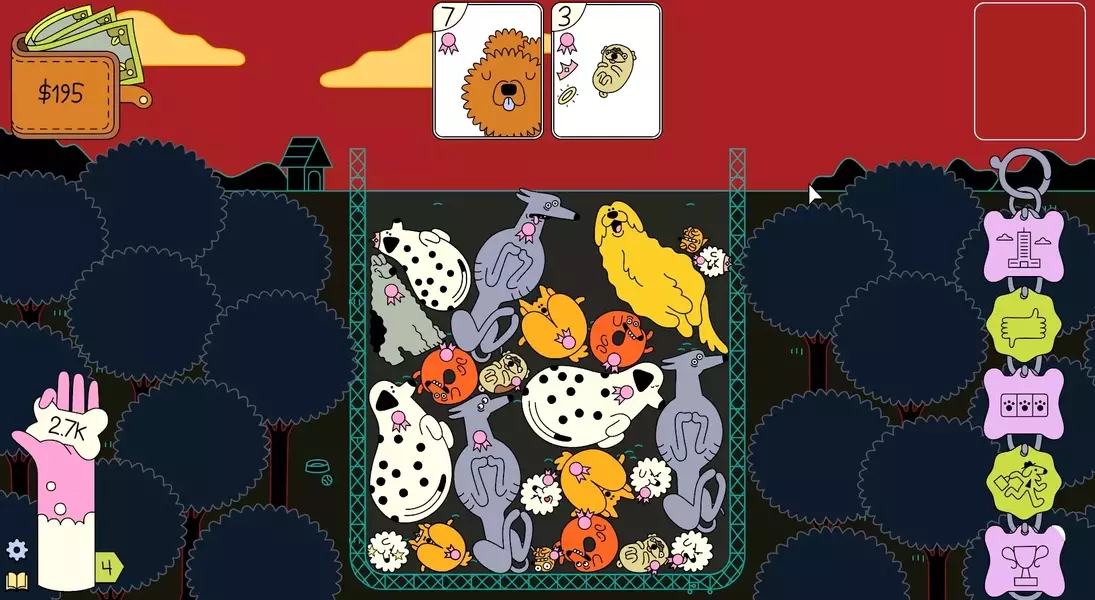
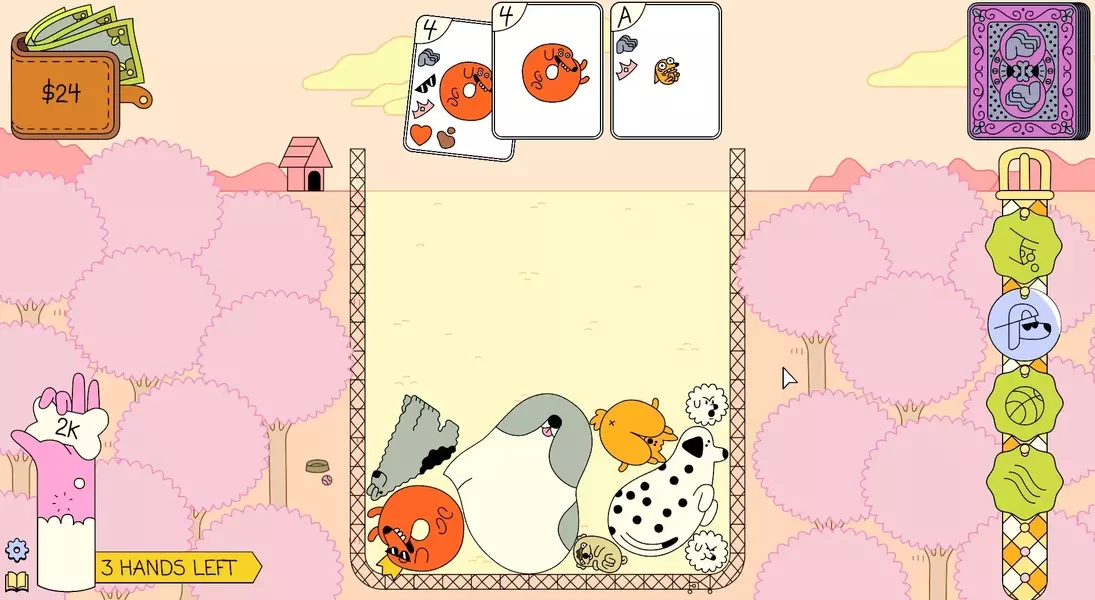
Dogpile offers a delightful take on the roguelike deckbuilder genre, distinguishing itself with an engaging core mechanic centered around merging dogs. Players draw canine cards, strategically place them, and witness the satisfying spectacle of them combining into larger, more valuable counterparts. This process generates resources crucial for progression, allowing for the acquisition of new dog breeds and powerful enhancement tags. While the game's physics engine introduces an element of tactile skill, the true depth lies in constructing a cohesive deck that capitalizes on synergistic upgrades and modifiers. The game's vibrant personality, brought to life through its diverse dog types and themed abilities, elevates it beyond a mere puzzle, fostering a connection with the player's evolving canine crew. Despite its endearing qualities, Dogpile is not without its typical roguelike challenges, including the potential for repetitive gameplay loops and a diluting effect on strategic choices as more unlocks are introduced.
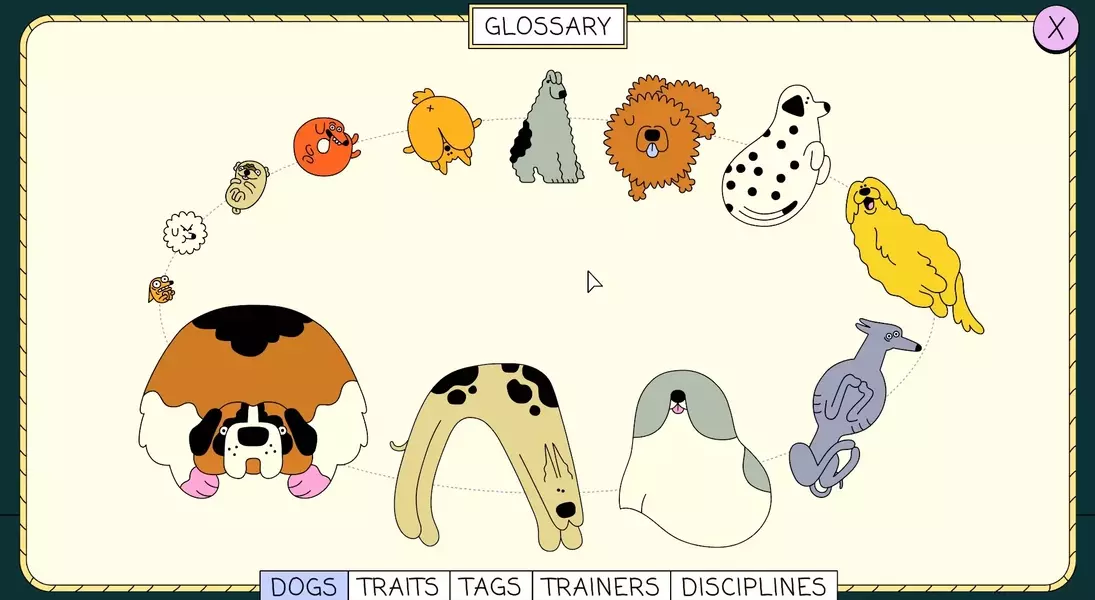
The developers have infused Dogpile with a distinctive charm, making the abstract merging mechanic feel surprisingly organic and fun. Each dog type, from tiny Chihuahuas to imposing St. Bernards, possesses a unique visual and behavioral identity, which is cleverly woven into the upgrade system. This thematic consistency transforms the strategic decisions from cold, calculated moves into narrative-driven choices, where players are not just optimizing numbers but cultivating a quirky band of companions. However, the game grapples with common pitfalls of the genre. Once a successful strategy is discovered, the incentive to experiment dwindles, leading to a sense of monotony. The progression system, while offering new elements, can inadvertently dilute the core experience by expanding the pool of available items, making it harder to craft specific, elaborate builds. Furthermore, the game's initial lack of polish, with occasional issues in upgrade functionality and save management, presented minor frustrations that required early patches to address. Despite these imperfections, the unique blend of engaging mechanics and an undeniably lovable theme ensures that Dogpile remains a memorable and enjoyable, if occasionally rough around the edges, experience.
The Unique Charm of Dogpile's Core Gameplay
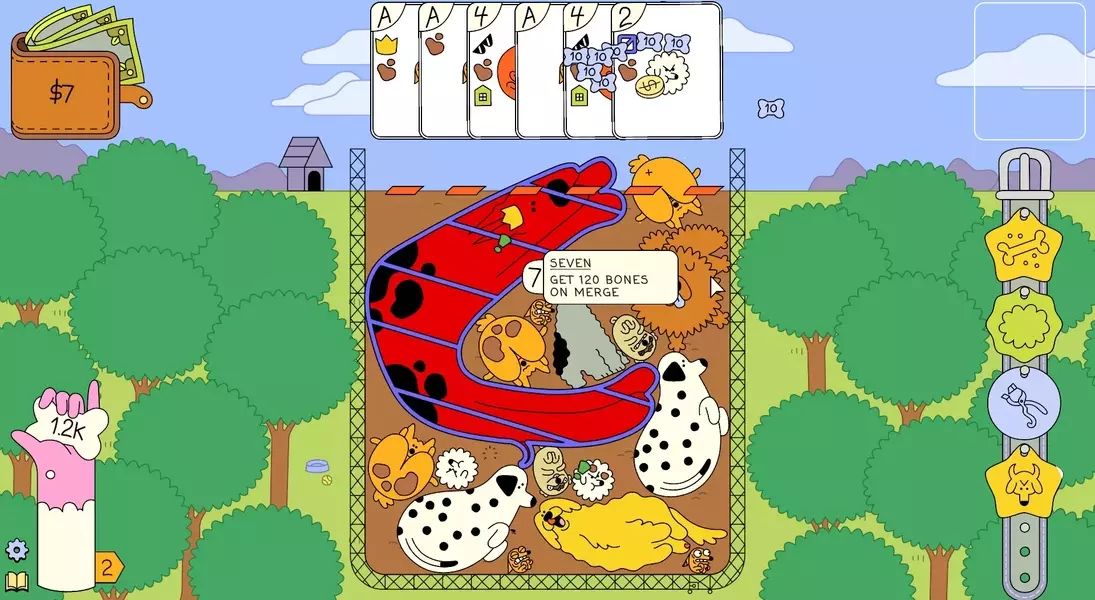
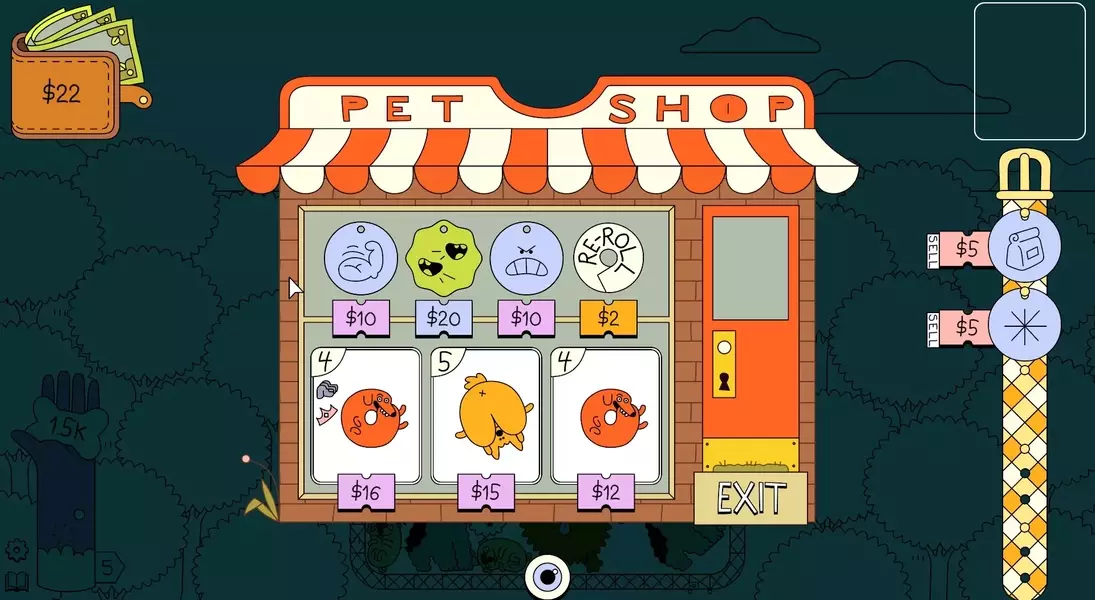
Dogpile presents a novel and highly satisfying core gameplay loop that centers on the strategic merging of various dog types. The game's primary appeal lies in the moment two identical dogs meet, triggering a delightful bark and their fusion into a larger, more valuable canine. This merging action can initiate chain reactions, creating an exciting cascade of yaps and jostling that transforms the entire playfield into a lively "doggy heaven." This simple yet profoundly gratifying mechanic forms the bedrock of the game, avoiding unnecessary complications and keeping the focus on accessible fun. Players are tasked with drawing three dogs from their deck each turn and carefully deciding where to drop them into a designated pit. Success hinges on generating enough "bones" through these merges within five hands to earn vital dog upgrades, and acquiring "money" to purchase new dogs and crucial bonus-granting "tags" from the shop.
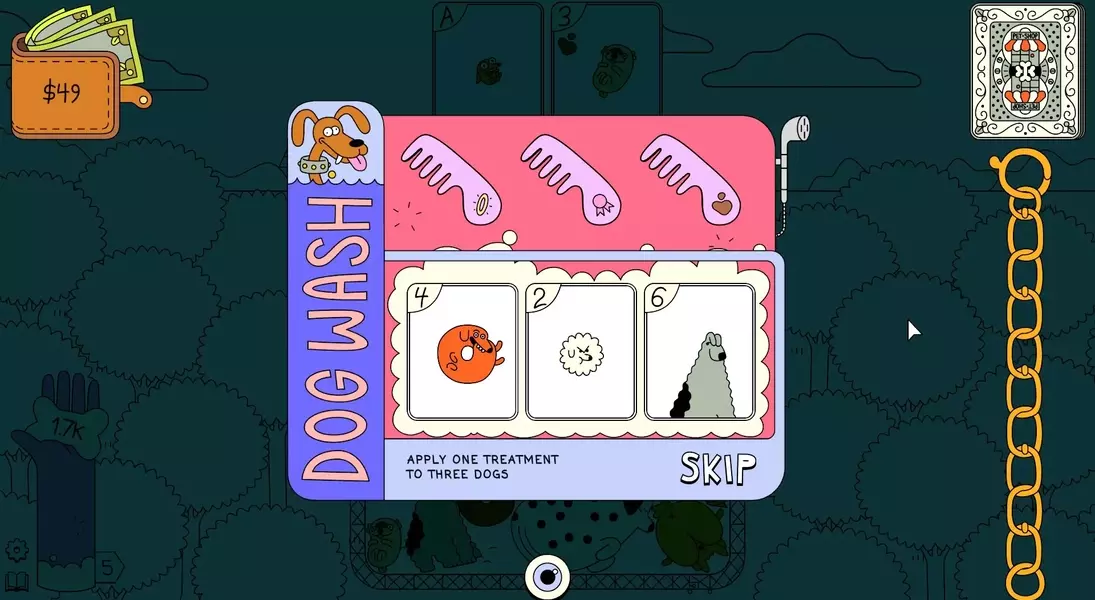
The ultimate objective in Dogpile is to successfully create the largest possible dog, known as the King, before the accumulation of dogs overflows the pit. This goal, combined with the intuitive merging mechanic, provides a straightforward yet addictive challenge. Beyond mere strategic placement, the game incorporates physics-based interactions, allowing players to skillfully bounce dogs, dislodge stacks, and execute clever trickshots. A key aspect of play involves mastering the art of piling dogs advantageously, preventing lower-value dogs from becoming trapped and fostering environments conducive to chain reactions. However, the true mastery of Dogpile extends to deck-building. Dog upgrades, such as 'Showdog' which boosts merge earnings, or 'Pack' which draws additional dogs, significantly influence how each hand unfolds. Furthermore, universal modifiers provided by 'tags' often create powerful synergies with these upgrades. For instance, obtaining the 'Friendly' trait early on, which makes dogs gravitate towards others of their type, can be combined with the 'Jupiter' tag for zero-gravity pits and the 'Endless Joy' tag to ensure 'Friendly' persists through merges. This combination results in a self-sorting, highly active pit where dogs aggressively seek out every possible merge, illustrating the depth of strategic possibilities within the game.
Navigating Progression and Polishing the Canine Experience
While Dogpile's charming premise and engaging mechanics offer significant initial appeal, its long-term replayability and overall polish present a mixed bag, echoing common challenges found in the roguelike genre. The game's early hours are often filled with the intoxicating satisfaction of discovering powerful dog and tag combinations, leading to game-breaking strategies that feel incredibly rewarding. This honeymoon period, marked by inventive deck construction and strategic triumphs, can captivate players for a substantial amount of time, typically ranging from 10 to 15 hours. However, as players become more adept and uncover reliable strategies, the incentive to deviate from these proven paths diminishes. This can lead to a repetitive experience, where successful but unvaried playstyles become the norm, potentially dulling the initial excitement and limiting the game's longevity for dedicated players.
A significant contributing factor to this issue lies within Dogpile's unlock system. As players progress and unlock new tags, the pool of potential items available in the shop becomes increasingly diluted with niche options. While new unlocks are generally a positive feature in roguelikes, in Dogpile's case, this dilution can paradoxically make it harder to assemble more elaborate or unconventional builds. Players might find themselves relying more on chance to acquire specific synergistic elements, pushing them towards more robust, less item-dependent strategies. This dilemma often distinguishes a good roguelike from a great one; the latter consistently encourages exploration and rewards diverse approaches. Moreover, the game's initial release was hampered by a lack of polish, with issues ranging from upgrades not functioning as intended to tags failing to work altogether, and a particularly problematic save/continue system. While early patches have begun to address these behavioral quirks, a considerable amount of refinement is still needed. Despite these rough edges, the inherent charm of merging dogs and the creative chaos that ensues often compel players to overlook the imperfections, much like forgiving a beloved pet's occasional mischief, ultimately making Dogpile a worthwhile, albeit flawed, addition to the roguelike deckbuilder landscape.
