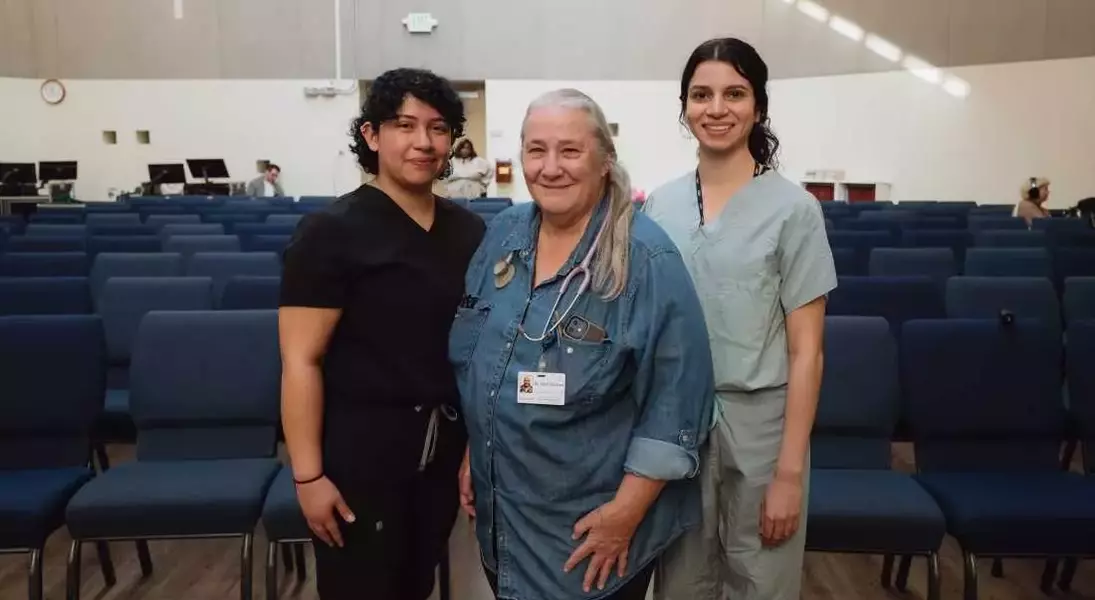


Dr. Mary Marfisee, a dedicated family medicine physician and an assistant professor at UCLA, has made it her life's work to enhance the well-being of unhoused women residing in Los Angeles' Skid Row. With nearly two decades of experience, she understands that for many in this vulnerable community, the immediate need for stable housing often eclipses critical health concerns. This prioritization frequently leads to minor ailments escalating into severe conditions. Dr. Marfisee actively engages with these women, both within the Union Rescue Mission and through her "street medicine" rounds, offering crucial medical attention and advocating for improved healthcare access. Her efforts aim to dismantle systemic obstacles that prevent unhoused women from receiving essential preventative care, particularly in areas like gynecological and prenatal health, where they face significant disparities and higher mortality rates due to late-stage diagnoses.
Dr. Mary Marfisee's Pioneering Efforts in Addressing Health Disparities on Skid Row
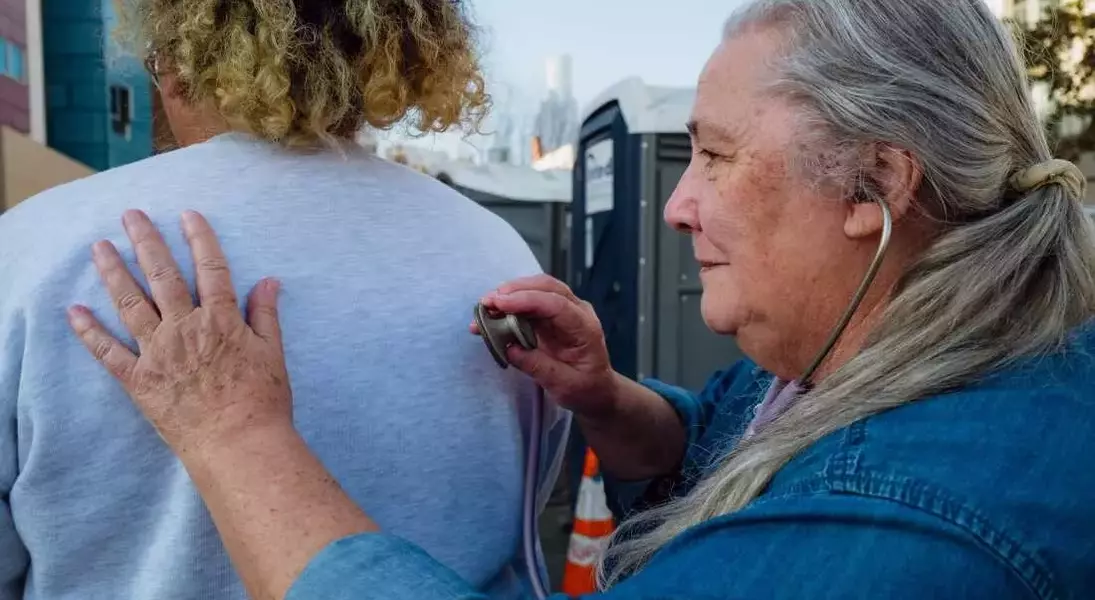
In the vibrant and often chaotic environment of Los Angeles' Skid Row, a dedicated physician, Dr. Mary Marfisee, has been making profound strides in transforming healthcare for its unhoused women. On a bright day in December 2025, she was observed on a bustling street, stethoscope in hand, diligently performing a breathing check on Hermione, a young woman pushing a stroller filled with her possessions. This interaction exemplifies Dr. Marfisee's empathetic and methodical approach to "street medicine." She identified Hermione's asthmatic symptoms and the critical need for medication, offering crucial information about nearby clinics. Hermione's subsequent decision to seek shelter at the Union Rescue Mission brought a smile to Dr. Marfisee's face, highlighting the physician's dual role as both a medical practitioner and the family medical services director at the mission.
For nearly two decades, Dr. Marfisee has been an integral part of the Union Rescue Mission, a prominent four-story Christian homeless shelter in Southern California, serving over 5,000 individuals annually. Her unwavering commitment extends beyond the mission's walls, as she regularly conducts street rounds to reach those who cannot access traditional healthcare. She emphasizes that while finding stable housing is the primary concern for unhoused individuals, their health often takes a backseat, leading to untreated infections, cuts, and chronic conditions that worsen over time.
Skid Row represents a significant challenge in the national homelessness crisis. A 2025 Los Angeles Homeless Services report indicated that 43,695 city residents were unhoused, with a substantial portion living without shelter. Studies, including a 2024 RAND report, show that Skid Row's unsheltered population is increasingly older and female, experiencing poorer physical and mental health due to limited access to insurance, transportation, and specialized care such as gynecological and prenatal services. The Union Rescue Mission's internal data reinforces this, revealing that approximately 87% of women were not current on preventative screenings like Pap smears or mammograms.
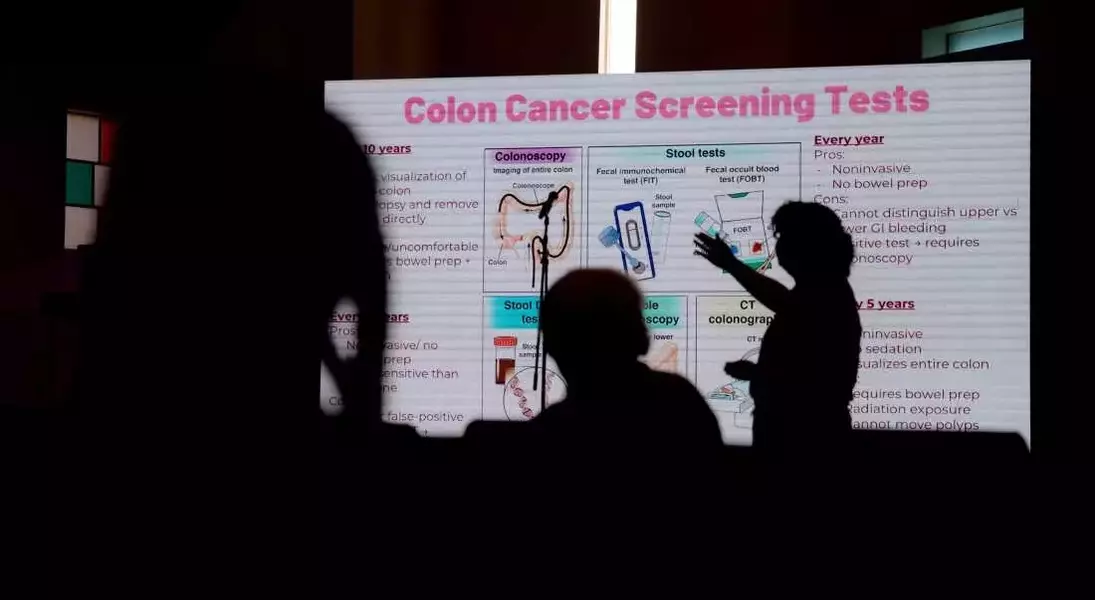
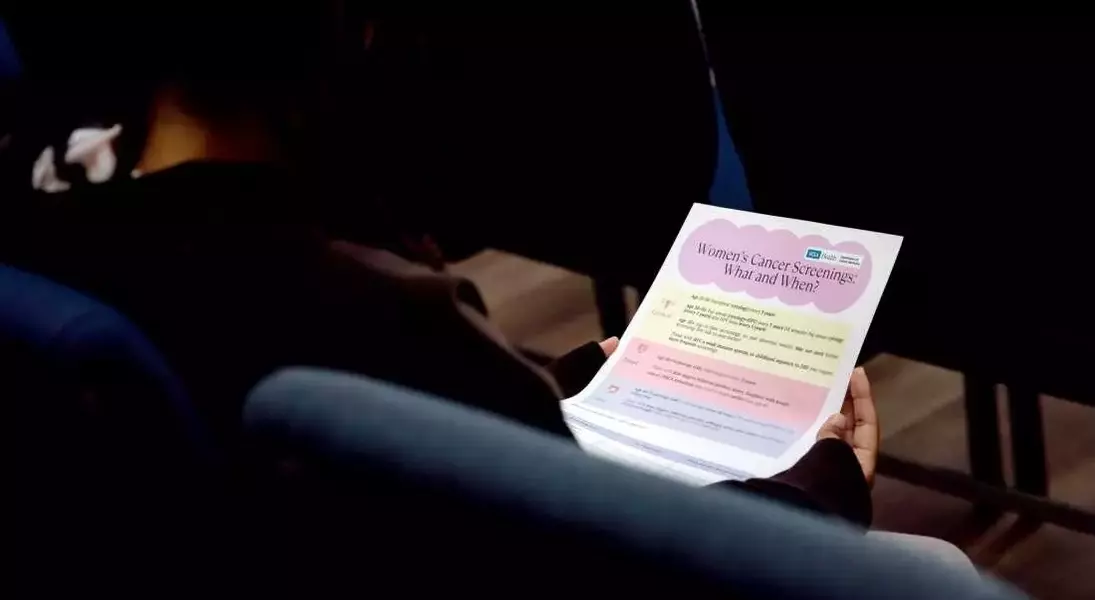
Dr. Marfisee recounts the harrowing experiences of her patients, such as a woman with a family history of breast cancer who faced a nine-month wait for a mammogram and then encountered bureaucratic hurdles due to a lack of identification and medical cards. Another patient suffered for decades from lower abdominal pain, which was later discovered to be caused by a forgotten IUD, deeply embedded in her uterine wall for 32 years. These cases galvanized Dr. Marfisee, inspiring her to launch a women's health initiative at the Union Rescue Mission in December 2025. This initiative, supported by UCLA medical student interns, includes regular town halls to educate women on cancer prevention and care. The next phase involves a partnership with a local hospital to deploy a mobile health van twice a month, offering free Pap smears and mammograms, with an estimated capacity for 100 breast exams per visit. This is particularly vital given that unhoused women die from breast cancer at nearly double the rate of the general population, largely due to late diagnoses.
Despite encountering logistical challenges, such as scheduling conflicts for the mobile van driver and medical waste disposal issues, Dr. Marfisee, an unwavering optimist, is confident that these obstacles will be overcome. She anticipates that screenings will commence by February, driven by her resolute belief that "No matter what it takes, we'll get it done. We just have to." Her work continues tirelessly, evident as she navigated San Julian Street, often described as "one of the roughest streets in the city," tending to a visibly frail older woman in a wheelchair, providing care and compassion, and ensuring follow-up for her most vulnerable patients.
Dr. Marfisee's work offers a profound lesson in humanitarian medical practice. It underscores the critical need for tailored healthcare solutions that address the multifaceted challenges faced by marginalized populations. Her approach of bringing medical care directly to those in need, coupled with persistent advocacy for systemic change, serves as an inspiring blueprint. It reminds us that compassionate, patient-centered care, even amidst the most challenging circumstances, can significantly improve lives and restore dignity. Her unwavering commitment to the unhoused women of Skid Row is a testament to the power of individual dedication in fostering collective well-being, pushing past bureaucratic hurdles to deliver essential services where they are most desperately needed.
