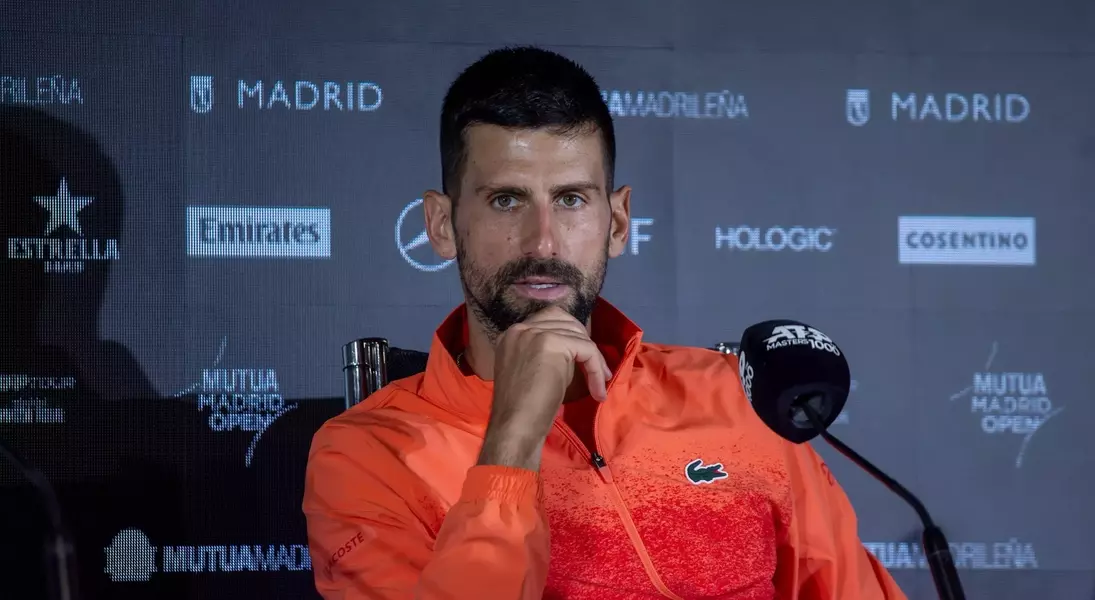
Novak Djokovic, a titan of the tennis world, has openly confronted the physical challenges posed by his advancing age, particularly in the demanding format of Grand Slam five-set matches. His recent defeat to Jannik Sinner in the Wimbledon semifinals underscores a pivotal moment in his illustrious career, as the Serbian maestro grapples with the inescapable reality of his body's wear and tear. This introspection comes after a series of Grand Slam semifinal losses, indicating a potential shift from his previously unyielding dominance. Despite these setbacks, Djokovic’s determination to remain competitive at the highest level is unwavering, as he continues to plan for major tournaments, adapting his approach to prolong his career while managing the new physical realities.
His candid remarks about the physical struggle of extended matches and the impact of age offer a rare glimpse into the mindset of an athlete accustomed to unparalleled success. This new phase of his career is defined by strategic adjustments and a deeper understanding of his physical limits, marking a transition from sheer physical power to a more nuanced game plan that prioritizes longevity and targeted peak performance. The narrative now shifts from relentless triumph to a valiant fight against time, where every match is not just a test of skill but also a testament to endurance and adaptability.
The Unyielding March of Time: Djokovic's Physical Realities
Novak Djokovic's recent loss in the Wimbledon semifinals to Jannik Sinner has prompted a candid reflection on the physical toll that years of elite-level tennis have taken. The 38-year-old expressed that playing best-of-five set matches has become a significant physical challenge, a stark contrast to his past imperviousness. This admission highlights a growing difficulty in maintaining peak physical condition throughout the duration of a demanding tournament, as recovery becomes more protracted and fatigue sets in quicker. His struggle is further emphasized by this being his third consecutive Grand Slam semifinal exit this year, following similar outcomes at Roland Garros and another earlier in the year, which ended his remarkable streak of reaching nine out of the last ten Grand Slam finals.
Djokovic's honest assessment underscores the universal truth that even the most formidable athletes are not immune to the effects of aging. He noted that the 'wear and tear' on his body has become more pronounced in the last year and a half, a reality he finds challenging to accept given his belief in his ability to perform at a high level when fully rested. His remarks reveal the mental and emotional struggle accompanying physical decline, as a champion of his caliber confronts the need to adapt his training, recovery, and competitive schedule. Despite recent victories against formidable opponents leading up to the semifinals, the cumulative physical burden of a deep tournament run proved too much, exacerbating an existing foot discomfort and ultimately impacting his performance against a younger, sharper adversary. This period marks a critical juncture for Djokovic, balancing his ambition for further Grand Slam glory with the pragmatic demands of his body.
Adapting to a New Era: Competition and Future Outlook
Djokovic's comments also shed light on the evolving landscape of men's tennis, where a new generation of incredibly fit and sharp players, such as Jannik Sinner and Carlos Alcaraz, are rising to prominence. He humorously acknowledged the challenge of facing these younger talents, describing it as entering a match with his "tank half empty." This perspective underscores not only his physical struggles but also the strategic adjustments required to compete against athletes who possess boundless energy and relentless intensity. The emergence of these formidable opponents makes deep runs in Grand Slams increasingly arduous for a veteran like Djokovic, transforming each encounter into a more significant physical and mental battle than ever before.
Despite these challenges and the failure to defend points from last year's Wimbledon final, Djokovic remarkably maintains his position as World No. 6, still comfortably ahead of his immediate pursuers in the rankings. This sustained high ranking is a testament to his consistent performance in reaching the latter stages of major tournaments, even if the ultimate triumph has recently eluded him. Looking ahead, Djokovic is slated to participate in the Canadian Open and Cincinnati Open, tournaments he has historically been selective about. His participation in these events, particularly the Cincinnati Open where he famously defeated Carlos Alcaraz in 2023, signals his ongoing commitment to the tour and his strategic efforts to prepare for future Grand Slams while managing his physical condition. This demonstrates his enduring resolve to compete at the elite level, adapting his schedule to maximize his potential and maintain his competitive edge amidst a changing guard in the sport.
