During a recent live broadcast of Divinity: Original Sin 2, Larian Studios' prior RPG installment within the Divinity saga preceding Baldur's Gate 3, communications developer Aoife Wilson engaged in a discussion about the concealed clues embedded in D:OS2 that subtly foreshadowed Larian's subsequent venture.
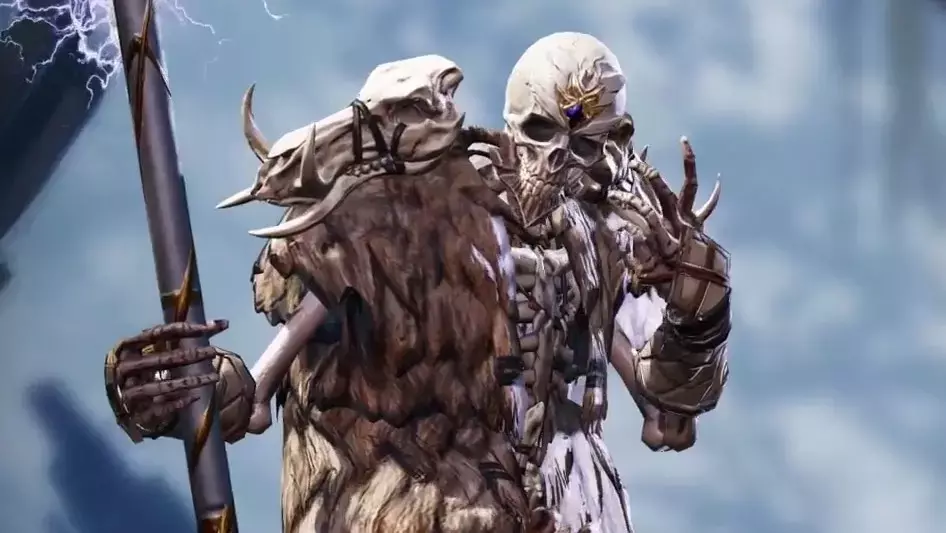
Larian CEO Swen Vincke revealed that the initial allusions to Baldur's Gate 3 were quite direct. He recounted how, during the summer of D:OS2's launch, they had already drafted a preliminary version of Baldur's Gate 3 due to a contractual agreement with Wizards of the Coast, though he admitted it was "very bad." These early, overt hints were subsequently refined into more obscure references. For example, in the D:OS2 epilogue, party member Fane might hint at a clandestine octopus plot, while the necromancer Tarquin speaks of enigmatic, mind-devouring entities from another dimension—both veiled references to mind flayers. The scattered jars of mind maggots in D:OS2 also retrospectively appear to foreshadow Baldur's Gate 3's tadpoles. Tarquin further mentions "Gustavchen," the written language of these otherworldly beings, a nod to "Project Gustav," Baldur's Gate 3's development codename, inspired by Vincke's dog, and the origin of the player character's default name, "Tav." The interconnectedness extends to Baldur's Gate 3, where faint echoes of Tarquin's interdimensional escapades can be found, such as a letter mentioning a "Tuqueen" and a note referring to "Marco Creenn," an anagram for necromancer, hinting at his potential return to Rivellon.
The intricate weaving of narrative hints across game titles, particularly in the realm of game development, exemplifies profound creative foresight and meticulous planning. This practice not only enriches the player's experience by offering deeper lore and anticipation but also serves as a testament to the developers' commitment to building expansive, interconnected universes. Such dedication fosters a vibrant community of fans who delight in uncovering these hidden connections, promoting a sense of discovery and intellectual engagement that extends far beyond the immediate gameplay. It underscores the idea that art, even in digital form, thrives on layers of meaning and the shared journey of exploration.
