
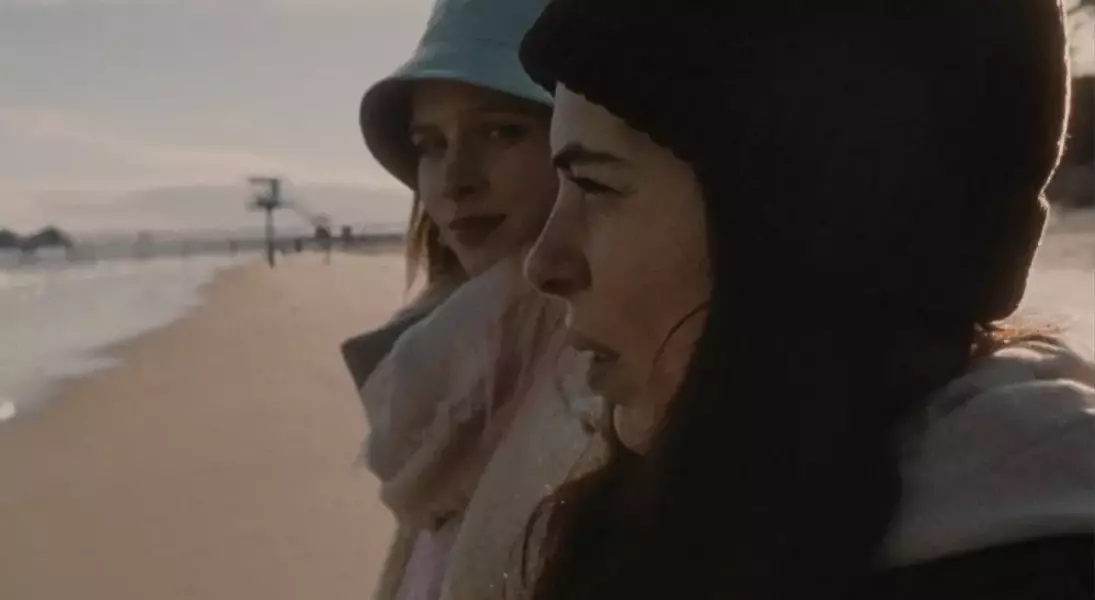
Urša Menart, a Slovenian filmmaker, draws inspiration from the peculiar online trend of individuals fabricating tragic life narratives to attract followers, culminating in her latest dramedy, 'Everything That's Wrong With You.' This film, which premieres at the Sarajevo Film Festival, intricately explores the complex interplay between online personas and the profound human desire for genuine connection in an increasingly isolated world. The narrative particularly examines the nuanced experiences of young women confronting loneliness and societal expectations.
The genesis of 'Everything That's Wrong With You' began prior to the COVID-19 pandemic, when Menart observed micro-influencers crafting elaborate, sorrowful tales to capture fleeting online attention. What truly captivated her was not the fabrication itself, but the eager engagement of followers, some even traveling vast distances to connect with these internet personalities. This observation, coupled with her own feelings of isolation during the pandemic and the challenges of new motherhood, underscored the universal yearning for human interaction. The film endeavors to capture this intricate dynamic, highlighting the longing for authentic relationships amidst a backdrop of digital artifice.
The story centers on Maruša, a young woman who returns to Slovenia after a period in Berlin, grappling with the recent loss of her mother and an overwhelming sense of displacement. In her aimless online browsing, she encounters Alja, a nurse residing in a small German coastal town. Their initial message exchange quickly blossoms into an intense friendship, which is then put to the test when they finally meet face-to-face. Menart developed these characters by drawing from a rich tapestry of personal observations and real-life encounters, ensuring their portrayals resonate with authenticity.
Over the course of seven years, as the project slowly progressed through the Slovenian production pipeline, Menart dedicated herself to extensive research and script refinement. Despite the lengthy development process, she remained confident in the enduring relevance of her film's themes. The rapid advancement of technologies like artificial intelligence has only intensified global discussions around loneliness and the critical importance of human connection. Menart's work serves as a timely reminder that as interactions with machines increase, the fundamental human need for meaningful in-person relationships becomes ever more vital.
Menart's film deliberately focuses on the female experience of loneliness, addressing societal pressures, the burdens of caregiving, and the complexities of online dating within a hypersexualized digital landscape. When asked about her choice to highlight young women, Menart emphasized that as a woman, this perspective feels most authentic to her. She believes that women's lives, though often challenging, are incredibly rich and still largely unexplored in cinema. While acknowledging the male loneliness epidemic, she prefers to delve into the untold stories and diverse characters within the female realm, inviting other filmmakers to explore different narratives.
A crucial element in the film's production was the meticulous casting of the two lead actresses. Menart specifically sought Slovenian talent, valuing the importance of language in her narrative. Through open auditions, she discovered Anuša Kodelja and Klara Kuk, who, surprisingly, initially auditioned for each other’s roles. Menart realized that their inherent personalities brought unexpected depth to the characters, enriching the script beyond its initial conception. Following casting, a year-long collaboration between Menart and the actresses allowed for further character development and script adjustments, ensuring a deeply intimate and authentic portrayal.
Another pivotal aspect was securing the ideal location for Alja’s home, ultimately found in the German seaside town of Heringsdorf. Menart was drawn to its flat, open landscape, a stark contrast to Maruša’s more claustrophobic, steep environment in Slovenia. This visual juxtaposition aimed to convey a sense of expansive possibility as Maruša enters this new setting. Despite the logistical challenges of filming in a tourist town with limited infrastructure, the minimal equipment and agile approach fostered a flexible and intimate production style that perfectly suited the film’s small-scale, personal narrative.
To capture the film’s intimacy, Menart chose a cinematographer with a documentary background, Roy van Egmond, who favored a spontaneous approach to filming. This collaboration fostered a deep understanding between the camera and the actors, allowing for genuine moments to be captured within the close relationship portrayed on screen. The film's world premiere at the Sarajevo Film Festival holds special significance for Menart, as the festival had previously supported the project through its industry arm, CineLink, creating a sense of a joyful reunion within the regional film community.
The film, a co-production between Slovenia’s Vertigo and Germany’s Chromosom Film, Tidewater Pictures, Serbia’s Living Pictures, and RTV Slovenija, received extensive support from various cultural and film organizations. 'Everything That's Wrong With You' not only explores the hidden facets of online culture but also underscores the enduring human need for authentic connection in a world increasingly shaped by digital interactions and pervasive loneliness. It stands as a testament to the power of human bonds against the backdrop of an isolating digital age.
