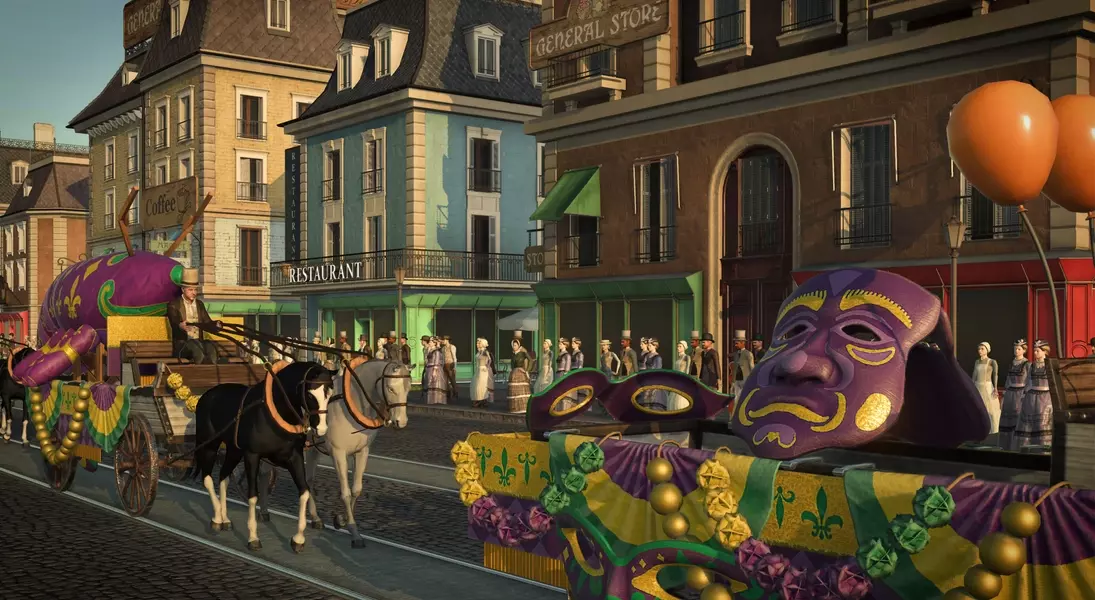
In an era where generative artificial intelligence is rapidly advancing, leading to concerns about its environmental impact and rising memory costs, a pervasive sense of vigilance, or even suspicion, has emerged regarding digital imagery. This climate of AI paranoia now influences how audiences perceive art, prompting even handcrafted works to be scrutinized for tell-tale signs of algorithmic creation.
Urban Games Reworks Transport Fever 3 Character Art Amid AI Concerns
Urban Games, the studio behind the highly anticipated simulation title, Transport Fever 3, has announced a significant adjustment to its character artwork. This decision stems from player feedback during beta testing, where the game's meticulously hand-drawn character portraits were mistakenly identified as AI-generated. The game features an eight-mission campaign with interactive characters delivering tasks through static art and voice acting. A striking example was the Mayor of New Orleans, whose polished and somewhat uncanny appearance in the game's initial mission elicited a strong sense of discomfort among players, echoing reactions often associated with AI-produced visuals. Despite the absence of common AI imperfections such as distorted hands or inconsistent patterns, the overall aesthetic raised suspicions.
Nico Heini, publishing manager for Urban Games, firmly stated that generative AI was not employed in any aspect of Transport Fever 3. He emphasized the studio's dedication to a "100% handmade" approach, affirming that all artistic elements are crafted by human artists. However, recognizing the impact of player perceptions, Urban Games has committed to revising these character portraits. The studio confirmed that the artwork is currently undergoing a rework, with plans to replace it with new designs that unequivocally demonstrate their human origin. This move underscores a broader industry sentiment where, unlike some companies that fully embrace AI technologies, Urban Games prioritizes and actively showcases its commitment to traditional, human-centric game development.
This incident offers a valuable insight into the evolving landscape of digital art and audience expectations. It reveals a growing skepticism towards AI-generated content, pushing creators to not only avoid AI but also to visibly assert the authenticity of their human artistry. For game developers, this means navigating a fine line where even well-executed traditional art can be misconstrued, highlighting the importance of transparent communication and a clear stance on creative processes.
