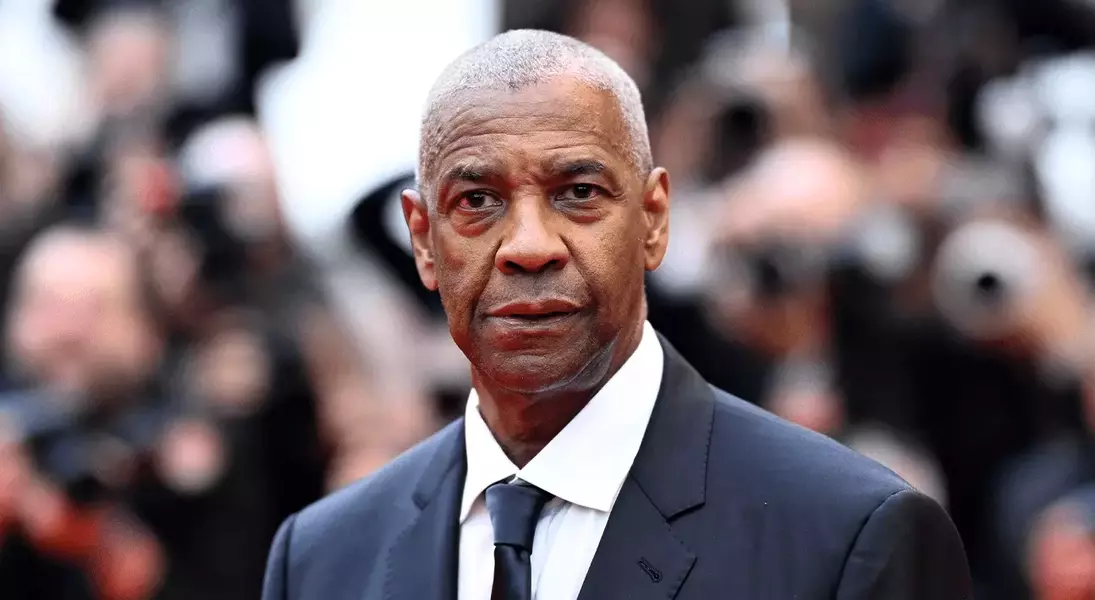
Denzel Washington, a celebrated figure in the film industry, has openly shared an intriguing aspect of his life: his disinclination to watch movies. This confession, made during a conversation with fellow creatives, highlights a unique perspective from someone deeply immersed in filmmaking. His lengthy and distinguished career, marked by numerous iconic roles and accolades, provides a paradoxical backdrop to his lack of cinematic consumption.
Furthermore, Washington's candidness extends beyond just his viewing habits. He has also expressed a detachment from industry awards, emphasizing that his motivation for acting stems from a different place than seeking accolades. This stance offers a fresh look at the priorities of a seasoned professional in an often award-obsessed industry, suggesting a focus on intrinsic rewards over external recognition.
A Cinematic Paradox: An Actor's Disinterest
Despite his iconic status and a filmography exceeding 50 titles, Denzel Washington candidly admitted he no longer watches movies. This surprising revelation came during a recent discussion with director Spike Lee and co-star A$AP Rocky. Washington, whose career includes acclaimed performances in films like 'Glory' and 'Training Day,' where he earned Academy Awards, expressed a profound weariness with the medium. His confession challenges the common assumption that those who create film are also avid consumers of it. This unexpected perspective from a highly respected actor invites contemplation on the personal connection artists maintain with their craft outside of their professional roles, shedding light on the nuanced relationship between creation and consumption in the entertainment world.
Washington's declaration, 'I don't watch movies, man. I really don't... I'm tired of movies,' offers a rare glimpse into the personal space of a Hollywood veteran. His extensive involvement in over five decades of filmmaking, starting with his debut in 1981's 'Carbon Copy,' appears to have led to a saturation point rather than an enduring passion for viewing. While promoting his latest project, 'Highest 2 Lowest,' the actor elaborated on his detachment, indicating that even attending movie theaters is no longer part of his routine. This stance is particularly noteworthy given his significant contributions to cinema and the critical acclaim he has consistently received throughout his career. It suggests that for some, the immersive process of making movies might overshadow the desire to engage with them as a spectator, leading to a unique form of professional burnout that manifests as a complete disinterest in the output of their industry.
Beyond the Accolades: A Different Motivation
Beyond his surprising viewing habits, Denzel Washington also conveyed a striking indifference towards industry awards. He explicitly stated that his acting pursuits are not driven by the desire for Oscars or similar honors. This perspective, articulated during an interview, contrasts sharply with the aspirations often associated with a career in Hollywood. For Washington, the value of his work seems to lie elsewhere, distinct from the recognition bestowed by award ceremonies. His sentiment challenges the conventional metrics of success in the film industry, proposing an alternative framework for evaluating artistic endeavors based on personal fulfillment and a deeper sense of purpose rather than external validation.
Washington's philosophy regarding awards is encapsulated in his remarks: 'I don't do it for Oscars. I don't care about that kind of stuff.' He further reflected on the capricious nature of awards, noting instances where he felt undeserving of wins and others where he was overlooked despite deserving recognition. This seasoned perspective leads him to conclude that 'Man gives the award. God gives the reward,' implying a belief in a higher form of recompense that transcends earthly accolades. He humorously dismisses the significance of his two Academy Awards, stating they simply sit 'next to the other one' and will ultimately be inconsequential on his 'last day.' This profound outlook underscores a focus on intrinsic value and spiritual rewards, positioning his artistic contributions within a broader, more meaningful context than mere industry recognition.
