

In a world where technology increasingly blurs the lines between the physical and digital, the 2007 anime series, Den-noh Coil, stands out as a remarkably insightful precursor to our current augmented reality landscape. Created and directed by Mitsuo Iso and produced by Madhouse, this 26-episode series masterfully envisioned a future where digital information isn't confined to screens but intricately woven into the fabric of our environment. Long before the advent of devices like Apple's Vision Pro or Meta Ray-Ban sunglasses, Den-noh Coil explored the emotional and psychological implications of a seamlessly integrated augmented reality, showcasing how digital spaces could profoundly impact human connection, memory, and grief.
The narrative centers around a group of youngsters residing in Daikoku City, a fictional Japanese metropolis at the forefront of AR research. This city itself is a central character, built upon an advanced 'cyber infrastructure' where digital overlays permeate streets, structures, and public spaces, creating an interactive playground for its inhabitants. The children utilize specialized augmented reality eyewear, known as Dennō Megane or 'Cyber Glasses,' which are as commonplace and essential to their daily lives and education as smartphones are to us today. Through these glasses, they interact with a hidden digital layer of their world, encountering digital pets called 'Denopets'—a concept that resonates strikingly with the later popularity of games like Pokémon Go.
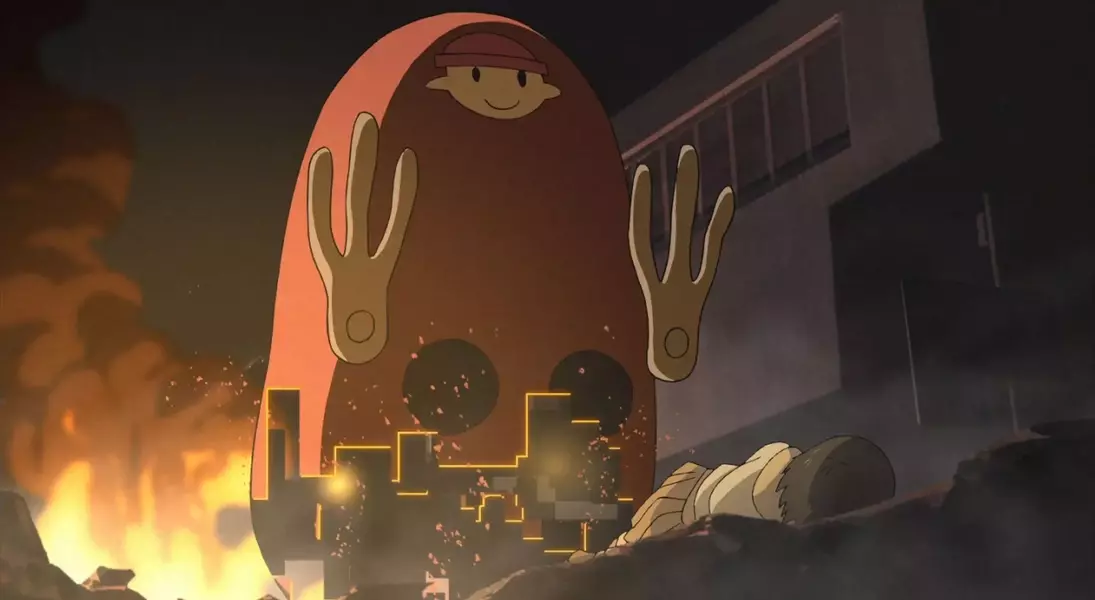
The story primarily follows Yuuko Okonogi, nicknamed Yasako, a warm and curious newcomer to Daikoku City who, after a personal tragedy, joins a group of children exploring these hidden digital dimensions. Among them is Yuuko Amasawa, known as Isako, an initially reserved character whose obsessive quest to cross into 'the other side' of the network to find her missing brother gradually unveils the series' emotional depth. What begins as a lighthearted adventure involving mischievous kids evading antivirus programs called 'Sachi'—digital entities resembling bowling pins—soon transforms into a poignant exploration of loss and the echoes of human emotion within technological systems. The series expertly shifts from a seemingly whimsical AR mystery to a narrative steeped in sorrow, human connection, and the very nature of digital existence.
Unlike earlier sci-fi works that depicted cyberspace as a separate realm one would enter, Den-noh Coil innovatively portrays the internet as an invisible stratum directly integrated into reality. This digital layer hovers over everyday locations—streets, schools, and neighborhoods—like a phantom world beneath the surface. As the children delve deeper into the city's glitches and uncover the mysteries within, they confront the profound question of whether digital spaces possess the capacity to encapsulate human emotions as effectively as they store data. A powerful illustration of this theme is Isako's journey into an obsolete network connected to an old hospital system. Here, surrounded by corrupted data and decaying digital architecture, she becomes less of a hacker and more a wanderer through a fading memory, underscoring the series' exploration of grief and digital legacy.
Even almost two decades after its initial release, Den-noh Coil remains a compelling and often overlooked work in anime. Its enduring relevance lies not only in its accurate foretelling of augmented reality's technological advancements but also in its profound understanding of the emotional weight inherent in living within intertwined digital and physical worlds. The series masterfully articulated the idea that the internet is not merely an escape, but an invisible force that quietly shapes our streets, memories, and most importantly, our relationships, long before smart glasses, AR gaming, and algorithmic spaces became staples of modern life.
