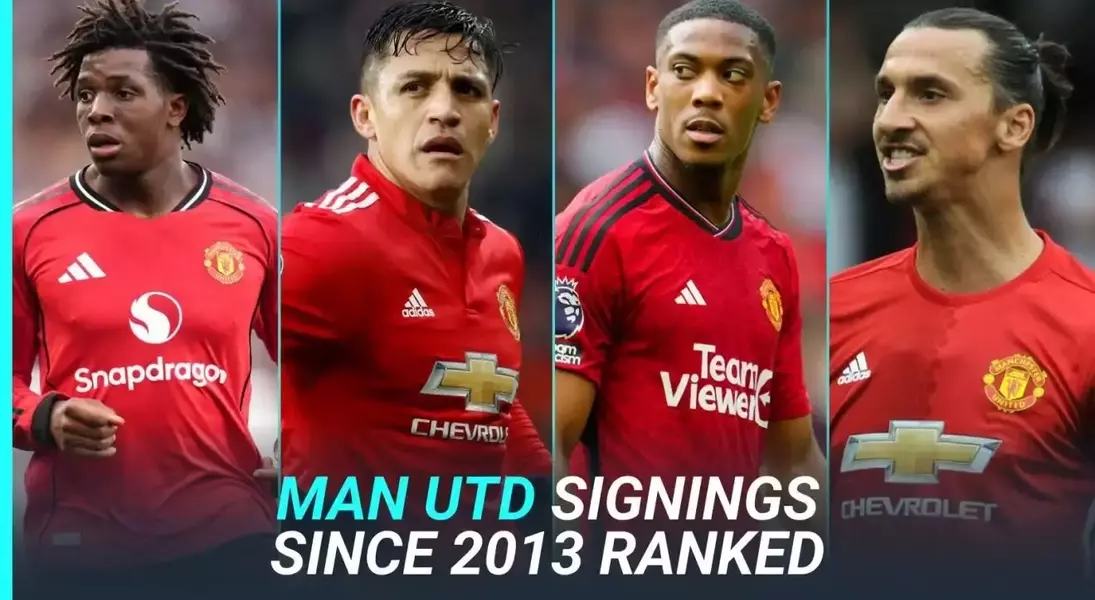
Since the departure of legendary manager Sir Alex Ferguson in 2013, Manchester United has embarked on an unprecedented spending spree, acquiring 74 players for an astonishing sum approaching £2 billion. This significant financial outlay, however, has not translated into consistent on-field success, with the club failing to secure a Premier League title and frequently fluctuating in and out of Champions League contention. A recent assessment of these acquisitions reveals a mixed bag of fortunes, with very few truly impactful signings amidst numerous costly disappointments. This extensive review evaluates each player's contribution, providing a critical perspective on the club's transfer strategy over the past decade.
The era following Ferguson's retirement has been marked by a staggering revolving door of talent. Many high-profile arrivals, such as Alexis Sanchez and Jadon Sancho, who commanded astronomical fees and wages, failed to replicate their previous form, becoming shadows of their former selves at Old Trafford. Their struggles exemplify the broader challenges faced by the club in integrating new players effectively. Similarly, significant investments in figures like Antony and Rasmus Hojlund have yielded minimal returns, with both players enduring challenging stints that have raised serious questions about their valuation and suitability for the team.
The financial ramifications of these transfers are substantial. Players like Angel Di Maria and Romelu Lukaku, despite their undeniable talent, proved to be expensive missteps, with the club often having to offload them at a loss. Even shrewd signings, such as the initial loan of Radamel Falcao, failed to ignite the team, underscoring a systemic issue beyond individual player quality. The constant churn of players, with many staying for only short periods before moving on, indicates a lack of long-term vision and stability in recruitment. This incessant turnover has hindered the development of a cohesive squad, contributing to the club's inconsistent performances and its ongoing search for a winning formula.
Among the countless acquisitions, a select few have stood out as genuine successes. Bruno Fernandes, for instance, has been a consistent creative force and a beacon of quality since his arrival. His impact, alongside the surprising effectiveness of free transfers like Zlatan Ibrahimović and the promising potential shown by academy graduates turned first-team players such as Alejandro Garnacho, offers a glimpse into what astute recruitment can achieve. These exceptions, however, underscore the broader narrative of underperformance and overspending that has plagued Manchester United in the post-Ferguson era. The club's recent leadership, including the backing of new manager Ruben Amorim with substantial transfer funds, signals a continued effort to rectify past mistakes, yet the path to regaining dominance remains arduous.
Ultimately, Manchester United's transfer history since 2013 paints a sobering picture of substantial investment not aligning with commensurate success. While a few individuals have made positive contributions, the overwhelming majority of signings have fallen short of expectations, leaving the club in a perpetual state of rebuilding. The challenge for the Red Devils lies not just in attracting top talent, but in ensuring that these players integrate seamlessly and perform at a level that justifies their considerable cost, transforming the club's fortunes from a period of relative decline to a resurgence of its former glory.
