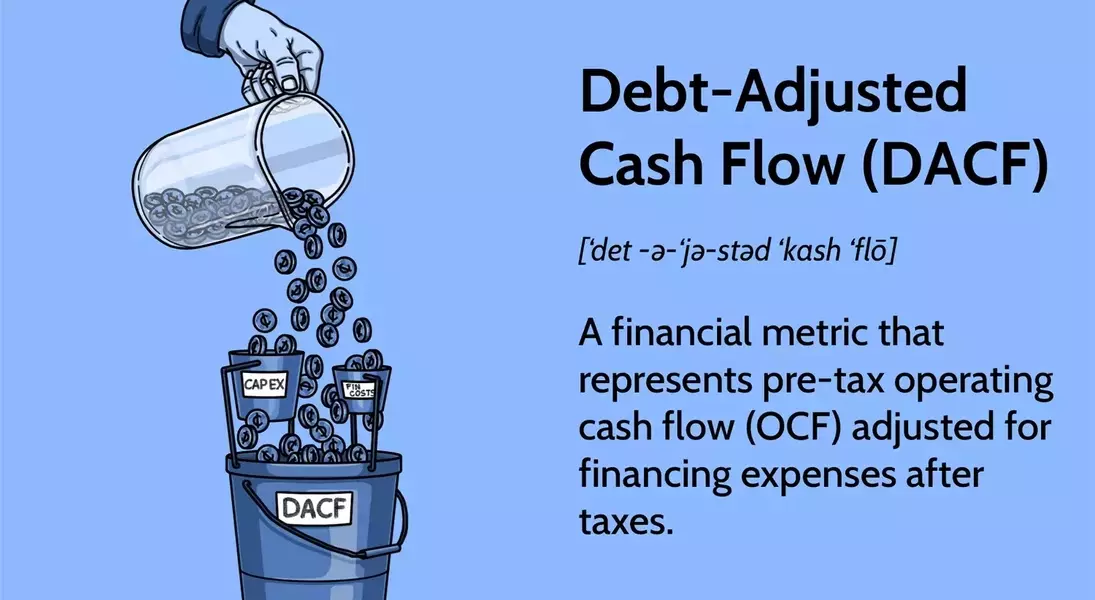
Debt-adjusted cash flow (DACF) is a pivotal financial metric predominantly employed to assess companies within the oil and gas industry. This measure integrates pre-tax operating cash flow with post-tax financing costs. A key advantage of DACF is its ability to normalize the impact of diverse accounting methods, particularly concerning exploration expenses, ensuring a more consistent comparison between companies.
DACF is crucial for accurate company valuation, as it helps analysts overcome distortions caused by varied capital structures. For instance, a high debt load might make a company appear undervalued when using traditional metrics like the Price/Cash Flow (P/CF) ratio. DACF rectifies this by factoring in the after-tax cost of debt, thereby providing a clearer picture of financial performance. The calculation involves adding cash flow from operations to after-tax financing costs.
The Enterprise Value to Debt-Adjusted Cash Flow (EV/DACF) ratio further refines valuation in the oil and gas sector. Enterprise Value, a comprehensive measure of a company's worth, accounts for market capitalization, debt, and cash reserves. By dividing EV by DACF, analysts can perform a more equitable comparison of companies, regardless of their debt levels or exploration accounting nuances. This makes EV/DACF a superior metric to EV/EBITDA for this industry, as it explicitly addresses the specific financial characteristics of oil and gas firms.
Understanding and applying financial metrics like DACF empowers stakeholders to make more informed decisions, fostering transparency and fairness in financial markets. Embracing rigorous analytical tools helps in accurately gauging a company's intrinsic value, promoting sound investment strategies and contributing to a robust economic environment.
