
The vision of a fully integrated, responsive living space, where technology seamlessly adapts to your needs, is rapidly becoming a reality. Artificial intelligence is poised to redefine our domestic environments, transforming them into intelligent ecosystems that anticipate and cater to human behavior.
Unlocking the Future: The AI-Powered Home Experience
The Evolution of Smart Living: From Automation to Intuitive Environments
The ultimate aspiration for a smart home is an ambient computing experience, where technology operates imperceptibly in the background, foreseeing and fulfilling your requirements without explicit commands. Imagine lights activating upon your entry, doors unlocking as you approach, or coffee brewing just as you wake. This represents the proactive dwelling: a setting that intuitively adjusts to its residents, prioritizing their well-being, comfort, and security. Despite significant advancements, contemporary smart homes often struggle with complexity, instability, and intrusive features, falling short of this seamless ideal.
AI's Breakthrough Moment: Transforming the Smart Home Landscape
As artificial intelligence continues to reshape every technological domain, it marks a pivotal juncture for the smart home. The emergence of sophisticated AI agents, leveraging advanced language and visual processing capabilities, holds the key to transitioning from a command-and-control paradigm to an immersive, adaptive living space reminiscent of science fiction. This shift promises a future where homes respond to every desire, akin to a sentient companion.
Pioneering AI Applications: Enhanced Security and Predictive Actions
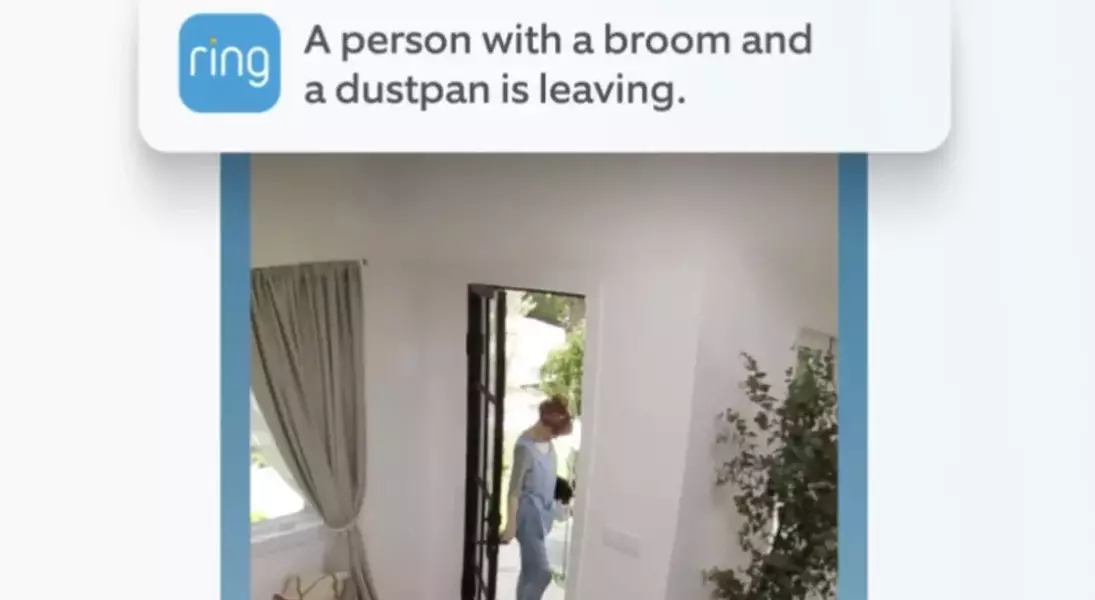
While the complete realization of this vision is still distant, the IFA consumer electronics show in Berlin is expected to feature numerous companies outlining their strategies for achieving it. Amidst a wave of AI-centric announcements, particular attention will be paid to innovations that genuinely enhance product functionality, intelligence, and user-friendliness, while robustly safeguarding local and private data. Early indications of AI's potential are already visible in smart home solutions. For example, contemporary security cameras equipped with advanced visual language models can now provide descriptive alerts, such as identifying a \"brown chicken pecking in the garden,\" offering far more practical information than a generic \"motion detected\" message. Similarly, intelligent doorbells can differentiate between a package delivery and its removal, and when integrated with security systems, can even facilitate secure access for trusted individuals, like a neighbor, to place deliveries inside your home.
Beyond Basic Automation: The Next Generation of AI-Driven Convenience
While machine learning has long been a component of smart home technology, as exemplified by thermostats that learn routines or voice assistants offering proactive suggestions, the current wave of large language model (LLM) and visual language model (VLM) powered assistants, such as Amazon's Alexa Plus and Google's Gemini for the Home, possesses the capacity to elevate this experience to unprecedented levels. Achieving the truly integrated and responsive living environment we envision necessitates the advanced contextual understanding and awareness that these sophisticated AI systems can provide.
Data Sovereignty: Ensuring Privacy in the Intelligent Home
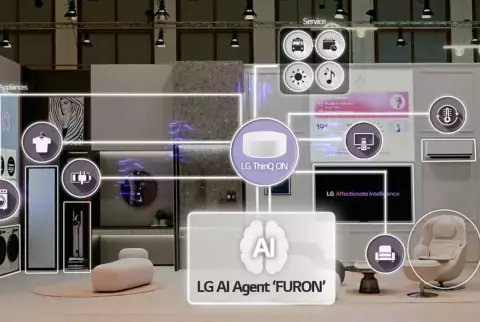
Leading technology companies like Amazon, Google, Samsung, and LG are actively developing platforms that orchestrate and analyze data from a multitude of in-home sensors, appliances, cameras, and devices. These systems are evolving beyond mere command execution, capable of identifying patterns, automating routines, and anticipating household needs based on learned behaviors and predefined automations. This can manifest in simple conveniences, such as automatically brewing coffee when you wake or closing blinds as you sleep, to more complex functions like proactive appliance maintenance or optimized energy consumption management. For instance, LG is highlighting its \"Affectionate Intelligence\" powered by the FURON AI Agent, while Samsung is emphasizing its SmartThings platform's synergy with its Home AI system to streamline home automation. However, the proliferation of these AI-powered platforms raises significant privacy concerns. Many current implementations rely on cloud-based processing, meaning sensitive household data—details about occupants and their activities—may not remain entirely within the home. Nevertheless, unlike mobile applications, home systems do not inherently require constant cloud connectivity. Edge AI processing, where data is analyzed locally, is becoming increasingly feasible as technology matures. A key focus for future development, particularly in privacy-conscious regions like Europe, will be on smart home applications that leverage local AI models to maintain data privacy.
Building the Foundation: Infrastructure and Interoperability Challenges
A significant obstacle to realizing this comprehensive smart home vision lies in its underlying infrastructure. For a residence to truly respond to its occupants, a pervasive network of sensors and data collection points is essential, a challenge that South Korean appliance manufacturers are already tackling. A recent innovation from Doma, a company founded by the creators of the August smart lock, introduces an AI-driven system that utilizes hardwired mmWave sensors throughout the home to predict user actions. Capable of detecting even subtle movements like breathing, this technology can monitor nearly every activity within a home. However, expecting widespread adoption of new sensors across existing homes presents a considerable hurdle, making such solutions more suitable for new constructions or extensive renovations. A more accessible approach would involve utilizing devices already prevalent in our homes. For example, Philips Hue is rumored to be developing \"MotionAware\" sensing, which would repurpose the radios in its existing light bulbs to function as motion detectors. This innovation could enable lights to adjust based on occupancy, and the sheer volume of data collected by such a network offers immense potential for developing truly proactive and ambient smart homes. Furthermore, the open-source interoperability standard, Matter, is crucial for connecting diverse smart devices, creating a unified platform for future AI agents. Cameras will also play a vital role in AI-powered homes, providing rich visual data for advanced interpretation by VLMs. Companies like Amazon and Google, with their established Ring and Nest camera ecosystems, hold a strategic advantage in this area, which likely explains Apple's increasing interest in home security cameras.
Navigating the Path Forward: Balancing Innovation with Trust
While we await the full realization of these futuristic concepts, more targeted applications of AI can enhance existing smart home functionalities by streamlining complex operations. For instance, chatbots integrated into smart home applications, as seen with Govee and Aqara, simplify feature access and routine creation, eliminating the need for tedious manual configurations. Philips Hue's new AI assistant exemplifies this, allowing users to simply describe desired lighting effects, such as \"set good makeup lighting on my vanity,\" rather than navigating complex menus or relying on often-unreliable voice commands. As new products from companies like Reolink, Aqara, and Eufy emerge, further innovations leveraging AI's contextual understanding and knowledge are anticipated, promising more intuitive and secure home environments. However, questions regarding AI's reliability in the smart home persist. A single error in an AI-controlled environment can have significant repercussions, and recent incidents highlight these risks. Therefore, a critical focus for companies must be on implementing robust safeguards for this technology. The smart home doesn't require artificial general intelligence; rather, it needs sufficient intelligence to transition from reactive responses to proactive anticipation, finally delivering on the long-held promise of a truly intelligent and responsive living space.
