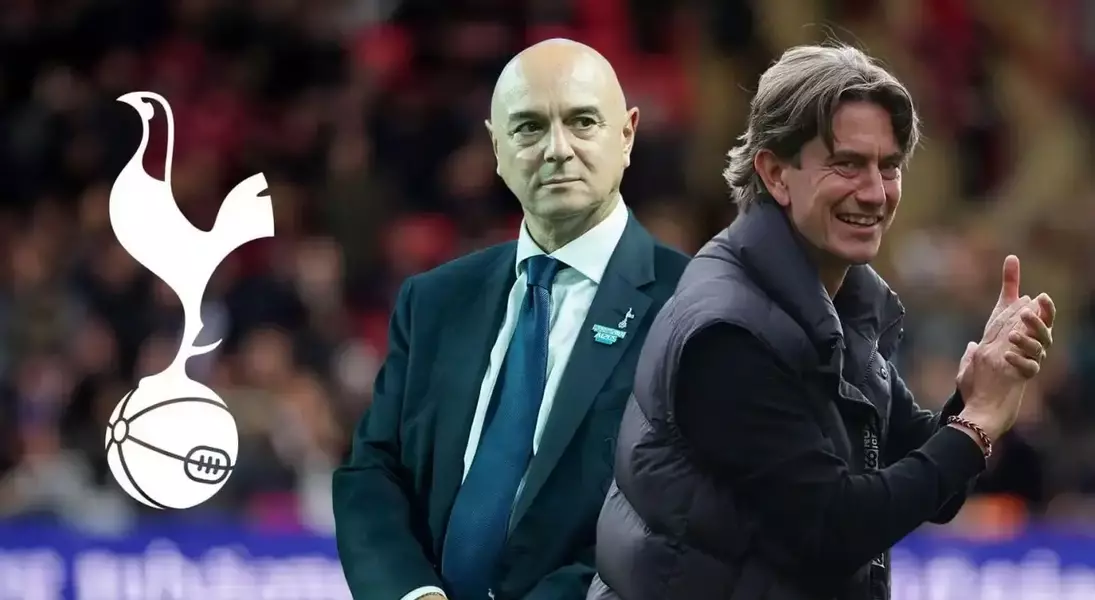
Tottenham Hotspur Chairman Daniel Levy has notably shifted his public engagement strategy this summer, moving from a typically reserved approach to a more vocal stance. This change is evident in his recent extensive discussions, including a notable conversation with Gary Neville, and an earlier in-house interview with Tottenham's media team. Such openness signifies an attempt by Levy to address and perhaps reframe perceptions surrounding his leadership and the club's direction. His public discourse frequently emphasizes the undeniable quality of Tottenham's infrastructure, particularly its world-class stadium. However, this focus often overlooks the deeply rooted desire among the club's fervent fanbase for tangible on-field success, specifically the acquisition of major trophies. This divergence in priorities highlights a fundamental disconnect: while Levy champions business achievements and facility development, supporters yearn for the elation that only silverware can bring, a sentiment perhaps undervalued by the club's strategic planning.
Daniel Levy's Evolving Public Engagement
Daniel Levy, the chairman of Tottenham Hotspur, has recently demonstrated a remarkable departure from his traditionally private and reserved public persona. This summer has seen him engage in a series of significant, lengthy public appearances, most notably a comprehensive interview with Gary Neville for "The Overlap" and a prior discussion with the club's internal media team. This newfound openness is highly uncharacteristic for Levy, who has historically limited his communications to brief program notes or occasional letters on the club's website. The mere existence of such extensive interviews signals a deliberate shift in strategy, suggesting a perceived need to explain his decisions and address the club's trajectory directly to a wider audience. This move is particularly striking given his previous reticence, indicating a critical juncture where Levy feels compelled to articulate his perspective.
The motivation behind Levy's increased public visibility appears to be a desire to justify the club's direction and his leadership, especially following recent controversial decisions. His interviews often touch upon predictable themes such as the merits of state ownership and the exceptional nature of Tottenham's stadium. However, the significance lies not in the content of these remarks, but in the very act of making them. After unintentionally becoming the focal point of discussion even with "softball" questions from his own team, it reflects a bold choice to subject himself to external scrutiny. This unprecedented level of engagement suggests that Levy feels a pressing need to convey his side of the story, particularly in a season marked by significant changes and lingering questions about the club's competitive aspirations. It highlights an evolving approach to fan communication, moving beyond perfunctory updates to a more direct, albeit still controlled, dialogue.
The Quest for Silverware Versus Business Priorities
The perennial trophy drought at Tottenham Hotspur has created a palpable tension between the club's business-oriented leadership and its passionate fanbase. While Daniel Levy is lauded for his acumen in developing the club's financial and infrastructural assets, particularly the state-of-the-art stadium, there is a clear gap in understanding the supporters' profound yearning for a major trophy. Levy's occasional references to past successes, such as the Europa League victory, often seem to be an attempt to convince himself rather than the fans, who prioritize the emotional triumph of winning silverware over impressive facilities or financial stability. This disconnect became acutely apparent following the departure of former manager Ange Postecoglou, a move that, while rational from a purely business standpoint given the team's league position, baffled many fans who cherished the unique emotional resonance of the previous season's achievements.
Tottenham's strategy under Levy has consistently prioritized the Premier League and Champions League, often treating domestic cup competitions as mere distractions rather than genuine opportunities for glory. This ingrained philosophy has resulted in a perplexing record, with the club failing to advance beyond the fifth round of the FA Cup since 2018, and inconsistent performances in the League Cup. Despite managerial changes, the prevailing message from the top has seemingly been to focus on the more prestigious competitions, inadvertently devaluing the domestic cups in the eyes of players and coaches. Yet, last season, an unforeseen convergence of circumstances made pursuing a "lesser" trophy the strategically sound decision for all facets of the club—business, on-field performance, and fan morale. The unexpected success in the Europa League, securing a Champions League spot, was a remarkable turnaround, an "absolute Homer" that salvaged the season against all odds. Nevertheless, Levy's struggle to fully grasp the profound significance of this achievement for the fanbase underscores the deep-seated philosophical chasm between the club's corporate vision and the emotional core of its support.
