The path to motherhood, often idealized, can unfold with unforeseen complexities, fundamentally reshaping one's relationship with daily routines and passions. This account delves into one individual's personal evolution, charting her experiences from a challenging pregnancy and the unexpected diagnosis of gestational diabetes, through the initial bewildering days of caring for a newborn, to a profound re-engagement with cooking. This journey highlights how the mundane acts of preparing food became a metaphor for the deeper, often unglamorous, yet ultimately rewarding work of nurturing a new life and rediscovering one's self.
The Culinary Reawakening Amidst Maternal Challenges
In the spring, before the onset of her pregnancy, the author had cherished cooking as a frictionless delight, a joyful endeavor easily woven into her daily life. However, this idyllic image shattered with the news of her impending motherhood. What she had envisioned as a period of radiant beauty quickly transformed into a challenging ordeal, marked by debilitating nausea that persisted far beyond expectations, and a subsequent diagnosis of gestational diabetes. This medical revelation compelled a drastic alteration in her diet, turning meal preparation into a series of scientific experiments focused on blood sugar management rather than culinary pleasure. Foods she once enjoyed, such as lentils and sweet potatoes, became culprits in elevating her glucose levels, making the kitchen a place of frustration rather than creativity.
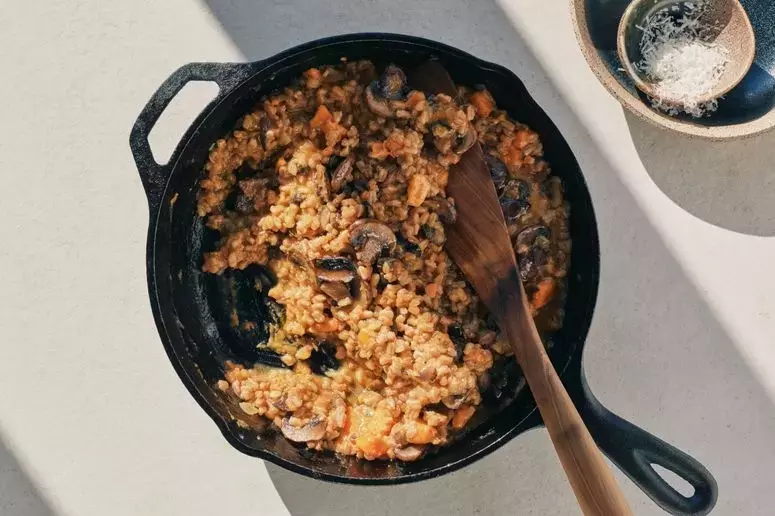
The arrival of her son, a tiny, initially unfamiliar being, marked another profound shift. The anticipated celestial bond was replaced by the raw, exhausting reality of caring for a newborn. Love, in this new phase, manifested as tireless 3 AM pacifications, the painful learning curve of nursing, and constant vigilance over a sleeping infant. Yet, amidst these demanding moments, fleeting instances of transcendence emerged, such as witnessing his first sneeze or his discovery of raindrops. It was within this crucible of exhaustion and nascent love that a surprising desire to return to the kitchen began to stir. Perhaps it was a yearning to infuse her child's infancy with beauty, a nostalgic pull for her former self, or simply a weariness of takeout meals. Whatever the reason, her return to cooking was not about grand inspiration, but about methodically executing the simple, repetitive actions: chopping onions, adding mushrooms, seasoning with rosemary and sweet potato, and eventually, incorporating farro and vegetable broth. This methodical approach, detached from the pressure of perfection, culminated in a satisfying meal—a rustic blend of mushroom risotto and sweet potato paella—crafted not from passion, but from persistence.
This renewed engagement with cooking mirrored her evolving understanding of maternal love. Both were less about innate knowledge and more about diligent, sometimes messy, application. Just as she learned to love her son by performing the necessary tasks of caregiving, she relearned to cook by embracing the process, even when it involved burnt onions or improvisational cream cheese dips. This transformation suggests that true connection, whether with a child or a craft, often blossoms not from an initial spark of affection, but from the steady, unwavering commitment to the daily acts of nurturing and creation. Today, her son, now a "weird, funny, miraculous" little being, enjoys the food she prepares, and the feelings this evokes are, as she describes, "something else entirely."
This journey beautifully illustrates that both motherhood and the art of cooking, at their core, are less about idealized perfection and more about the persistent, often messy, but deeply rewarding process of doing. It reminds us that embracing the practical, sometimes challenging, aspects of care and creation can lead to profound self-discovery and an enriched understanding of love.
