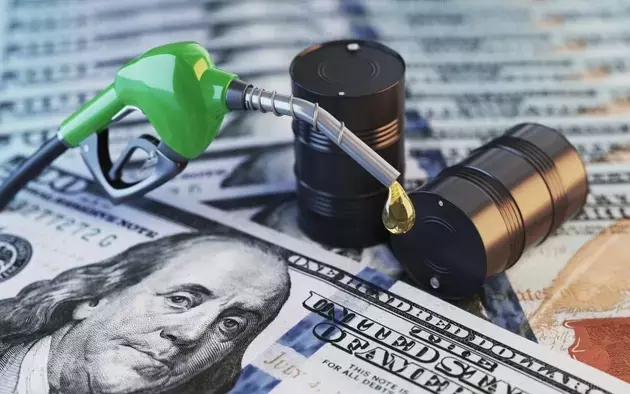
In a remarkable turn of events, crude oil prices have soared beyond the $100 per barrel threshold, marking a pivotal moment in the global energy landscape. This dramatic increase is largely attributed to unexpected supply disruptions in key Middle Eastern oil-producing nations. The rapid ascent, characterized by a single-session gain exceeding 13%, reflects heightened market sensitivity to geopolitical instability and its direct impact on crude availability. The market's aggressive reaction underscores the critical balance between global demand and a suddenly constrained supply, pushing prices to levels not seen in some time and triggering concerns about broader economic implications.
This surge is not merely a reflection of short-term trading enthusiasm; it is underpinned by tangible reductions in output from major producers. As the market grapples with these unforeseen cuts, the emphasis shifts to the sustainability of current production levels and the potential for prolonged supply chain challenges. Traders are recalibrating their expectations, factoring in a new reality where geopolitical risks can swiftly translate into significant price movements. The intensified volatility highlights the fragility of global energy security and the intricate web of factors that influence crude oil valuations.
Middle East Unrest Fuels Oil Price Escalation
The recent dramatic ascent of West Texas Intermediate (WTI) crude oil beyond the $100 per barrel mark can be primarily attributed to escalating geopolitical tensions and subsequent supply disruptions in the Middle East. Specifically, significant production cuts in Iraq, Kuwait, and the United Arab Emirates have severely curtailed the global oil supply. These unforeseen reductions have sent shockwaves through the market, with prices soaring by over 13% in a single trading session, reflecting a profound shift in the supply-demand balance. The immediate impact of these events has been a rapid repricing of oil, as traders factor in a prolonged period of reduced output and heightened uncertainty.
The current crisis is characterized by more than just immediate supply shortages; it points to a broader concern about the stability of oil production in a region vital to global energy. The curtailment of output from these nations has directly translated into a tightening of the global oil market, pushing prices upwards with remarkable speed and intensity. This rally highlights the vulnerability of the energy market to geopolitical events, as even localized disruptions can have far-reaching effects on international oil benchmarks. The market is now keenly watching for any further developments that could exacerbate or alleviate these supply pressures, with the potential for continued volatility remaining high.
Technical Indicators Confirm Robust Market Momentum
Beyond the fundamental drivers of supply disruption, technical analysis of WTI crude oil prices provides compelling evidence of the strength behind its recent breakout. The commodity has decisively breached key resistance levels, moving well above the $80-85 range, a psychological and technical barrier that had previously capped price advancements. This breakthrough is further reinforced by WTI trading significantly above all major Exponential Moving Averages (EMAs), a strong indicator of sustained bullish sentiment and momentum. The consistent positioning above these long-term averages suggests that the upward trend is deeply entrenched and supported by broad market participation.
A critical technical signal is the daily Relative Strength Index (RSI) climbing above 90. Such an extreme reading typically indicates that an asset is overbought, often preceding a period of consolidation or correction. However, in the context of crisis-driven rallies, an exceptionally high RSI can also signify extraordinary momentum, where market participants are aggressively buying despite elevated prices due to an urgent perception of scarcity or future price increases. While this does suggest a potential for short-term retracements or sharp intraday declines, the overriding influence of geopolitical factors and ongoing supply concerns could well sustain these elevated price levels for an extended duration, defying conventional technical expectations for a pullback.
