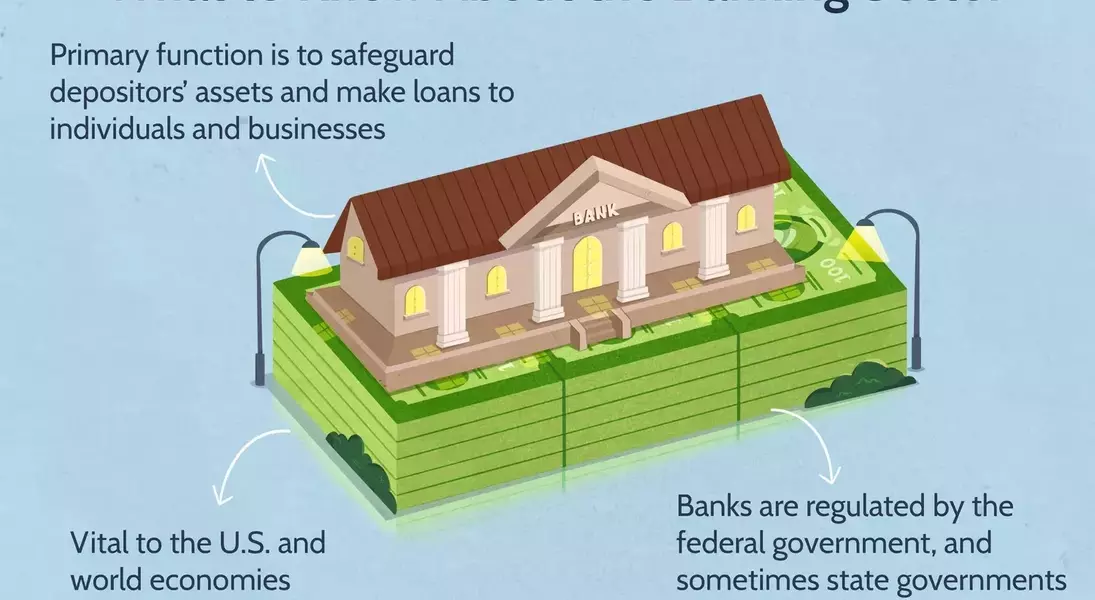
The banking sector, a cornerstone of the global economy, is essential for economic stability and growth. It serves as a vital intermediary, channeling funds from savers to borrowers, thereby facilitating investment, consumption, and overall economic activity. Understanding its operations, impact, and regulatory framework is crucial for comprehending modern financial systems.
Driving Economic Progress: The Indispensable Role of Financial Institutions
Understanding the Core Function of the Banking Sector
The financial services industry, particularly the banking sector, forms an indispensable component of the global economic framework. Its primary functions involve safeguarding financial assets and extending credit, which are vital for stimulating economic expansion. Commercial banks, in particular, manage trillions in assets, underscoring their profound influence. This sector is not only a catalyst for economic growth but also a potential source of systemic risk, necessitating robust regulatory oversight to preserve financial stability. Throughout history, banking has evolved from rudimentary asset-holding to a sophisticated ecosystem integral to contemporary commerce and investment landscapes.
Exploring the Dynamics of Banking Operations
At its heart, banking involves the fundamental process of financial asset management, a practice rooted in ancient civilizations that has dramatically expanded beyond merely storing valuables. Essentially, banks accept deposits from both individuals and businesses. Depositors can access their funds based on account terms, with some accounts offering interest payments. These accumulated deposits are then lent out to other individuals and businesses, generating interest income for the bank. The bank's profitability stems from the margin between the interest paid to depositors and the higher interest charged to borrowers. Banks are also subject to capital and liquidity requirements, which ensure they can absorb losses and meet withdrawal demands, though these regulations vary and evolve over time.
The Extensive Economic Footprint of Financial Institutions
The banking sector plays a pivotal role in the modern economy. Depository institutions, including commercial banks, savings institutions, and credit unions, are the leading providers of private credit in the United States. They facilitate essential transactions such as home and car purchases, and provide businesses with capital for equipment, expansion, and payroll. Additionally, banks offer secure platforms for individuals to store their money, often with deposit insurance, and earn interest. The widespread use of credit and debit cards, facilitated by banks, is crucial for daily transactions and the growth of e-commerce. Furthermore, the banking sector is a significant employer, providing livelihoods for millions. However, as demonstrated by events like the subprime mortgage crisis and the Great Recession, unchecked risks within the sector can cause substantial economic damage. Consequently, regulatory reforms are continually implemented to mitigate future crises.
The Landscape of Bank Regulations and Oversight
Given the critical economic function of banks, governments globally implement stringent regulations to curb excessive risk-taking. In the U.S., various federal and state agencies, such as the Federal Reserve System, the Office of the Comptroller of the Currency, and the Federal Deposit Insurance Corporation (FDIC), oversee different types of banks. Credit unions have their own regulatory bodies, including the National Credit Union Administration, which regulates federal credit unions and supervises federally insured ones, alongside state-level authorities for state-chartered institutions. Some banks operate under a dual regulatory structure, being supervised by both state and federal agencies.
Key Stakeholders in the Financial Industry
The banking industry encompasses a wide spectrum of institutions, from small local banks to massive international financial conglomerates often labeled as "global systemically important banks" or "too big to fail" due to their potential impact on the global economy. As of a recent assessment, the largest U.S. banks by consolidated assets include JPMorgan Chase Bank, Bank of America, Citibank, Wells Fargo Bank, and Goldman Sachs Bank USA, with the top four each holding over a trillion dollars in assets.
Why Financial Institutions Are Called Banks
The term "bank" is believed by some to originate from the Italian word "banca," which referred to a bench or counter where early money changers conducted their business activities.
Diverse Categories of Financial Institutions
Common types of financial institutions include central banks, commercial banks, and investment banks. Central banks, like the U.S. Federal Reserve, are governmental entities responsible for managing a nation's money supply. Commercial banks are the traditional institutions that accept deposits and issue loans, familiar to most individuals. Investment banks primarily assist corporations with issuing securities and securing financing. Many large financial entities combine both commercial and investment banking services.
The Evolution of the U.S. Banking Landscape
As of March 2026, there were 3,763 FDIC-insured commercial banks in the United States. This number represents a significant decline over several decades, largely due to mergers, consolidation, and bank failures. For instance, in 1984, the U.S. boasted over 14,000 commercial banks, highlighting a trend towards fewer, larger institutions.
The Concluding Perspective on the Banking Sector
The banking sector’s dual role as a driver of economic prosperity and a potential source of systemic risk, exemplified by historical events like the Great Recession, necessitates vigilant regulatory frameworks. These regulations are designed to prevent financial crises and safeguard the broader economy, adapting continuously to the evolving financial landscape.
