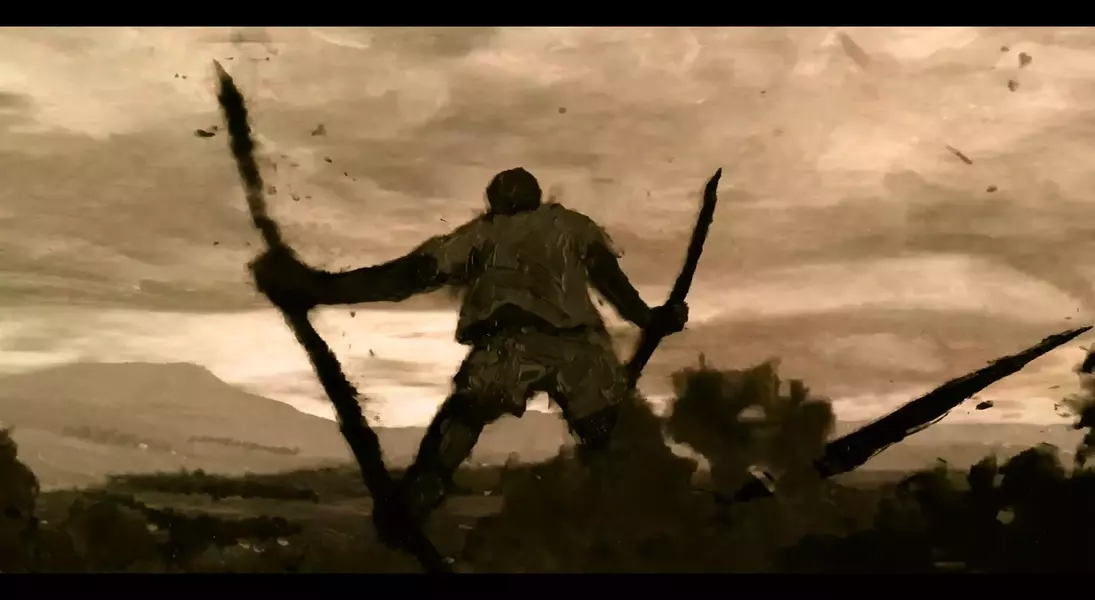
Antoine Fuqua's documentary, 'Troublemaker,' presents a concise yet compelling narrative of Nelson Mandela's life, primarily through his own recorded words. While the film's brief duration necessitates a somewhat superficial treatment of historical events and supporting figures, its impact is significantly amplified by the striking animated sequences crafted by Thabang Lehobye. This visual artistry not only bridges gaps in archival footage but also imbues the historical account with a dreamlike quality, enhancing the emotional resonance of Mandela's struggle and leadership. The documentary, despite its limitations, serves as an essential primer for new generations on Mandela's enduring legacy and the fight against apartheid.
However, the film's structure, heavily reliant on interviews conducted for Mandela’s autobiography, leads to an undeniable hagiographic tone. The introduction of Mac Maharaj as a late-stage talking head, while providing crucial insights into Mandela's incarceration, creates an abrupt shift in narrative style. This unexpected alteration in storytelling, coupled with the executive producer role of Maharaj, raises questions about narrative consistency and editorial choices. Despite these structural eccentricities, the film effectively conveys the timeless significance of Mandela’s story, albeit in a streamlined format that leaves many details to be further explored outside its 94-minute runtime.
The Condensed Chronicle of a Revolutionary Life
Antoine Fuqua's 'Troublemaker' aims to encapsulate the profound life of Nelson Mandela within a mere 94 minutes, a task that inherently suggests a rapid progression through significant historical moments. The documentary, whose title derives from Mandela's Xhosa birth name, 'Rolihlahla,' meaning 'troublemaker,' functions as a summary rather than an in-depth analysis. This concise approach means that many pivotal events and influential personalities are touched upon briefly, often leaving the audience with a desire for more detailed context. The film's narrative pace could feel brisk for viewers unfamiliar with the intricacies of South African history and Mandela’s expansive journey, potentially necessitating external research to fully grasp the complexities of the era and the struggle.
The film constructs its narrative primarily from interviews with Mandela conducted by journalist Richard Stengel in the early 1990s, forming the backbone of his autobiography, 'Long Walk to Freedom.' While this foundation provides an authentic voice to the storytelling, it naturally steers the documentary toward a celebratory portrayal of Mandela, sidestepping deeper critical examination of his ideology or the broader impact of his contemporaries. The brevity also means that key figures in his life, including his wives Evelyn and Winnie, are mentioned without the comprehensive development needed to understand their individual contributions and challenges. Despite these constraints, the documentary reinforces the enduring relevance of Mandela's fight against injustice, underscoring that his narrative remains vital and impactful for contemporary audiences.
Animated Visions: Elevating Mandela's Story
A standout feature of 'Troublemaker' is the innovative use of animation by South African artist Thabang Lehobye. This artistic intervention is not merely supplementary but fundamentally enhances the narrative, providing visual depth and emotional resonance that traditional archival footage alone might not achieve. Lehobye’s bold and evocative animations serve multiple purposes: they symbolize abstract concepts, such as the duality of Mandela's name, and vividly reconstruct private historical moments, like the initial meeting between Mandela and F.W. de Klerk, which were unrecorded by cameras. These animated sequences are crucial in visualizing portions of Mandela's life that lack photographic or video documentation, lending a unique and artistic interpretation to his journey.
The integration of Lehobye’s animation with existing television news and archival footage, facilitated by Jake Pushinsky's seamless editing, creates a fluid and often dreamlike viewing experience. The transitions between different visual mediums—from historical black-and-white footage to richly colored animation—are executed with dissolves that subtly blur the lines between past and present, documented reality and artistic reimagination. This blend allows the documentary to convey the gravity of Mandela's experiences, particularly his years as a political prisoner on Robben Island, in a manner that is both informative and emotionally engaging. The animation thus not only compensates for the documentary's condensed timeframe but also leaves a lasting impression, making it a memorable element of the film's storytelling strategy.
