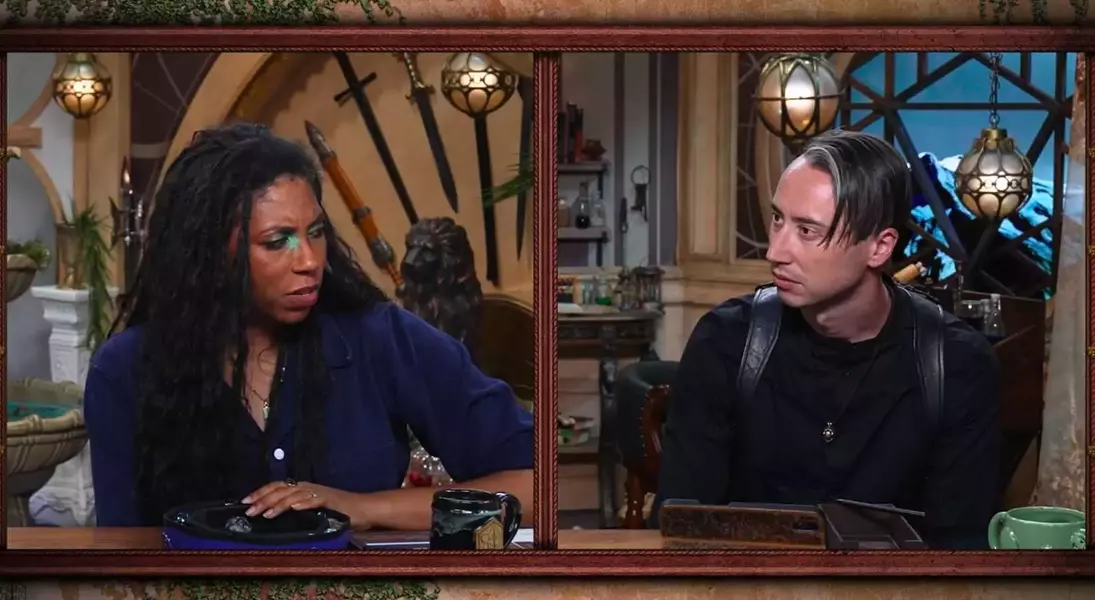

Initially, fans expressed confusion regarding the true nature of Critical Role's Campaign 4, especially after its announcement of adopting a West Marches format. The innovative concept of a rotating player roster stirred excitement, yet the early, heavily plot-driven episodes seemed to depart from the traditional sandbox storytelling inherent to West Marches. Nevertheless, after delving 17 episodes deep into the campaign, the strategic brilliance behind Critical Role's decision has become clear, showcasing how the show is ingeniously harnessing the distinctive qualities of the West Marches style.
Critical Role's Campaign 4: A Deep Dive into West Marches Mechanics
In the realm of Dungeons & Dragons, the West Marches campaign, conceptualized by game designer Ben Robbins, offers a distinctive approach to narrative progression. This format was conceived not only as a creative choice but also as a practical solution to the common challenge of player availability. By accommodating a large group with flexible scheduling, the campaign world organically evolves through the diverse choices of its participants. For instance, one week a group might embark on a quest to aid a goblin village, and the following week, a different group could find themselves grappling with the repercussions of those very actions when encountering the same goblins.
The interactive nature of players, who exchange information in communal areas or engage outside the game, allows for a vibrant sandbox environment. This fosters an organic growth of history and interconnected details, where seemingly minor clues discovered in one location can unveil significant revelations elsewhere. With a sprawling cast of 13 players in Campaign 4, Dungeon Master Brennan Lee Mulligan faced the formidable task of managing such a vast ensemble. Following an initial four-episode prelude, the players were strategically divided into three distinct tables: the Soldiers, the Seekers, and the Schemers. What initially appeared to be merely a rotating player dynamic, in line with West Marches, has, after a sufficient number of episodes, unveiled a more profound interplay where the decisions of one group intricately influence the others.
A notable instance of this interconnectedness emerged in episode 14, “A Bridge Too Far,” featuring the Seekers. This episode’s events were directly shaped by the outcome of episode 3, “The Snipping of Shears,” where future Soldiers Wicander Halovar (Sam Riegel) and Tyranny (Whitney Moore) liberated Teor Pridesire (Travis Willingham) from Halovar’s demonic tailors. In episode 14, the Seekers found themselves ambushed by the demonic aspirants of the Halovar family and Tyranny’s sisters—Agony, Enmity, and Cruelty. Initially, the presence of these sisters in the druidic encampment of Schongarten was puzzling until Mulligan, during episode 14’s “Cooldown,” elucidated the intricate behind-the-scenes machinations stemming from the Soldiers’ decisions. When the Soldiers ventured into the woods in episode 5, Mulligan’s dice roll determined whether the sisters could track them. This roll led to a pivotal decision that sent the demons on an entirely different path due to their lack of precise information.
This intricate web of details re-emerged in a recent episode, “The Place of Wings,” where the party unearthed more about the Halovars and the Tachonis family’s use of other noble houses as experimental subjects. The Halovars’ celestial heritage had been hinted at in Campaign 4’s overture and through the inherent abilities of Wicander and his family. Even the mysterious filament transported by the Candescent Creed was clarified as celestial blood, used to augment magical capabilities. However, within the game’s narrative, the Seekers remain oblivious to the Halovar secrets, just as the Soldiers and Schemers are unaware of the Seekers’ discoveries regarding the Tachonis family’s ambition to forge their own celestial being.
The unfolding of these revelations within the West Marches framework is particularly compelling, especially in the world of Aramán, where magic operates differently from Critical Role’s established world of Exandria. In previous campaigns, characters could transmit direct messages across vast distances using spells like Sending, making information scarcity almost non-existent. This is not the case here, compelling knowledge to be exchanged through traditional means: face-to-face conversations or written correspondence. This deliberate communication gap among the cast heightens the tension not only for the players at each table but also for the captivated audience. For instance, while we know that the Schemer Halandil Fang (Liam O’Brien) has an informant within House Einfasen—who may very well have been discovered and eliminated—the Seekers and Soldiers remain completely unaware. Far from being frustrating, this communication void has only deepened my appreciation for Critical Role’s embrace of the West Marches playstyle, sparking further curiosity about its sustained impact as the campaign progresses. Ultimately, each table’s actions, whether positive or negative, will profoundly influence the others in the long run. While this dynamic among the three tables diverges from the original vision of West Marches, it seamlessly integrates within the structure Critical Role has crafted for Campaign 4.
The strategic implementation of the West Marches format in Critical Role's Campaign 4 offers a compelling example of how traditional tabletop role-playing mechanics can be adapted to create a richer, more dynamic narrative experience. The deliberate fragmentation of information and the organic ripple effect of individual group decisions not only foster a heightened sense of realism within the campaign world but also elevate viewer engagement. This approach underscores the value of player agency in shaping an evolving storyline, reminding us that sometimes, the absence of instant knowledge can be a more powerful narrative tool than its ubiquitous presence. It prompts a fascinating question about the future of collaborative storytelling in role-playing, where carefully managed chaos can lead to the most memorable and interconnected adventures.
