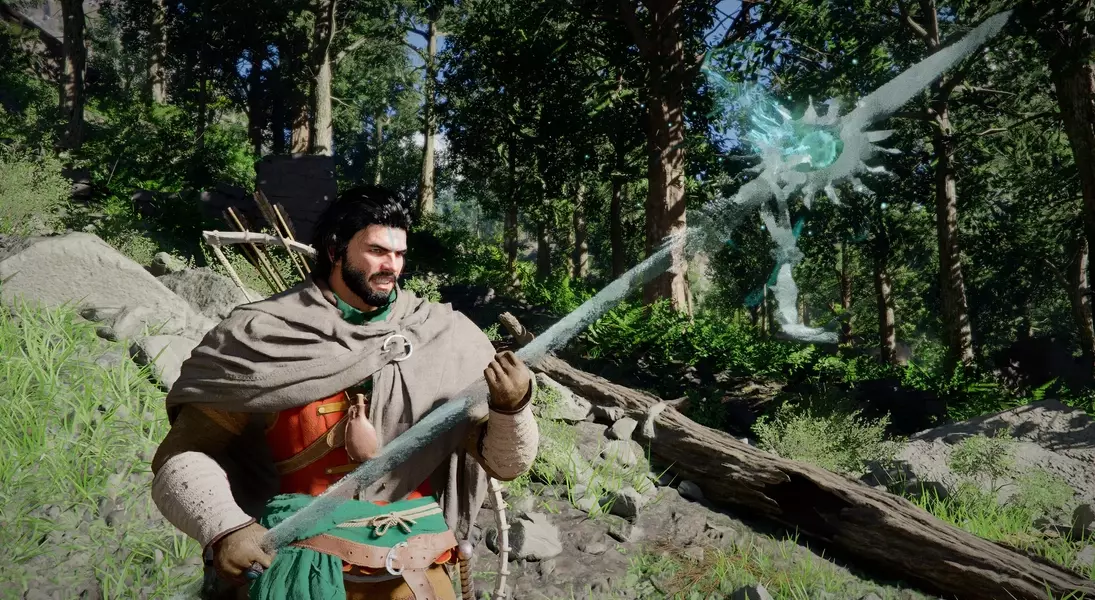
Crimson Desert, an expansive open-world role-playing game, continues to grapple with persistent graphical inconsistencies and performance bottlenecks, even after several recent updates. Players are encountering notable frame rate reductions when enabling Ray Reconstruction, primarily because this setting mandates maximum ray tracing, leading to a substantial impact on performance. Furthermore, disabling Ray Reconstruction introduces peculiar visual artifacts, particularly affecting the appearance of in-game armor. Despite these challenges, the game's unique creativity still captivates players, who remain hopeful for future optimizations from the development team.
Ongoing Graphical Challenges in Crimson Desert
Since its launch, the highly anticipated open-world RPG, Crimson Desert, has presented players with a captivating virtual world, yet it has also been plagued by a series of graphical issues. A central concern revolves around the game's Ray Reconstruction feature. When activated, Ray Reconstruction, designed to enhance visual realism, forces the game's ray tracing settings to their highest level. This aggressive implementation, unfortunately, results in a drastic reduction in frame rates, diminishing the overall smoothness of gameplay. For instance, a player equipped with an RTX 5070 Ti graphics card reported experiencing less than half the expected frame rate with Ray Reconstruction enabled, compared to a setting just one step below.
While recent patches have addressed some visual glitches, such as the 'neon-green grass' anomaly that appeared when Ray Reconstruction was off, other visual problems persist. Specifically, players have noticed significant degradation in the appearance of reflective objects, particularly armor. With Ray Reconstruction disabled and lighting set to a performance-friendly 'Cinematic' level, armor models, which are intended to appear polished and detailed, often render with a low-polygon, dated aesthetic. This issue is particularly frustrating for players who frequently view their character's armor, as it detracts from the immersive experience.
Moreover, the game's overall image quality, regardless of the chosen settings, tends to be noisy. This is compounded when utilizing DLSS Performance mode, a technique often employed to mitigate performance drops. The ray-traced lighting, seemingly based on a lower-resolution pre-upscaled output, contributes to this visual noise once the upscaler is engaged. An example of this is the noticeable 'boiling' effect around character details, such as Kliff's sleeves, during movement. A previous patch aimed to improve visual quality and address texture animation quirks by changing the DLSS Ray Reconstruction preset. However, some players perceive this alteration as a downgrade, noting that the new preset struggles with fast-moving elements, exacerbating the visual artifacts. This creates a dilemma for players: either endure substantial performance hits with enhanced visuals or opt for compromised visual fidelity for better frame rates.
Despite these technical shortcomings, the game's developers, Pearl Abyss, appear committed to providing robust patch support. The community remains optimistic that future updates will introduce further visual enhancements and performance improvements, ultimately refining the player experience and allowing the game's inherent creative strengths to shine without graphical distractions.
The ongoing graphical challenges in Crimson Desert highlight the intricate balance game developers must strike between cutting-edge visual technologies and optimized performance. While the ambition to incorporate advanced features like Ray Reconstruction is commendable, its implementation must be carefully calibrated to ensure a consistent and enjoyable player experience across various hardware configurations. This situation underscores the importance of thorough testing and iterative refinement in game development, particularly for visually demanding open-world titles. Players' continued engagement, despite these issues, speaks to the game's underlying appeal, yet sustained technical problems could dampen long-term enthusiasm. Moving forward, a concerted effort to optimize the graphics pipeline and address lingering visual bugs will be crucial for Crimson Desert to fully realize its potential and deliver on its promise of a truly immersive adventure.
