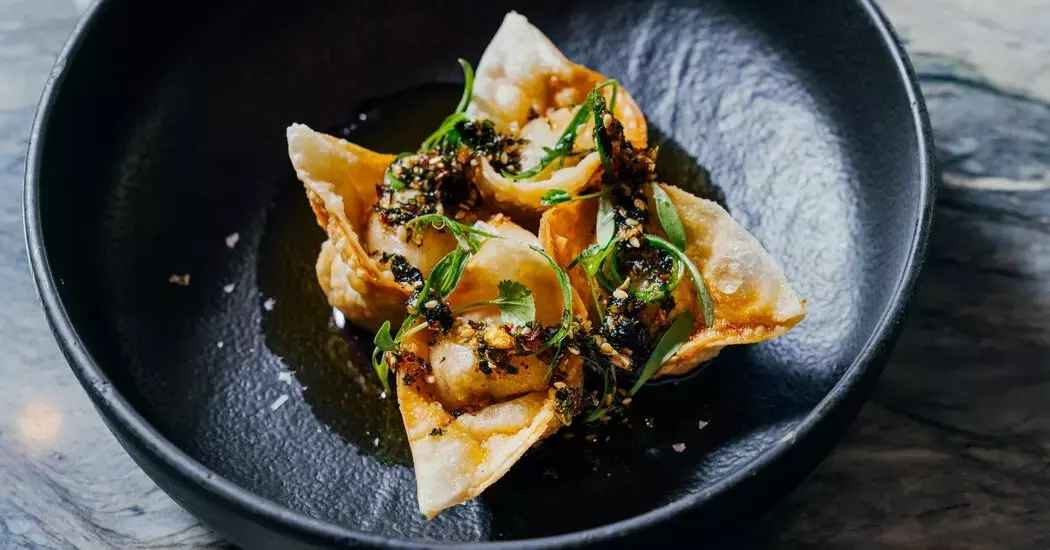
The beloved Chinese-American dish, crab Rangoon, has found its way into various culinary creations across the United States. This appetizer, known for its creamy, sweet, and spicy elements, has inspired chefs to incorporate it into unexpected dishes such as bagels, pizzas, and doughnuts. The fusion of flavors has resonated with diners, leading to innovative menu items that blend Eastern and Western cuisines. For instance, Sidedoor Bagel in Indianapolis introduced a special featuring crab Rangoon-inspired ingredients inside an everything bagel, which became an instant hit with over 100 orders in just two days. Similarly, Fong’s Pizza in Des Moines offers a popular pizza topped with cream cheese, imitation crab, and wonton strips, further showcasing the versatility of this iconic dish.
Josh Greeson, owner of Sidedoor Bagel, grew up enjoying crab Rangoon from local Chinese-American restaurants in rural Indiana. His childhood memories influenced his decision to experiment with the dish, resulting in the creation of the Mr. Krabs Rangoon bagel. The combination of crab-flecked cream cheese, fried egg, Sichuan pepper flakes, and sweet chili sauce within a spicy everything bagel proved to be a winning formula. Greeson noted that the dish's popularity stems from its ability to harmonize different flavors, making it adaptable to various culinary interpretations. Despite its name suggesting origins in Rangoon (now Yangon, Myanmar), crab Rangoon is neither authentically Chinese nor made with real crab. Instead, it typically consists of surimi and cream cheese wrapped in wonton wrappers and deep-fried.
The history of crab Rangoon adds another layer of intrigue. It first appeared on menus in California during the late 1940s at Trader Vic’s, a restaurant chain influenced by Polynesian culture. Grace Lin, author of "Chinese Menu: The History, Myths and Legends Behind Your Favorite Foods," suggests that many Chinese restaurateurs tailored their offerings to appeal to American tastes. Since appetizers are not traditionally part of Chinese cuisine outside of banquets, crab Rangoon emerged as a response to this demand. Its popularity allowed restaurateurs to claim it as their own, ensuring survival in a competitive market. The dish's success has led to its incorporation into diverse dishes, from mozzarella sticks to pasta melts.
In Des Moines, Fong’s Pizza continues to honor the legacy of King Ying Low, Iowa's oldest Chinese restaurant, by serving Asian-inflected pizzas. One of their most sought-after offerings is a pizza featuring a cream cheese base, imitation crab, mozzarella, Asiago cheeses, and crushed wonton strips. According to Chris Mendenhall, a managing partner, this pizza outsells all others by a significant margin. The enduring appeal of crab Rangoon demonstrates how a single dish can inspire creativity and innovation in the culinary world, bridging cultural divides and delighting palates across the nation.
