Luxury timekeeping has witnessed a remarkable ascent in the popularity of meteorite dials, transforming watches into more than mere instruments for measuring time. These distinctive dials, fashioned from celestial debris, offer a tangible link to the vastness of space. The intricate Widmanstätten patterns etched into each piece are a testament to their cosmic journey, making every watch an individual work of art. Beyond their aesthetic appeal, these ancient rocks provide profound insights into the genesis of our solar system, intertwining the art of horology with the mysteries of the universe.
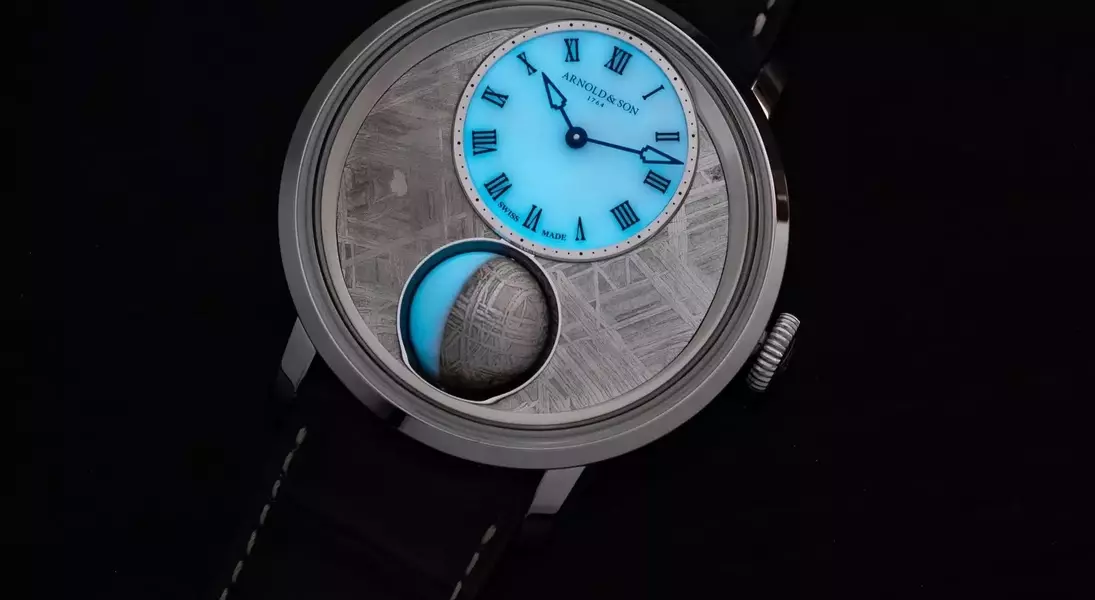
The appeal of meteorite-faced watches stems from several compelling factors. Foremost is the undeniable allure of owning a fragment of space, an object that has traversed billions of kilometers to reach us. This inherent coolness is amplified by the unique visual characteristics of the Widmanstätten pattern, a labyrinthine network of intersecting lines formed as molten iron and nickel slowly cooled in the vacuum of space over millennia. This natural phenomenon ensures that no two meteorite dials are identical, imbuing each timepiece with a singular identity that captivates collectors and enthusiasts alike. This fascination is shared by luxury brands like Rolex, Omega, and indie watchmakers such as Sartory Billard, all of whom have embraced the cosmic trend.
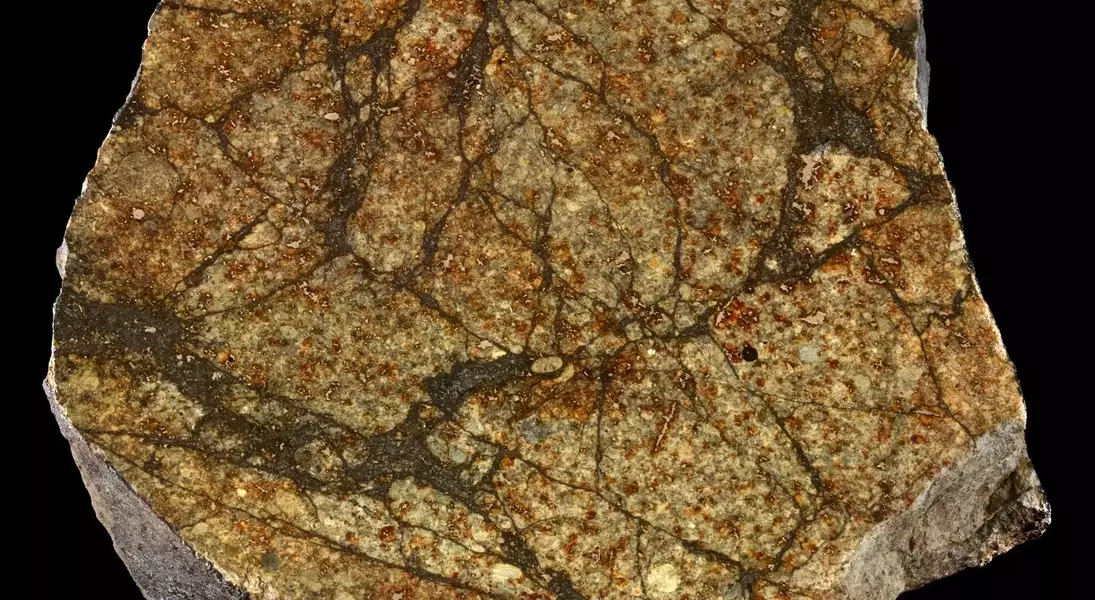
According to Philipp Heck, a distinguished research director at the Field Museum in Chicago, meteorites offer a unique lens through which to view nature, extending our understanding beyond Earth's atmosphere. The Field Museum boasts an impressive collection of over 12,000 meteorite specimens, ranging from fragments of the Moon and Mars to relics from the solar system's distant reaches. These extraterrestrial rocks, many of which formed alongside our solar system approximately 4.5 billion years ago, contain invaluable clues about the Earth's formation and the emergence of life, serving as ancient archives of cosmic history.
The meteorites typically utilized in watchmaking, primarily the Gibeon from Namibia and the Muonionalusta from Sweden, are iron meteorites. These are among the oldest known materials on Earth, predating our solar system by over 4.5 billion years. Watchmakers prefer these iron meteorites due to their relative ease of manipulation compared to more brittle types, and crucially, for their pronounced Widmanstätten patterns, which are perfectly suited for the compact surface of a watch dial. This material not only provides aesthetic beauty but also a robust and ancient foundation for a timepiece.
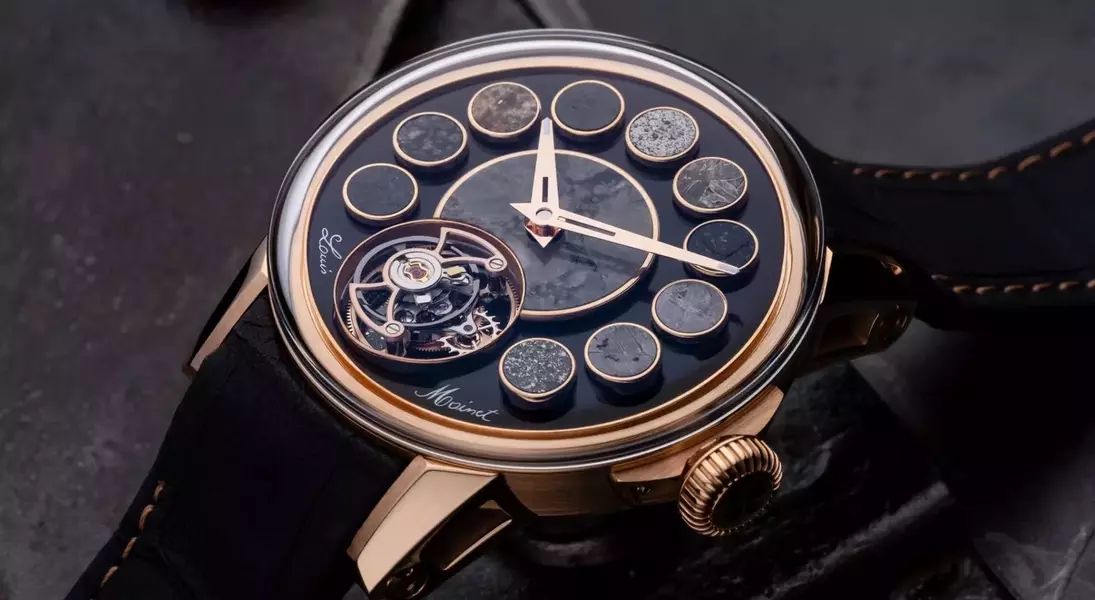
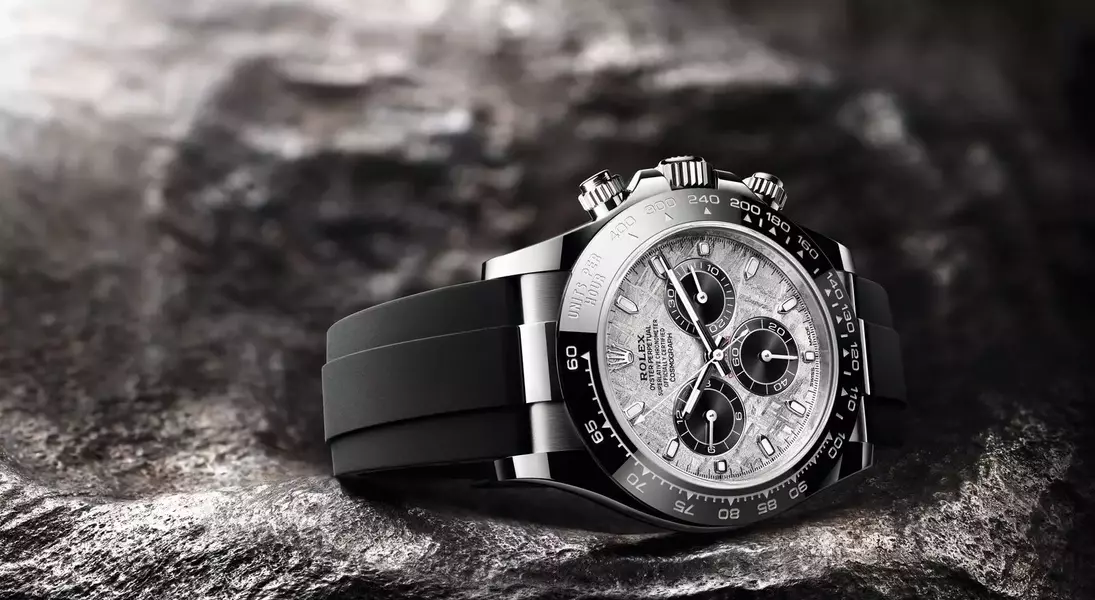
The pioneering use of meteorite dials in wristwatches dates back to 1986, when Corum introduced its Muonionalusta-dial Admiral. Rolex soon followed, incorporating Gibeon meteorite into its iconic Day-Date and Daytona models from the late 1980s to early 2000s. Other prestigious brands such as Omega, Cartier, and Jaeger-LeCoultre subsequently joined this trend. Among them, Louis Moinet has distinguished itself with an unparalleled dedication to meteorite integration, releasing 16 models since 2008. Jean-Marie Schaller, Louis Moinet's owner and creative director, expresses a deep fascination with these celestial travelers, noting their immense journey through the cosmos before their arrival on Earth. The brand's limited-edition Cosmopolis, featuring hour markers crafted from a dozen distinct meteorites, including lunar and Martian fragments, underscores this commitment. Schaller, an avid collector himself, views meteorites as profound storytellers, some carrying the earliest signs of life and witnessing the birth of our solar system. He describes holding such a stone as a humbling and inspiring experience, bridging the cosmic and human scales of existence.
A meteorite-dial watch offers more than just precise timekeeping; it provides a philosophical anchor. It serves as a constant reminder of our place within the grand cosmic narrative, juxtaposing the infinite expanse of cosmic time with the finite nature of human existence. As Schaller eloquently puts it, "A meteorite dial reminds us that time cannot be controlled; it can only be told." This integration of a 4.5 billion-year-old rock into a modern time-telling device creates a profound connection to the universe's antiquity, offering a unique perspective on the passage of moments and the vast history that precedes us.
