

The Corsair Vanguard Air 99 Wireless keyboard presents a compelling blend of robust construction and distinctive tactile feedback, albeit at a premium price point. Its design prioritizes a refined typing experience with low-profile optical keys, engineered for satisfying actuation. However, the absence of adjustable actuation, a feature increasingly common in modern gaming keyboards, and the questionable utility of its integrated LCD screen, which contributes to battery drain, may limit its appeal to a broader audience. While the keyboard's performance in high-intensity gaming scenarios is commendable, its ergonomic design and layout might not cater to all users for extended daily use.
Despite its high quality components and design, the keyboard faces a challenge in justifying its cost against alternatives that offer more advanced features like Hall Effect magnetic analog switches. The current economic climate further amplifies the perception of its steep price. The Vanguard Air 99 Wireless is an excellent choice for a specific demographic that values its unique key feel and premium build above all else, but its overall value proposition requires careful consideration for those seeking a more versatile or future-proof device.
Tactile Excellence Meets Design Peculiarities
The Corsair Vanguard Air 99 Wireless distinguishes itself with remarkable build quality and a satisfying typing experience, characteristics expected from a high-end peripheral. The meticulous attention to detail in its low-profile optical keys, featuring a gasket-mounted design and optimal 2.5mm travel distance, provides a smooth and responsive feel. This, coupled with five layers of sound-dampening, creates an auditory and tactile experience that is genuinely pleasant. The keyboard's solid aluminum casing and high-quality PBT keycaps further enhance its premium appeal, making it a robust and visually attractive addition to any desk setup.
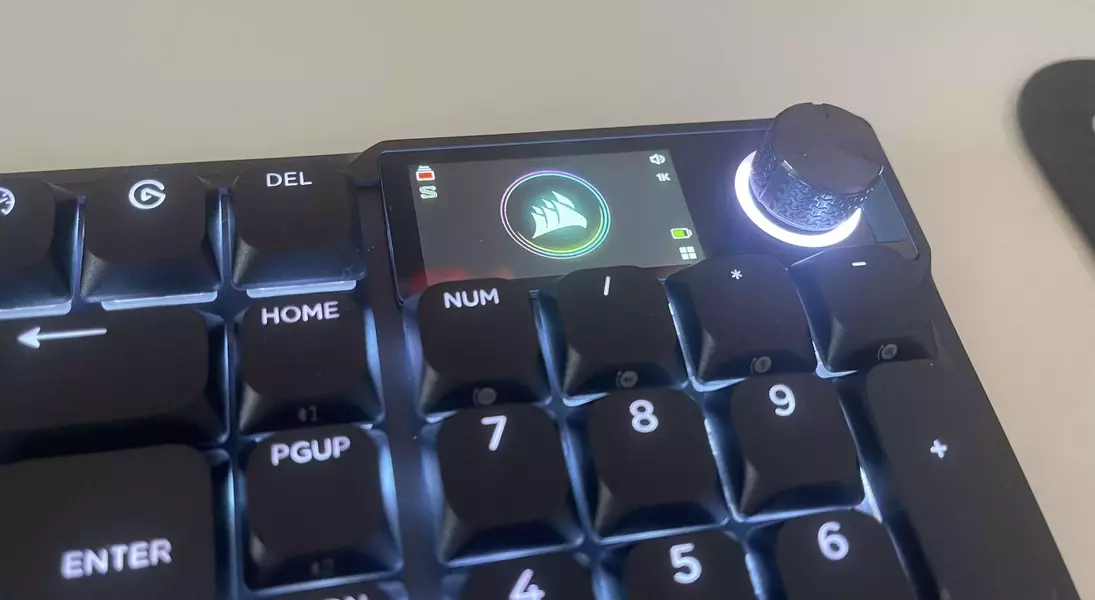
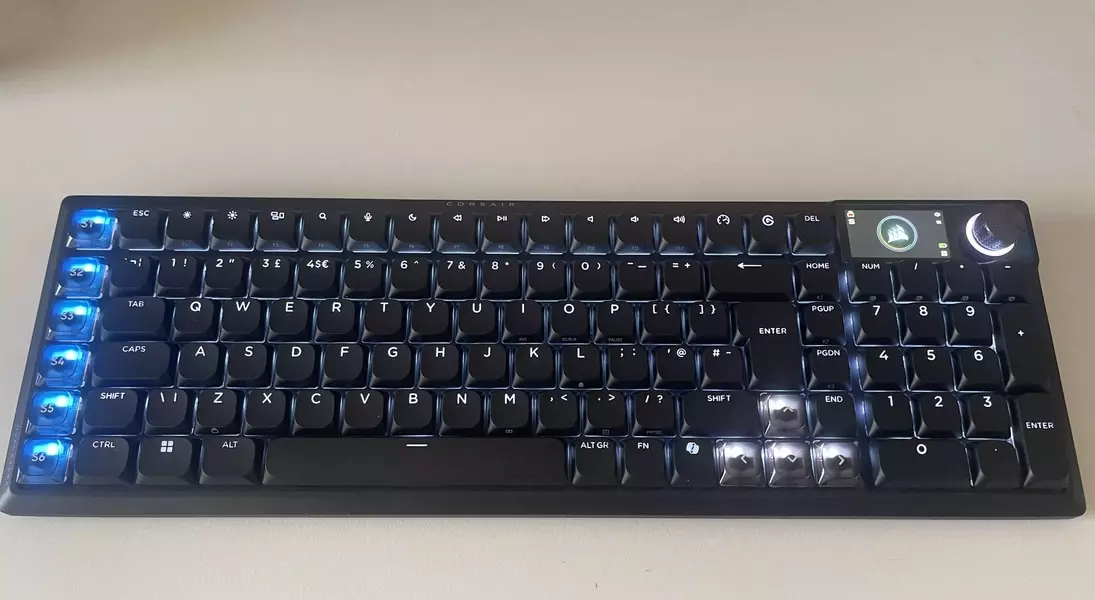
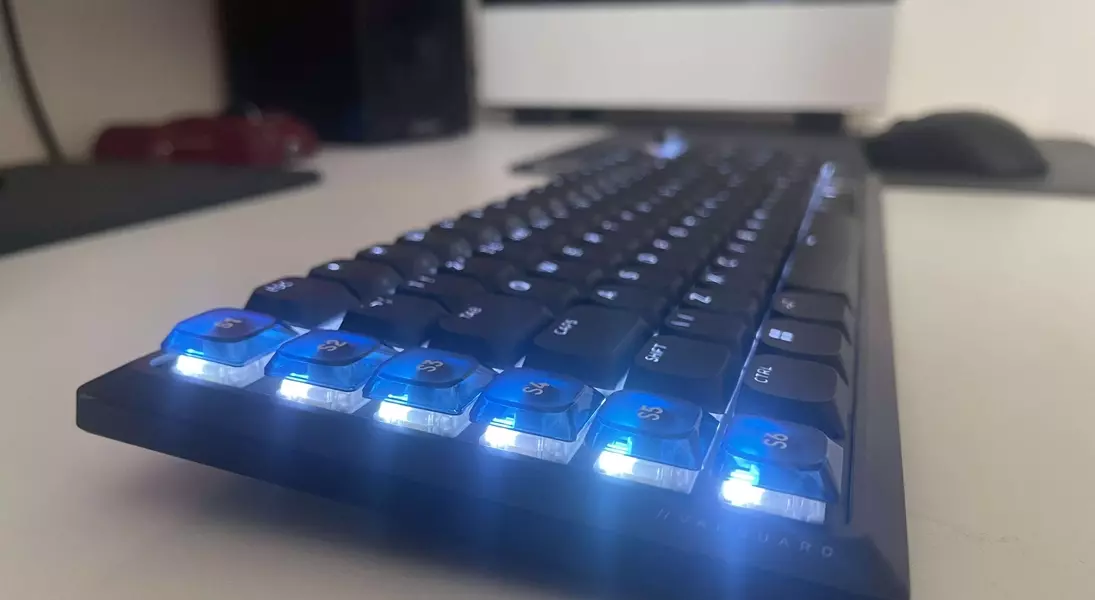
However, the inclusion of transparent directional arrow keys and macro hotkeys, which emit significantly more light than the rest of the board, introduces a design inconsistency. While this might aid in locating these specific keys, it raises questions about their practical utility, especially for functions like directional arrows that are less frequently used in modern computing contexts. This design choice, along with the limited functionality of the LCD screen, highlights a potential disconnect between aesthetic innovation and practical application, subtly detracting from an otherwise polished product.
Value Proposition and Ergonomic Considerations
The Corsair Vanguard Air 99 Wireless commands a considerable price, prompting users to weigh the unique benefits of its actuation feel against the absence of features found in competing models. The market's shift towards Hall Effect magnetic analog switches, offering adjustable actuation and faster inputs, positions the Vanguard Air 99 Wireless as a product that, while excelling in specific areas, may be perceived as lacking in cutting-edge technology. The integrated LCD screen, though visually modern, consumes battery power without offering substantial functional advantages, contributing to the overall cost without a proportional increase in utility.
From an ergonomic standpoint, the keyboard's 99% layout and specific key stacking may not be universally comfortable. While some users might adapt quickly, others, like the reviewer, may find themselves frequently miskeying or struggling with muscle memory, particularly during prolonged productivity tasks. This suggests that while the keyboard can perform admirably in short, intense gaming sessions, its design might not be ideally suited for all-day use across a variety of applications. Ultimately, the decision to invest in this keyboard hinges on individual preferences for tactile feedback and an acceptance of its design trade-offs in a rapidly evolving market.
