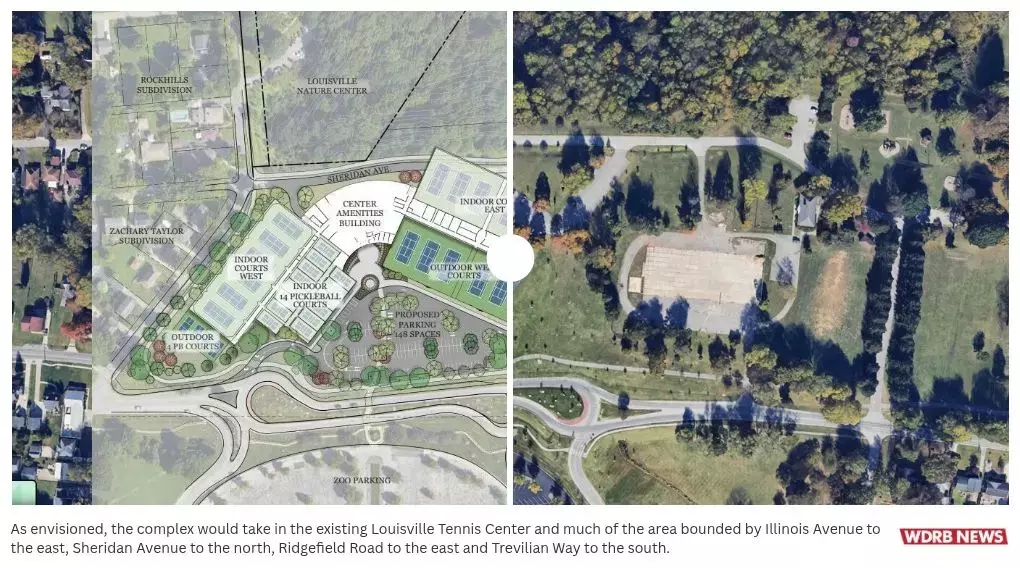
A significant controversy has unfolded in Louisville, Kentucky, regarding plans to construct a $65 million tennis and pickleball complex at Joe Creason Park. Backed by Democratic Mayor Craig Greenberg, the project aims to create jobs, boost tax revenue, and attract tourists. However, it has sparked opposition from some residents and park users who argue that public land should not be used for private developments. This week, two public meetings are scheduled to discuss the proposal, providing an opportunity for stakeholders to voice their concerns and support.
The proposed facility would encompass 25 acres of the park and include 36 tennis courts, 18 pickleball courts, a restaurant, health club, and sports medicine clinic. The venture is spearheaded by Kentucky Tennis & Pickleball Center Inc., a nonprofit entity established in April 2024. While supporters highlight the potential economic benefits and increased accessibility to racquet sports, opponents express worries about congestion, safety, and community input. The debate extends to questions over the transparency of planning processes and the allocation of municipal funds.
Mayor Greenberg emphasizes the importance of engaging with the community to refine the project. He acknowledges concerns but also highlights widespread support for the initiative. The planned development seeks to revitalize an area with a rich history in tennis, including hosting the Louisville Open in the 1970s. Proponents argue that this central location makes it ideal for serving the entire city population.
Despite assurances from developers about maintaining environmental integrity and minimizing disruptions, critics remain skeptical. Concerns have been raised about potential impacts on wildlife habitats, migratory bird patterns, and existing recreational spaces within the park. Some residents fear setting a precedent where public green spaces could be repurposed for commercial ventures.
As discussions continue, all eyes are on how the Metro Council will respond to the proposed $20 million municipal bond request. For the project to gain approval, proponents must demonstrate undeniable economic impact and secure broad-based community backing. Meanwhile, neighbors and advocates are gathering to express their views at upcoming meetings, aiming to influence the final outcome of this contentious proposal.
In conclusion, the future of Joe Creason Park hangs in the balance as differing perspectives collide over its proposed transformation. As stakeholders deliberate on the merits and drawbacks of this ambitious plan, one thing is clear: the decision made here will set a significant precedent for public land use in Louisville. Whether it becomes a beacon of progress or a symbol of misplaced priorities remains to be seen, contingent upon thorough evaluation and inclusive dialogue among all affected parties.
