In a move that has ignited considerable debate, the iconic Lincoln Memorial Reflecting Pool in Washington D.C. is currently undergoing a significant resurfacing project, transforming its traditional grey hue to a vibrant "American flag blue." This initiative, spearheaded by President Trump, aims to revitalize the 2,030-foot-long landmark within a week, at an estimated cost of $2 million. The swift and bold alteration has drawn a spectrum of opinions from residents and visitors alike, highlighting a broader discussion about urban aesthetics, historical preservation, and presidential influence on the nation's capital.
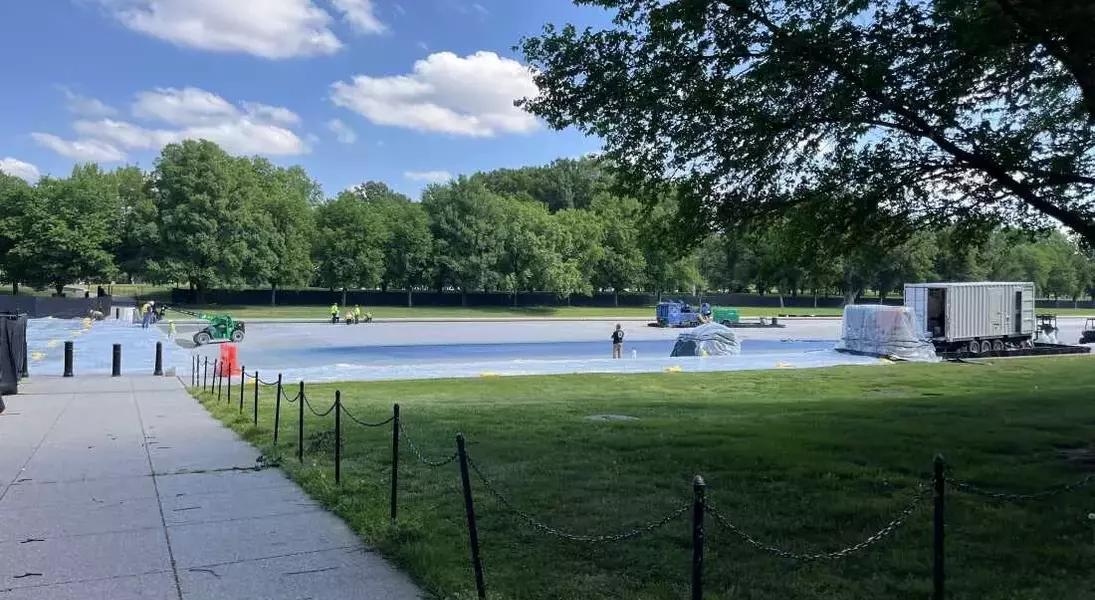
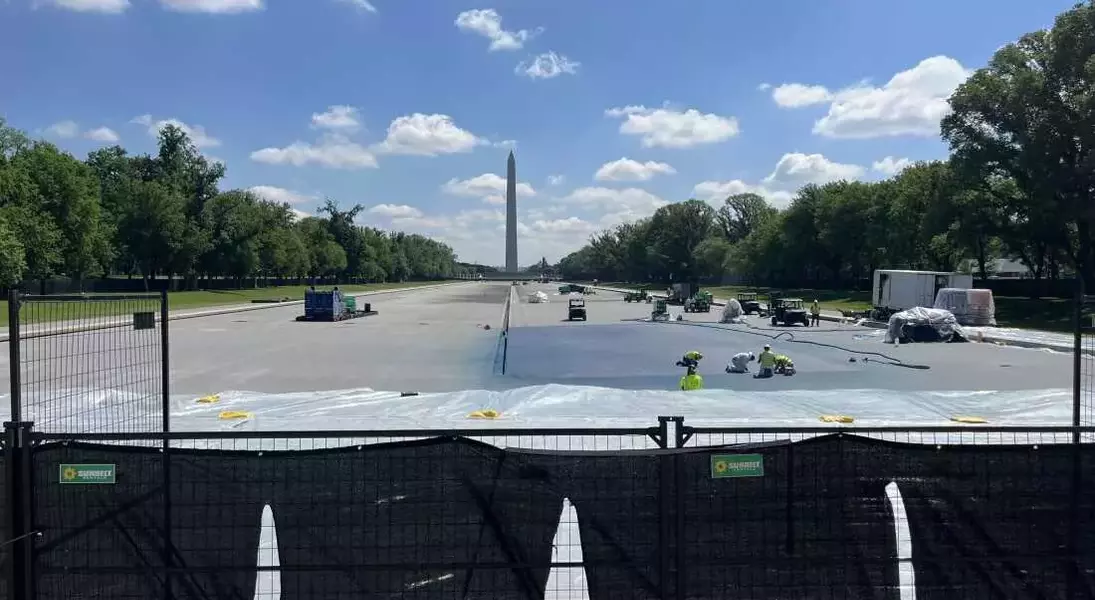
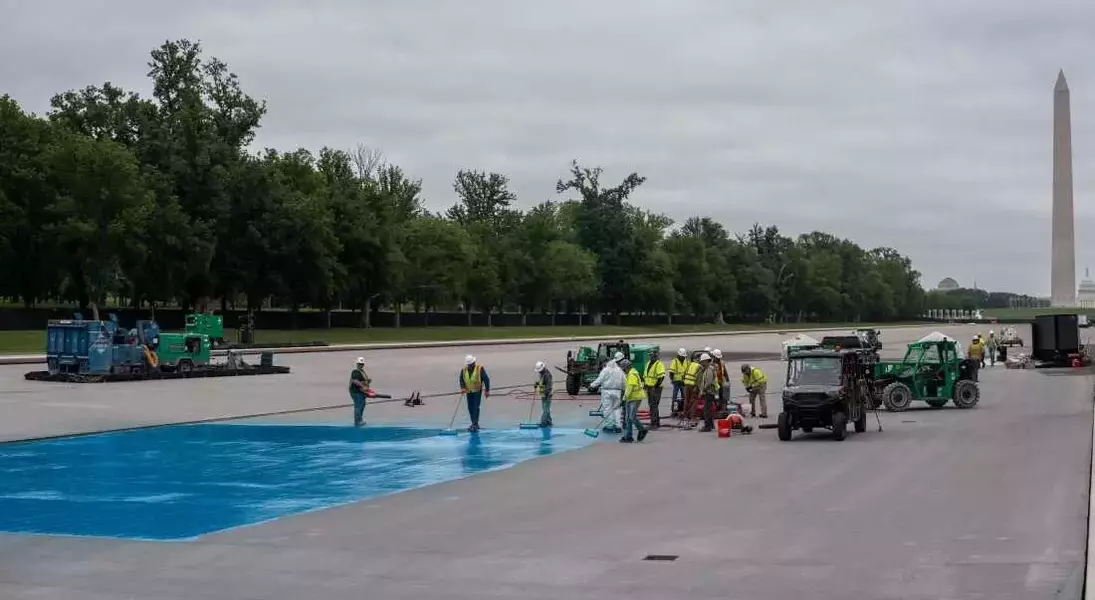
On a recent Monday morning, the normally bustling area around the Reflecting Pool presented an unusual sight: the vast basin lay completely empty, save for an assortment of construction equipment and workers meticulously spraying the base with a striking blue coating. This dramatic change captivated onlookers, including long-time D.C. resident Laurie Collins, who expressed skepticism about the project's ambitious timeline, predicting it would take far longer than the projected week. The National Park Service, responsible for the National Mall, has yet to provide detailed information regarding the project's schedule, expenses, or maintenance plans, leaving many questions unanswered.
President Trump publicly announced his intentions for the pool's makeover last Thursday, detailing his collaboration with experienced "pool builders" from his real estate background. His vision is to not only clean and repair the pool's structural issues but also to imbue it with a new color, specifically an "industrial-grade" material in "American flag blue." He initially favored a "turquoise like in the Bahamas" but was persuaded to opt for the more patriotic shade. Photos shared on Truth Social by Trump himself showcased workers applying a dark blue coating, which appeared more muted when observed firsthand by NPR reporters, with laborers shifting from rollers to sprayers.
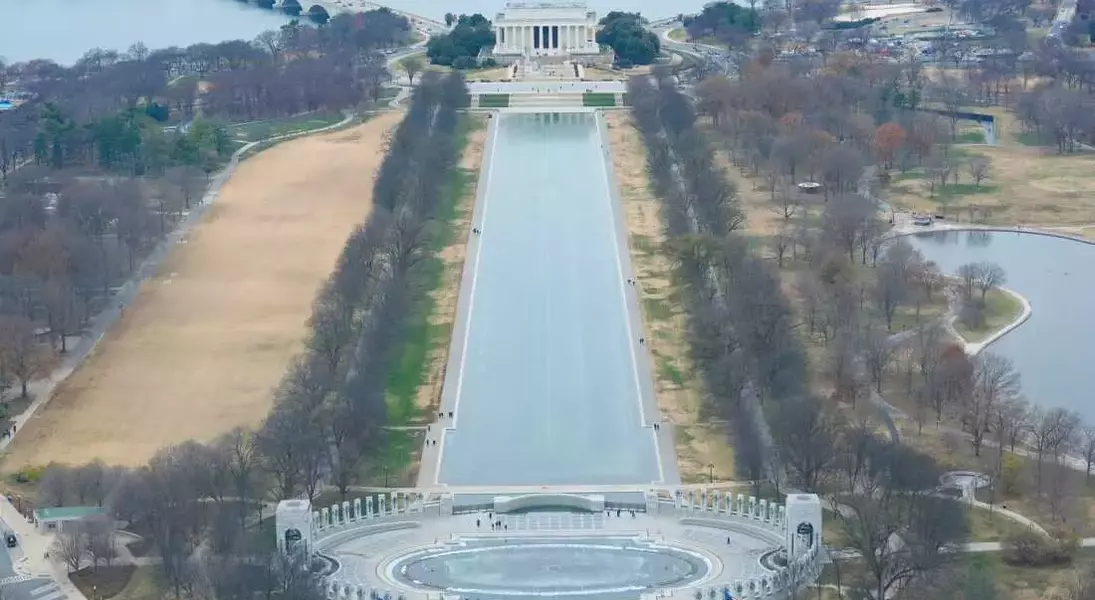
The Reflecting Pool, completed in the early 1920s shortly after the Lincoln Memorial, has been the silent witness to countless pivotal moments in American history, from presidential inaugurations to Dr. Martin Luther King Jr.'s seminal "I Have a Dream" speech in 1963. Despite its historical significance, the pool, constructed on marshy land with asphalt and tile, has endured decades of deterioration. Over approximately 90 years, it settled by a foot in certain sections, and its water circulation system faltered, necessitating two to three annual refills.
Previous extensive renovations occurred between 2010 and 2012, funded by a $34 million economic stimulus package from the Obama administration. These efforts focused on improving water quality, ensuring watertightness, and redesigning the pool for enhanced visual appeal. However, a 2023 budget report from the Department of the Interior revealed that the 2012 project installed incorrectly sized water system pipes, leading to continuous breakages and significant water loss. In 2019 alone, the pool required an additional 71 million gallons of water, incurring over $1 million in water costs, underscoring the pressing need for further repairs.
Trump's interest in a "bigger fix" for the pool dates back to November 2025, and he made a formal announcement on Truth Social earlier this month. He later elaborated on his plans during an Oval Office event, stating that the decision to prioritize the renovation was influenced by a German friend's negative remarks about the pool's condition. Trump asserted that his approach would be considerably faster and more cost-effective than previous estimates, promising a refurbished pool by early July 4th.
This Reflecting Pool project is just one of several contentious urban development initiatives proposed by Trump in D.C. Other plans include the construction of a massive triumphal arch on the National Mall, a two-year renovation of the Kennedy Center, and ongoing legal disputes over a proposed White House ballroom. While many of these proposals have faced legal challenges and public opposition, approval boards with strong ties to Trump have generally expedited their progression.
Neil Flanagan, a Washington D.C. architect and public historian, views Trump's interventions as treating the city like his "personal country club," bypassing established agencies and processes. Laurie Collins, a local influencer, echoed this sentiment, calling Trump's approach "authoritarianism" and deeming the renovations unnecessary. Conversely, Will Martinez, a frequent visitor from Arizona, expressed enthusiasm for the makeover, believing the previous green and unsightly appearance did not adequately represent the nation. He emphasized the importance of a beautiful capital for international visitors, arguing that the changes would positively impact America's image.
The ongoing transformation of the Reflecting Pool is a stark illustration of the tension between maintaining historical continuity and embracing new visions for urban landscapes. While the pool has undeniably been in need of structural and aesthetic improvements, the methods and motivations behind the current project have sparked a broader conversation about political influence, public opinion, and the very identity of Washington D.C. as a national symbol.
