
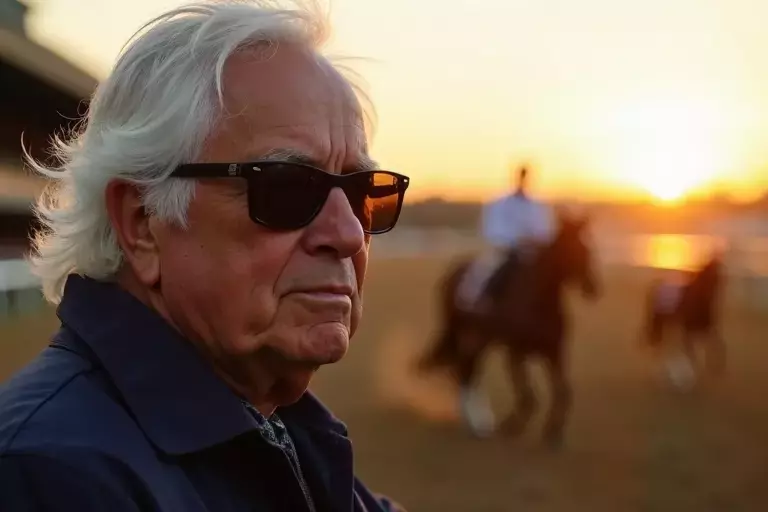



Horse racing enthusiasts are abuzz as renowned trainer Bob Baffert prepares for his comeback at Churchill Downs on May 3rd, aiming for a record seventh Kentucky Derby title. This return comes after the tumultuous events of 2021, when Medina Spirit's failed drug test led to the revocation of Baffert's Derby victory and a two-year ban from Churchill Downs. Despite this setback, Baffert remains optimistic about reclaiming glory. However, questions regarding his training techniques persist, especially in light of recent fatalities among his horses. With the focus now shifting to three of his contenders—Citizen Bull, Rodriguez, and Madaket Road—the shadow of controversy looms over his stable.
The upcoming Kentucky Derby is just around the corner, bringing with it heightened attention to the three horses under Baffert’s care that have made it into the race. Yet, amidst this anticipation, there is an unsettling reality concerning the deaths of two other horses linked to Baffert. These incidents raise concerns once more about the methods employed by one of horse racing's most polarizing figures. On April 3rd, Willy, an unraced colt, tragically passed away during training. Then, on April 17th, Non Compliant, a promising filly sired by Tiz the Law, also succumbed to injuries sustained while galloping at Los Alamitos Racetrack. Both deaths were attributed to musculoskeletal issues.
Beyond these recent losses, Baffert has long been scrutinized for his extensive history involving equine fatalities. Since 2000, over seventy horses under his supervision have died in California alone, making him the trainer with the highest fatality rate per race among top trainers in the state. A report from The Washington Post in 2021 highlighted that Baffert's stable experienced 8.3 horse deaths per 1000 starts in California since 2000, marking the highest rate among trainers with the most catastrophic injuries. Between 2011 and 2013, seven of his horses died due to cardiac arrest, prompting investigations into their use of thyroxine, a thyroid hormone not commonly administered to racehorses.
In addition to these fatalities, Baffert has faced criticism for drug violations, notably during the Medina Spirit incident. While some argue that his training methods may jeopardize horse safety, others note that between 2018 and 2023, Baffert's fatality rate was relatively lower compared to many large stables in California. Nevertheless, these controversies continue to spark debates about the ethics of horse racing and the practices of its prominent figures.
As Baffert gears up for another chance at victory, the legacy of his past actions casts a long shadow over his ambitions. His return to Churchill Downs represents not only a quest for personal redemption but also an opportunity to address lingering doubts surrounding his methodologies. For fans and critics alike, the coming weeks will reveal whether Baffert can rise above scrutiny or if deeper reforms within the sport are necessary to ensure both success and safety in horse racing.
