
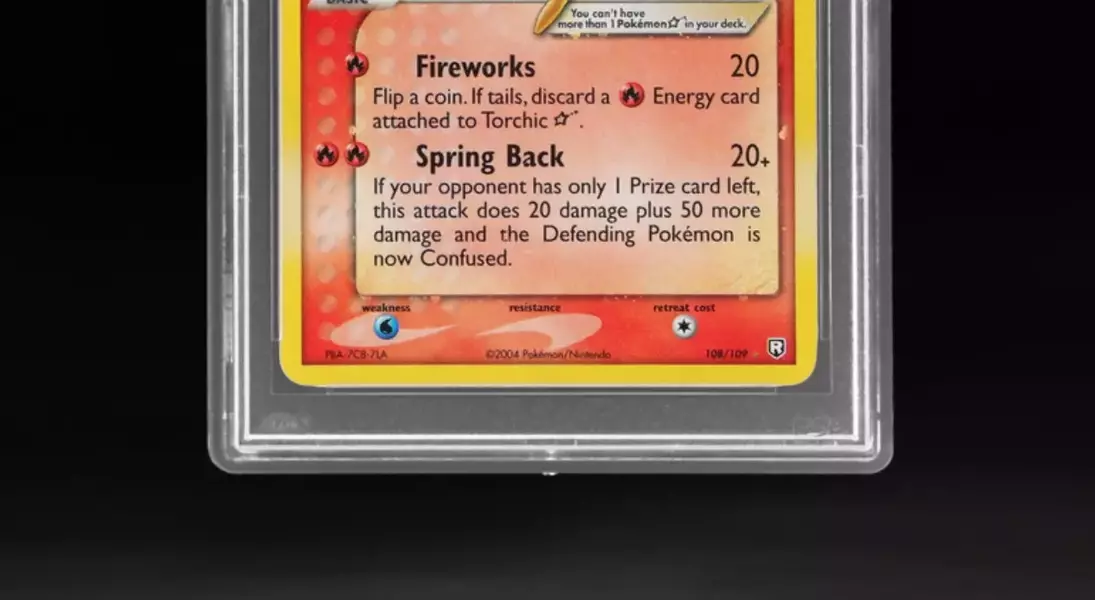

The valuation of collectible trading cards, particularly within the Pokémon Trading Card Game (TCG) community, frequently hinges on the elusive concept of 'pristine' condition. While average enthusiasts might overlook minor blemishes, high-stakes collectors, accustomed to investing significant sums, typically demand perfection. However, a recent auction for a 22-year-old Pokémon card has ignited considerable controversy, underscoring the inherently subjective nature of card grading standards.
The focal point of this debate is a 2004 Torchic Star card from the EX Team Rocket Returns series, a highly sought-after item due to its rarity and limited print run. Currently, only 30 ungraded copies exist, and none have achieved the coveted PSA 10 Gem Mint rating, with existing graded versions fetching exorbitant prices. A recent example saw a CGC-rated 10 Torchic Star card, owned by Steve Aoki, sell for $117,800. The card at the center of the current dispute, despite being a PSA 10, exhibits visible flaws on its reverse side—specifically, white spots along the right edge and frayed edges on the left. This has led many to question how such a card could attain the highest grading, especially given that a Gem Mint 10 from PSA is expected to be virtually flawless, featuring sharp corners, crisp printing, intact gloss, and freedom from stains.
The ongoing auction for this particular PSA 10 Torchic card has already reached an astonishing $1.3 million. If the sale is finalized, it would rank as the second-highest Pokémon TCG sale ever, surpassed only by Logan Paul's $16.4 million Pikachu Illustrator card. This potential record-breaking sale has provoked mixed reactions among TCG aficionados. Some express disbelief, citing the card's imperfections and arguing it should be graded much lower, perhaps a PSA 7, given current stringent grading standards. Others, however, defend the valuation, attributing the high grade to a period when grading criteria were less rigorous, prior to the recent surge in the hobby's popularity and the resulting backlog of cards awaiting assessment. They argue that as one of only 19 known PSA 10s, its extreme rarity inherently justifies the price, regardless of minor flaws, seeing it as an inevitable outcome for such a legendary gold star card.
The unfolding saga of the $1.3 million Torchic card serves as a powerful reminder that value is often more than just perfection. It reflects the intricate interplay between rarity, historical context, market demand, and the passionate community of collectors. This event compels us to reflect on the dynamic nature of collectibles markets and the ever-evolving standards that shape them, ultimately highlighting how collective enthusiasm and perceived scarcity can elevate an object to extraordinary heights, transcending mere physical condition.
