
Angeles Crest Highway, a scenic yet perilous stretch of road, is frequently in the news due to severe accidents, reckless driving, and fatal crashes. This notoriety has prompted locals to question the true extent of its dangers. Thanks to the meticulous work of Instagram user @bluturt, who has compiled California Highway Patrol data into an interactive heat map, we now have a comprehensive visualization of nearly every incident on the Crest over the last ten years. While the data may not be flawless, it provides valuable insights for both daily commuters and recreational drivers.
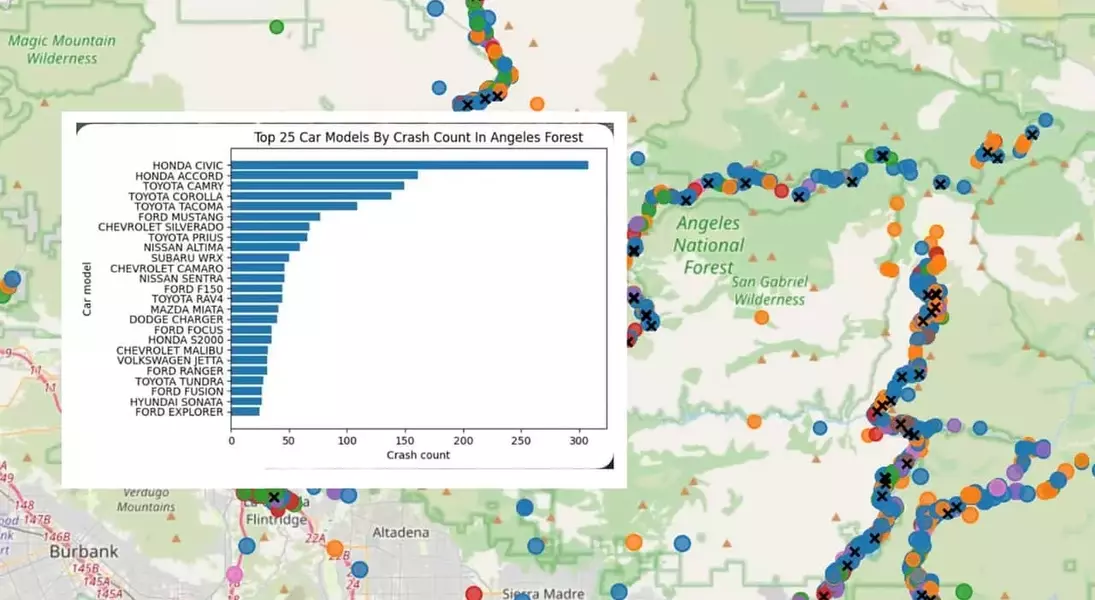
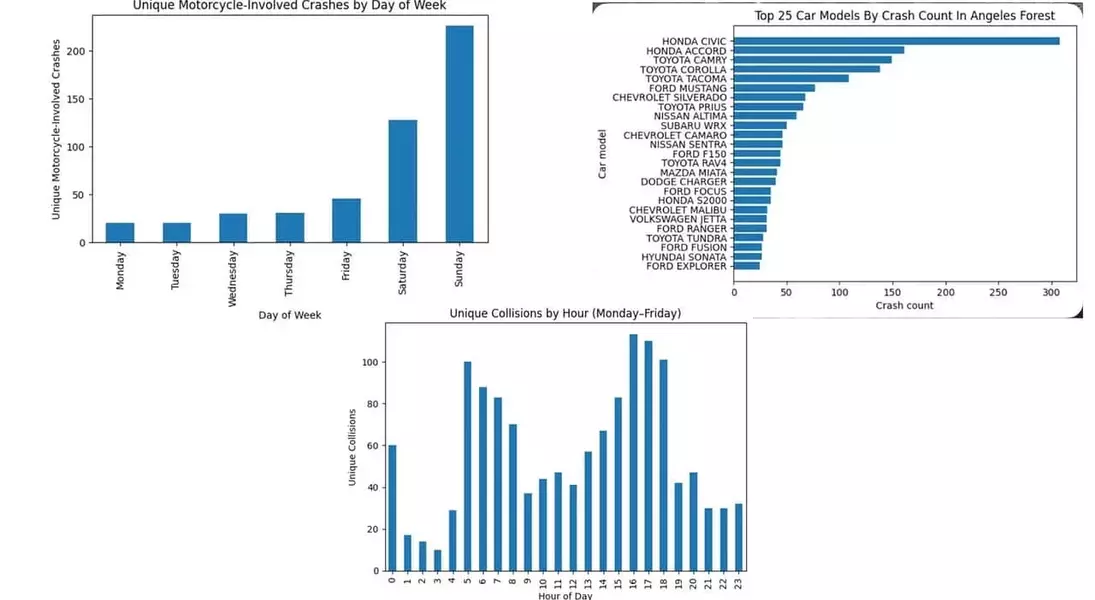
The interactive map visually represents the crash data, displaying a dense network of incidents across almost the entire length of the road. Fatal crashes are distinctly marked, underscoring the severe consequences that can occur. Among the most frequently involved vehicles in these incidents is the Honda Civic, a detail that might not surprise many given its prevalence. The data also reveals distinct patterns in accident timing: a significant number of crashes coincide with morning and afternoon rush hours, predominantly on weekdays, while motorcycle accidents spike on Sundays, likely due to increased recreational use.
Angeles Crest Highway (ACH) is the primary thoroughfare within the Angeles National Forest, complemented by several interconnected roads such as Angeles Forest Highway (AFH), Big Tujunga Canyon Road, and Upper Big Tujunga Canyon Road, also known as Nine Mile. Each of these routes is included in the crash data analysis. ACH serves primarily as a scenic and recreational route from La Cañada Flintridge to Wrightwood, while AFH is a vital commuter artery connecting ACH to Palmdale, offering an alternative to the often-congested State Route 14. The significant role of AFH in daily commutes heavily influences the overall accident statistics.
Historical records show that the challenges faced on these roads are not new. As far back as the 1990s, AFH was infamous for the "Palmdale 500," a daily phenomenon where thousands of commuters, striving to avoid congestion, would use the route, often leading to dangerous driving behaviors like passing on blind turns and excessive speed. This trend persists today, exacerbating the road's inherent risks. While enthusiasts also contribute to the accident rate, particularly on weekends, the commuter traffic accounts for a substantial portion of incidents. The map highlights that weekend crash rates are comparable to weekdays, suggesting that both groups share responsibility for the road's hazardous reputation.
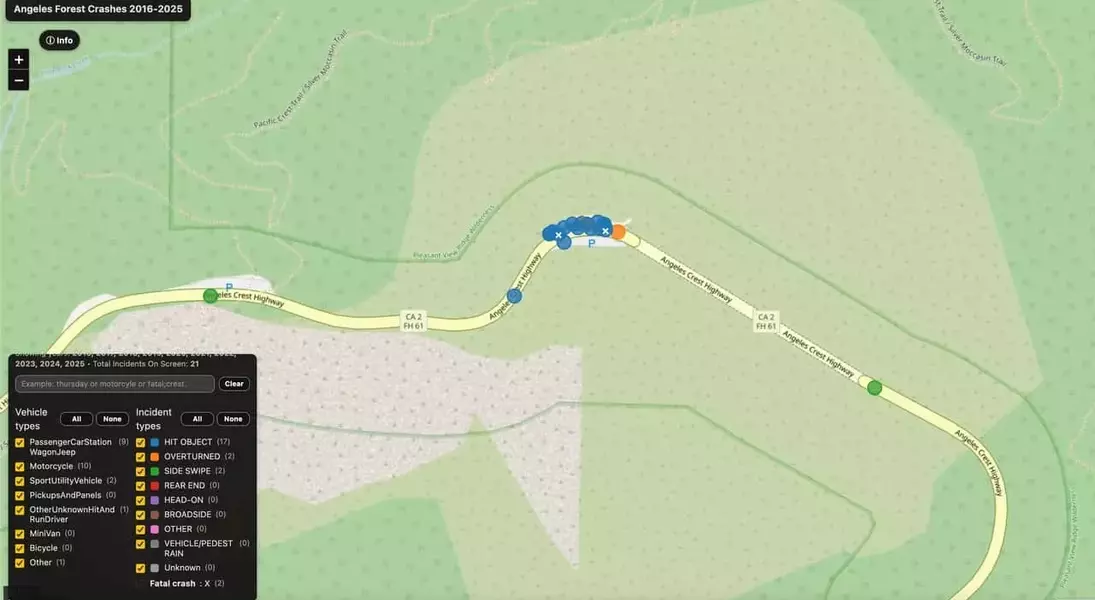
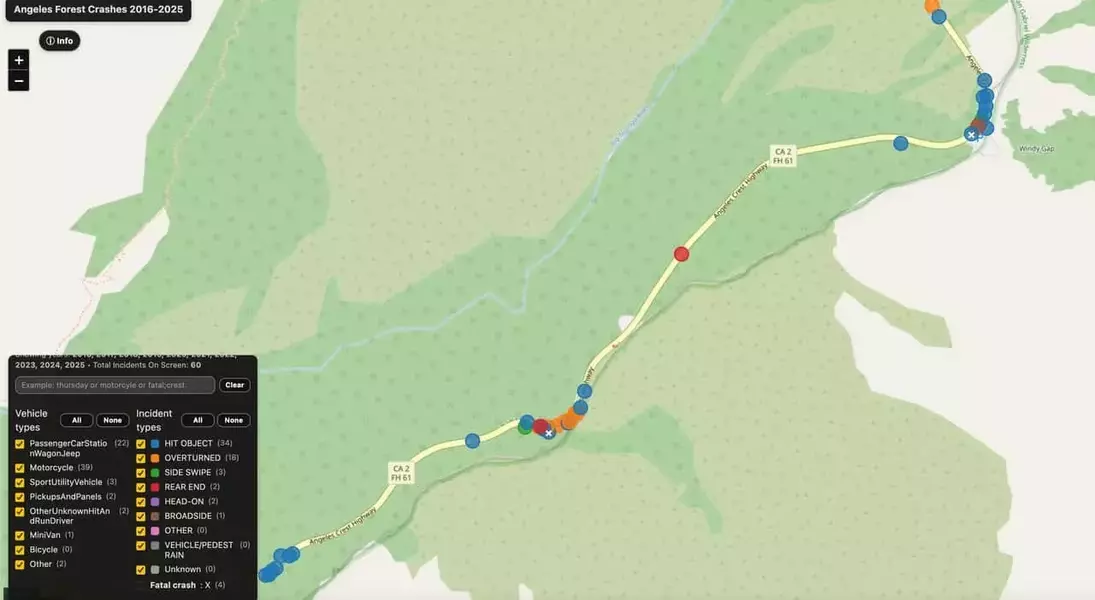
Beyond the general high-accident areas influenced by commuters, specific sections of ACH are notorious for incidents linked to enthusiastic drivers. For instance, the corner where Vince Zampella, the creator of Call of Duty, tragically crashed his Ferrari, shows a cluster of single-vehicle-hit-object incidents. Another particularly dangerous spot, near Windy Gap and locally known as "the shadies," is a recognized rollover hotspot. These identifiable problem corners, familiar to locals, are graphically represented on the map by concentrated clusters of accident reports, underscoring the specific risks associated with certain road segments.
The prevalence of accidents on Angeles Crest Highway can be attributed to a combination of factors: its accessibility from Southern California, its popularity among automotive enthusiasts seeking challenging drives, and its function as a commuter route. Regardless of the driver's purpose, a greater degree of caution and respect for the road is essential. This highway demands attention and skill, and failure to acknowledge its inherent dangers can lead to severe consequences. The detailed crash map serves as a stark reminder of these risks, encouraging all who traverse these mountain roads to drive responsibly.
