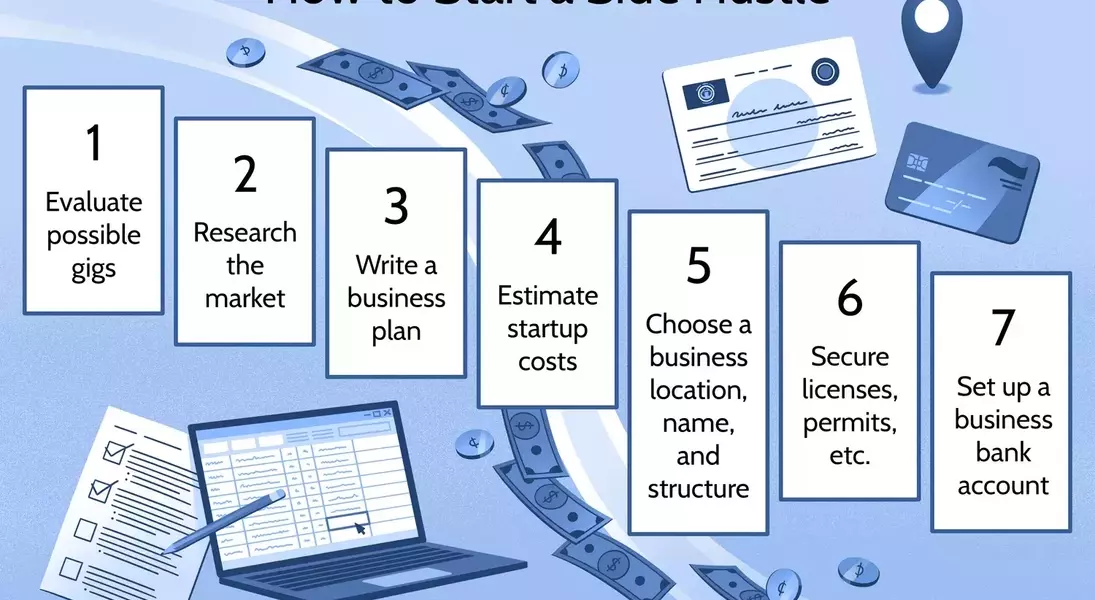
Embarking on a side hustle offers a dynamic pathway to augmenting income, cultivating new skills, and venturing into entrepreneurship without the immediate leap of a full-time commitment. This detailed guide unpacks the essentials of launching and nurturing such a venture, emphasizing the critical balance between passion and practicality. It delves into the strategic steps for identifying viable opportunities, understanding market dynamics, and navigating the indispensable financial and legal frameworks. From initial conceptualization to sustained growth, individuals are equipped with insights into the advantages and disadvantages, vital considerations, and actionable advice to transform their aspirations into successful, supplementary income streams.
Your Blueprint for Launching a Thriving Side Hustle
In the vibrant economic landscape of today, the pursuit of a side hustle has become an increasingly popular avenue for individuals aiming to supplement their primary income, nurture personal passions, or meticulously build the groundwork for a future entrepreneurial endeavor. The journey, however, from conception to a flourishing enterprise, requires a methodical approach, keen discernment, and an unwavering commitment to understanding the multifaceted elements that dictate success.
The initial phase, often the most introspective, involves evaluating one's unique tapestry of skills, profound interests, and established lifestyle. This critical self-assessment serves as the cornerstone for identifying potential side hustle ideas that not only resonate with personal capabilities but also address a discernible market need. It's a quest for alignment, where a beloved hobby or an inherent strength can be serendipitously matched with a consumer demand, thereby transforming leisure into a lucrative opportunity.
Following this, meticulous market research becomes paramount. This isn't merely an academic exercise but a strategic imperative. Aspiring side hustlers must diligently scrutinize the competitive landscape, identifying direct and indirect rivals, and, more importantly, meticulously defining their target demographic. Such research illuminates the viability of a product or service, guiding decisions on pricing strategies and ensuring that the offering is not just desirable but also sustainably profitable.
For ventures that may necessitate external capital, forming partnerships, or securing investment, the development of a comprehensive business plan is indispensable. This document transcends a simple formality; it is a strategic narrative outlining the venture’s vision, detailing the products or services, articulating the marketing and sales strategies, and forecasting financial trajectories. It serves as a compass for the entrepreneur and a compelling proposal for potential stakeholders.
A critical, yet often underestimated, aspect involves the estimation of startup costs and the formulation of a robust funding strategy. While many side hustles boast minimal initial overheads, every venture incurs some form of expense, be it for materials, licensing, or marketing. A proactive financial plan ensures that these initial costs are adequately covered, preventing premature cessation due to unforeseen monetary constraints.
The legal and administrative dimensions demand careful attention. Selecting an appropriate business structure—be it a sole proprietorship, partnership, or limited liability company—has profound implications for taxation, legal liability, and administrative compliance. Furthermore, securing the requisite federal and/or state licenses, permits, and certifications is not optional but a legal mandate, ensuring the venture operates within established legal frameworks. These regulatory steps, including obtaining necessary tax IDs, protect the entrepreneur from future legal entanglements and foster legitimate business operations.
Finally, the establishment of a dedicated business bank account and the procurement of appropriate insurance policies are foundational elements of sound financial management and risk mitigation. Separating personal and business finances simplifies accounting, streamlines tax preparation, and fortifies the venture against operational risks, providing a layer of protection against unforeseen circumstances. This systematic approach, grounded in thorough preparation and informed decision-making, significantly enhances the probability of a side hustle not merely surviving but genuinely flourishing.
The Dual Edge of Entrepreneurial Spirit: Navigating the Challenges and Rewards of Side Hustles
The journey into entrepreneurship via a side hustle is a fascinating exploration of personal and professional growth. It offers a unique blend of liberation and responsibility, demanding a careful consideration of both its enticing advantages and its inherent pitfalls. On one hand, the allure of crafting your own destiny is powerful. Imagine the flexibility of orchestrating your work schedule around life's demands, not the other way around. This autonomy is a cornerstone benefit, allowing individuals to dictate their pace, choose their projects, and seamlessly integrate their entrepreneurial aspirations with existing commitments. Beyond the temporal freedom, a side hustle serves as a fertile ground for pursuing genuine passions. It transforms a beloved hobby or a latent interest into a productive endeavor, offering profound satisfaction that often eludes traditional employment. Financially, the promise of additional income is a clear motivator, providing a buffer against economic uncertainties or accelerating personal financial goals. Moreover, engaging in a side hustle is an invaluable opportunity for professional diversification, allowing one to cultivate new skills, explore untapped talents, and broaden their professional repertoire in an experimental, low-stakes environment. It’s an informal incubator for entrepreneurial spirit, enabling individuals to test business concepts and market reactions without the full financial and emotional commitment of a standalone startup. This exploratory phase can be critical, providing real-world experience that theorizing can never replicate.
However, the path of the side hustler is not without its shadows. The very flexibility that attracts many can swiftly erode the delicate balance between work and personal life. What begins as a passion project can quickly morph into an all-consuming task, leading to burnout and a profound sense of exhaustion. The monetization of a cherished hobby, while financially rewarding, can paradoxically diminish the joy it once brought, transforming a source of relaxation into another obligation. Financially, side hustles carry inherent risks. The initial investment, however modest, is always a gamble, and the specter of business failure looms large, potentially leading to financial losses rather than gains. Legal and tax complexities also represent significant hurdles. Navigating the labyrinthine world of business registrations, permits, and, crucially, understanding the tax implications of supplementary income demands diligent research and often professional guidance. The distinction between a hobby and a business, as defined by tax authorities, can have substantial consequences, transforming what one perceives as a casual endeavor into a formal enterprise with stringent reporting requirements. These challenges underscore the necessity for meticulous planning, realistic expectations, and a resilient spirit when embarking on the entrepreneurial voyage of a side hustle.
