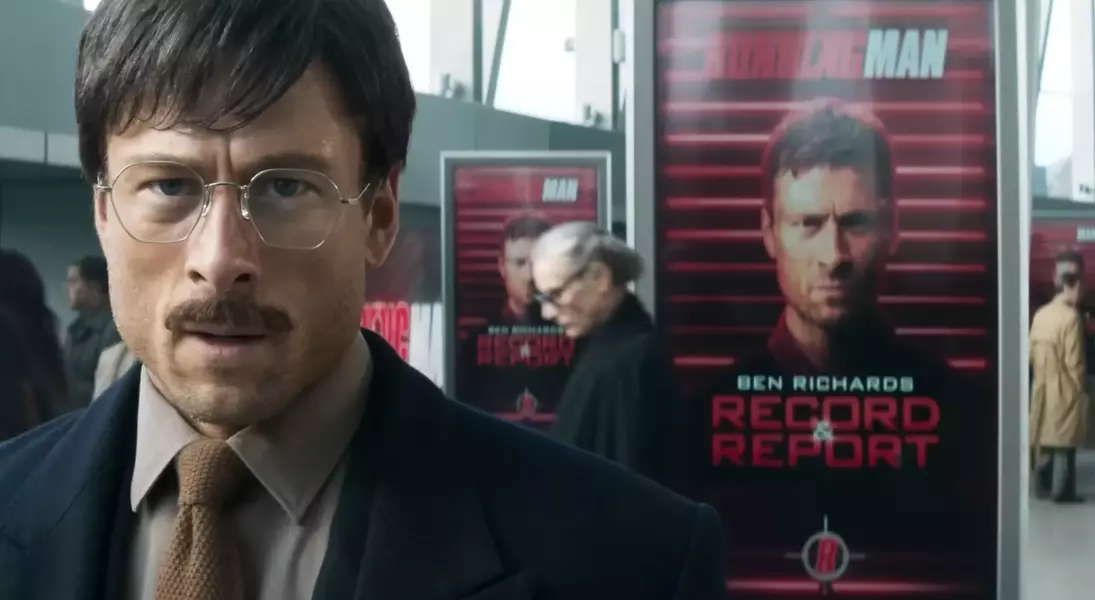
When considering adaptations of Stephen King's novel, The Running Man, the 2025 version stands out for its faithfulness to the source material, presenting a more developed world and enhanced action sequences. While the 1987 film, featuring Arnold Schwarzenegger, diverges significantly from the book, it remarkably excelled in one particular aspect that even surpassed King's original narrative.
King, writing under the pseudonym Richard Bachman, first introduced The Running Man in 1982. This chilling tale is set in a future America gripped by extreme wealth disparity, where the impoverished struggle to find employment. The protagonist, Ben Richards, driven by the desperate need for medicine for his ailing child, volunteers for a government-sanctioned reality game show, a common form of entertainment in this grim society. Richards is then thrust into The Running Man, a deadly competition where contestants must survive for 30 days in the real world while being hunted by professional assassins, with the public also encouraged to participate in their capture or elimination for prize money. Although the 2025 film, directed by Edgar Wright, largely adheres to the novel's plot, especially regarding Richards' character as an unemployed individual, the 1987 film takes a different path, portraying Richards as a police captain framed for refusing to harm civilians, and confines the game show to a limited urban area rather than the expansive real-world chase depicted in the book and remake.
Both cinematic renditions share a common weakness in character development, often resorting to abrupt, exposition-heavy introductions for Ben Richards. The 1987 film opens with Richards' refusal to fire on innocents, while the 2025 remake quickly establishes his desperation to support his sick child. However, the most compelling element that the 1987 film introduced, and which the 2025 remake could have benefited from adopting, is the portrayal of the villain. In the novel and the 2025 film, the antagonist is Dan Killian, a somewhat generic executive producer focused solely on ratings. In contrast, the 1987 film cleverly merged Killian with the game show's host, Bobby Thompson, and cast Richard Dawson, a well-known game show host, in the role. Dawson's performance as a charming yet diabolical host who exploits human lives for entertainment was a stroke of genius, creating a character far more nuanced and memorable than his book counterpart. The impact of seeing a familiar, amiable television personality transform into such a villain was truly shocking and elevated the entire film. Imagine the surprise if a contemporary beloved game show host had taken on such a role in the 2025 adaptation; it would undoubtedly have delivered a similar unforgettable twist.
Ultimately, while the 2025 adaptation of The Running Man offers a more faithful and action-packed dystopian experience, the 1987 version's unique take on the antagonist proves that creative divergence, when executed brilliantly, can elevate a story beyond its original form. Both films, despite their distinct interpretations and individual flaws, contribute to a broader understanding of the timeless narrative's exploration of exploitation, desperation, and the corrupting influence of media in a dystopian future.
