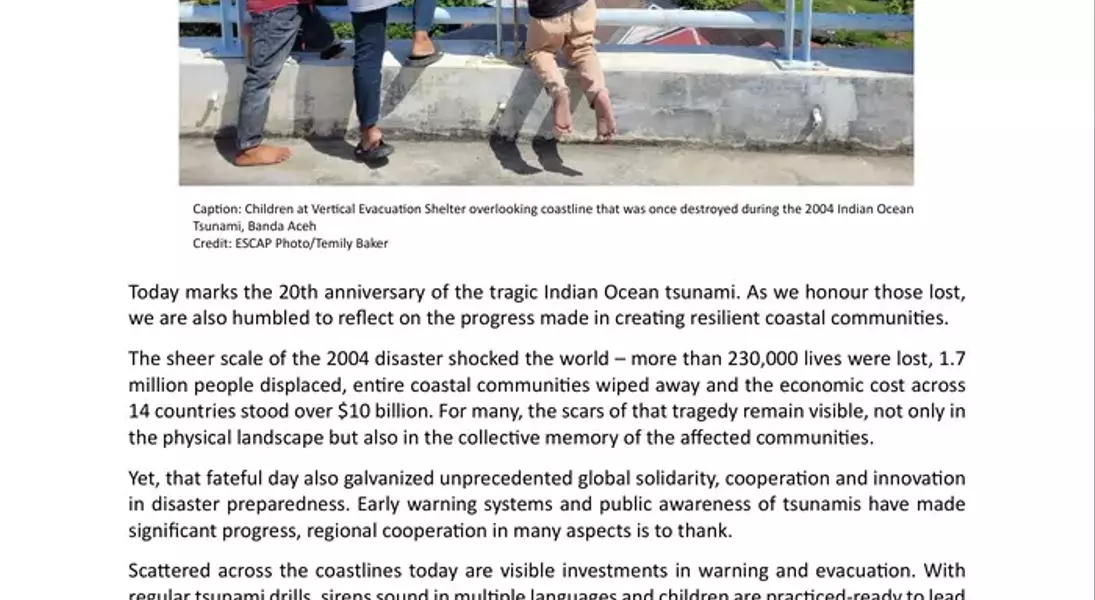
In this poignant reflection on a significant milestone, we mark two decades since the devastating Indian Ocean tsunami that claimed over 230,000 lives and displaced millions. This tragic event has left an indelible mark on the global consciousness. However, it also catalyzed unprecedented advancements in disaster preparedness and resilience. Today, communities along vulnerable coastlines have implemented robust early warning systems, regular drills, and infrastructure designed to withstand future calamities. The progress made underscores the power of international cooperation and innovation in mitigating the impact of natural disasters.
Transforming Tragedy into Triumph: A Journey Toward Coastal Resilience
On that fateful day two decades ago, the world witnessed one of the most catastrophic events in recent history. In the aftermath, governments and international organizations united to establish the Indian Ocean Tsunami Warning and Mitigation System (IOTWMS). This system, now operational with Australia, Indonesia, and India as key providers, ensures that tsunami alerts reach national centers within minutes of seismic activity. Today, more than three-quarters of high-risk coastal communities have access to early warning information, compared to less than a quarter in 2004.
Along the coastlines, visible signs of preparedness abound. Sirens blare in multiple languages during regular drills, vertical shelters dot popular beaches, and standardized evacuation routes guide residents to safety. Families maintain emergency kits, livestock are moved to higher ground, and boats remain in deep waters to protect livelihoods. Schools and health facilities have been fortified, and community leaders are equipped with life-saving knowledge through programs like UNESCO-IOC’s Tsunami Ready initiative.
However, new challenges loom on the horizon. Climate change is exacerbating water-related disasters, complicating efforts to build resilient communities. With millions still at risk across Asia-Pacific, there is an urgent need for sustained financial mechanisms, public-private partnerships, and regional cooperation. High-capacity nations can lead by integrating advanced technology in medium-capacity countries, while low-capacity nations benefit from international support. Data sharing and technological innovation must be prioritized to enhance hazard monitoring, particularly in underserved areas.
A Call to Action: Strengthening Resilience Through Collective Effort
The commemoration of this tragic anniversary serves as a powerful reminder of our shared vulnerability and interdependence. It highlights the importance of collaboration in overcoming adversity. The ESCAP Multi-Donor Trust Fund for Tsunami, Disaster, and Climate Preparedness exemplifies this spirit of cooperation, having supported the development of multi-hazard early warning systems over the past two decades. As we honor those lost, let us commit to a future where coastal communities are resilient, early warnings reach everyone, and disasters no longer devastate lives and livelihoods. The journey toward resilience is far from complete, but the progress made offers hope and inspiration for a safer tomorrow.
