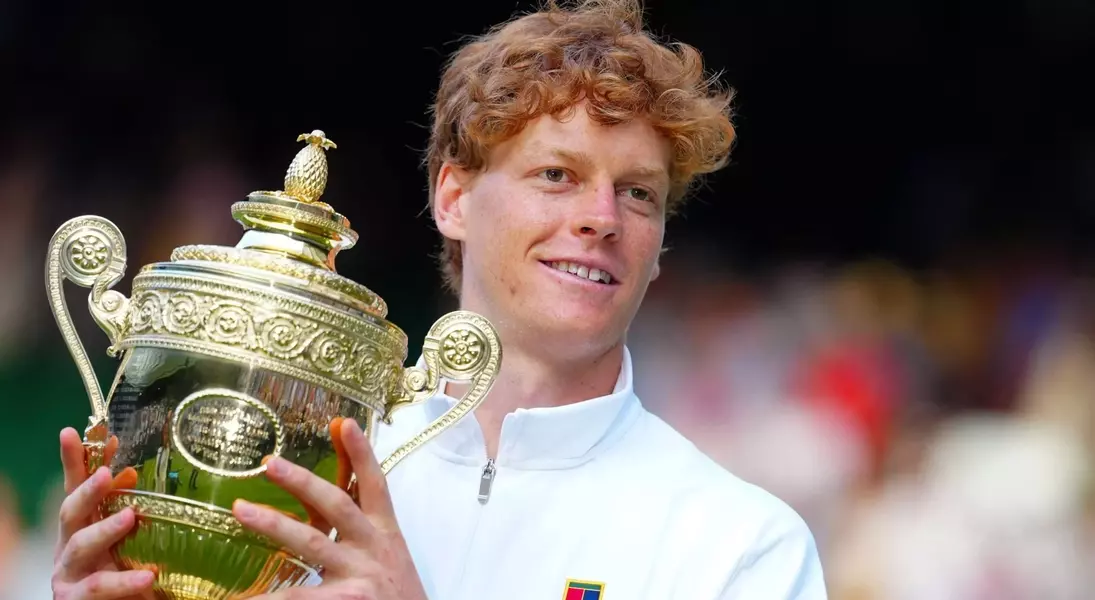
This article explores Rennae Stubbs' insightful commentary on Jannik Sinner's impressive Wimbledon final win over Carlos Alcaraz, dissecting the strategic and psychological elements that contributed to the Italian's fourth Grand Slam title. It offers a comparative look at the two tennis stars through the eyes of a seasoned coach, highlighting their distinct approaches to the game.
Mastering the Moment: Sinner's Strategic Triumph at Wimbledon
Unpacking the Wimbledon Final: Sinner vs. Alcaraz Dynamics
Rennae Stubbs, a distinguished figure in the tennis world and former coach of Serena Williams, recently provided her expert opinion on Jannik Sinner's decisive victory against Carlos Alcaraz in the Wimbledon final. This match saw the World No. 1 secure his fourth Grand Slam. On a recent podcast, Stubbs, drawing upon observations from fellow analysts Andy Roddick and Tim Henman, presented a fascinating comparison between the Italian and Spanish tennis titans.
Contrasting Strengths: Sinner's Consistency vs. Alcaraz's Brilliance
According to Stubbs, a key differentiator between the two athletes lies in their performance variability. She suggests that Sinner maintains a higher baseline, outperforming Alcaraz on an off-day. Conversely, when Alcaraz is at his peak, his game exhibits a superior level of flair and execution. \"While Sinner may not possess Alcaraz's inherent artistry, one cannot discount Sinner's top performance, even if it doesn't quite reach Alcaraz's peak brilliance,\" Stubbs remarked.
Sinner's Peak Performance: A Match for Alcaraz's Best
Stubbs asserted that when Jannik Sinner is playing at his absolute best, he undeniably has the capacity to defeat Carlos Alcaraz, even when Alcaraz is also at his peak. She pointed out that the specific court conditions at Wimbledon, characterized by a bouncier and flatter surface, seemed to favor Sinner's game, particularly his improved serving.
Clutch Moments: Sinner's Mental Fortitude Under Pressure
The American coach specifically highlighted Sinner's remarkable composure during a critical juncture in the fourth set. Facing a daunting 15-40 deficit with two break points against him, Sinner delivered a series of powerful first serves, securing crucial points and averting a potential setback. This display of mental toughness was especially notable, as it recalled a previous encounter at the French Open where similar pressure had led to a different outcome.
Learning from the Past: Overcoming French Open Ghosts
During the French Open, Sinner held a 5-3 lead and had three match points on Alcaraz's serve. However, Alcaraz mounted a comeback, narrowing the score to 5-4. In the subsequent game, despite having an opportunity to clinch the victory, Sinner faltered under pressure, conceding the break. This moment proved pivotal, as Alcaraz capitalized, pushing the set to a tie-break and ultimately winning it, eventually securing his fifth Grand Slam title. This loss at the French Open was arguably one of the most disheartening of Sinner's career.
Aggression and Calculated Risks: Sinner's Evolved Strategy
\"That was the turning point,\" the former coach elaborated, referring to Sinner's resolute play in the Wimbledon final. \"Even in the game where he held serve to go up 5-3 in the fourth set, facing a 15-40 situation, he bravely went for a powerful second serve to Alcaraz's forehand, hitting it wide at 130 mph, catching Carlos off guard. The same aggressive approach was evident in the next rally.\" Stubbs concluded by noting that Sinner demonstrated a willingness to take calculated risks on his second serve, a boldness he might have held back from at the French Open, ultimately contributing to his Wimbledon success.
