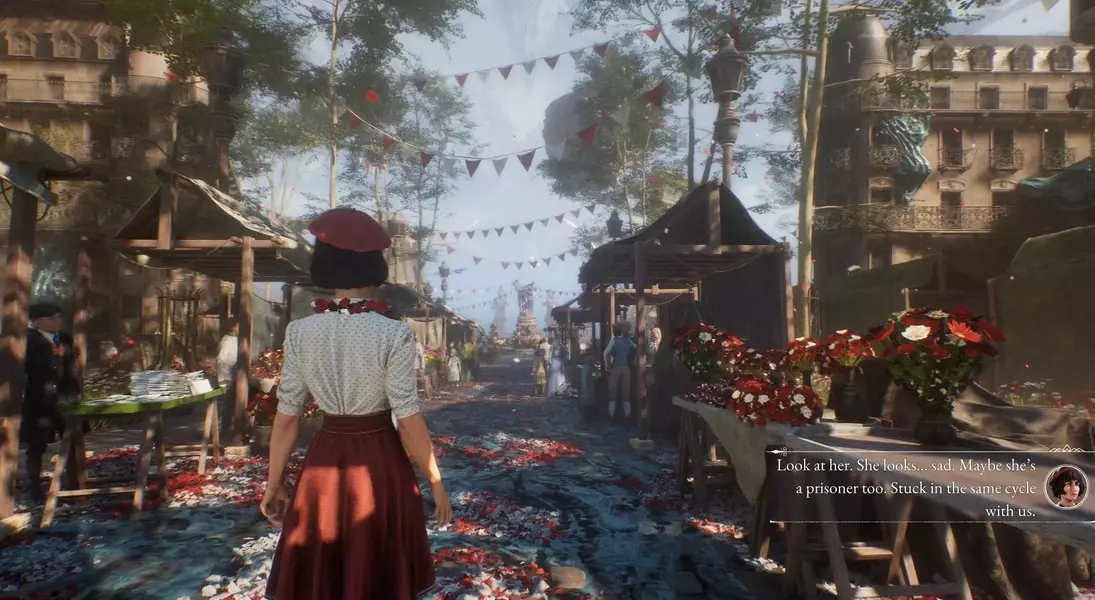
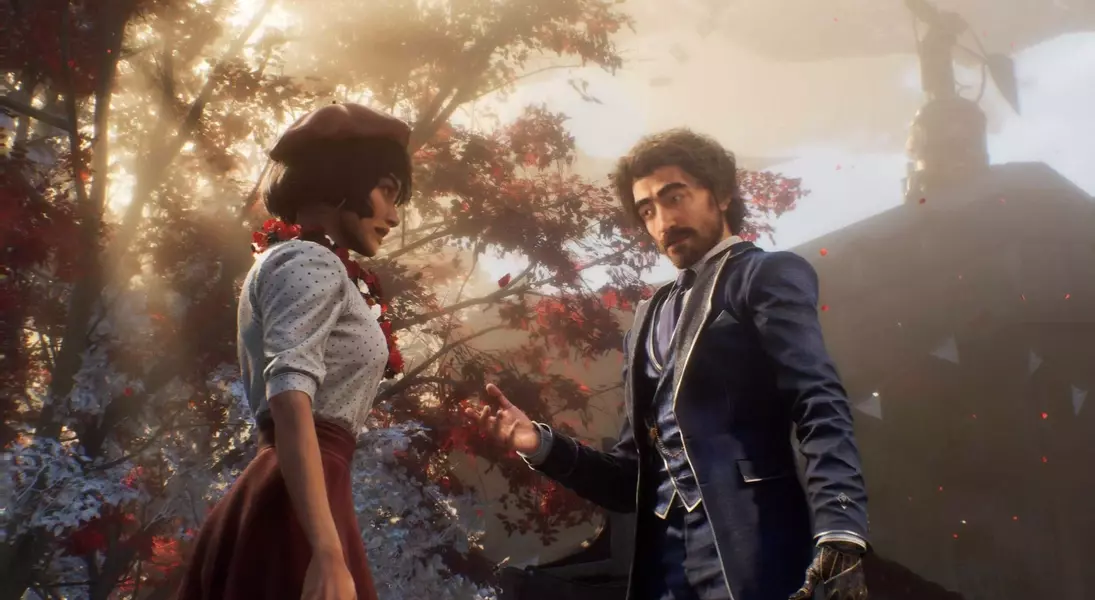

"Clair Obscur: Expedition 33," acclaimed as Game of the Year, captivates players not only with its mesmerizing design but also with its deeply emotional prologue. This initial segment, where players embody Gustave and Sophie navigating the city of Lumière on the eve of the Gommage, subtly introduces the game's overarching themes. Through environmental storytelling and nuanced dialogue, particularly a brief exchange between the two protagonists regarding 'The Paintress,' the game's central thesis on the cyclical nature of grief, imprisonment, and the healing power of empathy is unveiled, defying initial perceptions of good and evil within the narrative.
Insightful Discoveries in "Clair Obscur: Expedition 33's" Opening Moments
In the opening sequence of "Clair Obscur: Expedition 33," a critical dialogue exchange between Gustave and Sophie in the radiant city of Lumière subtly lays bare the game's profound narrative underpinnings. As the pair traverses the city streets, notably past a performing musician named Lune, they confront the imposing Monolith. Here, a conversation unfolds not as a cutscene, but fluidly within gameplay, highlighted by character icons and subtitles. Sophie, observing 'The Paintress' seated against the Monolith, muses, "Sometimes I feel sorry for her," adding, "She looks... sad." Gustave, astonished by Sophie's compassion in such dire circumstances, remarks on her unique capacity for empathy. This exchange redefines 'The Paintress' not as a one-dimensional antagonist but as a complex figure, potentially a prisoner of her own grief, much like the inhabitants of Lumière. This revelation challenges players' initial understanding, hinting that the destructive cycle of grief can ensnare anyone, and only external empathy might offer a path towards healing for wounds too deep to mend otherwise. Later in the game, it is revealed that 'The Paintress,' identified as Aline Dessendre, is trapped by her sorrow over losing her son, with her husband Renoir's actions inadvertently perpetuating the Gommage within Verso's canvas.
This early glimpse into the game's intricate lore encourages players to re-evaluate perceptions and look beyond immediate appearances. Sophie's empathetic observation, initially seemingly minor, transforms into a pivotal clue, shedding light on the profound suffering that drives the game's central conflict. It suggests that even those perceived as villains may be victims of their own circumstances, trapped in cycles of pain. The narrative ingeniously uses this moment to underscore the idea that understanding and compassion are crucial in navigating the complexities of human-like struggles, even in a fantastical setting, fostering a deeper, more nuanced appreciation for the game's storytelling and character development.
