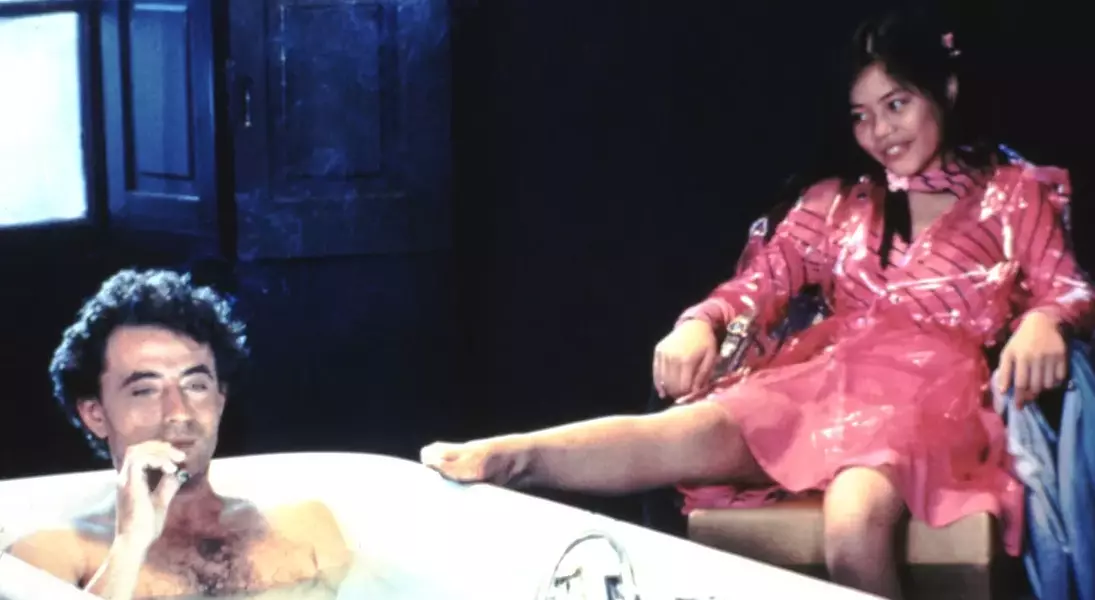
This article delves into the significant impact of the 1981 French thriller \"Diva\" on the distinctive visual style of the renowned television series \"Miami Vice\". It highlights how the groundbreaking film's aesthetic, marked by its vibrant urban scenery and innovative use of color and light, provided a blueprint for the iconic 1980s crime drama. The piece also includes insights from \"Diva's\" cinematographer, Philippe Rousselot, on the creative process behind the film's revolutionary look and its lasting legacy in popular culture.
Unveiling the Neon Canvas: How an Arthouse Thriller Painted Miami Vice's Iconic Look
The Genesis of a Visual Phenomenon: \"Diva's\" Revolutionary Impact
Universal Pictures is moving forward with director Joseph Kosinski's cinematic reimagining of \"Miami Vice,\" drawing inspiration from the original NBC crime drama's pilot and initial season. The core influence behind \"Miami Vice's\" signature aesthetic, however, traces back to \"Diva,\" Jean-Jacques Beineix's 1981 French thriller. This film sparked an arthouse sensation and captivated audiences with its unique visual language.
Connecting the Dots: \"Diva's\" Influence on \"Miami Vice's\" Aesthetic
Michael Mann, the creator of \"Miami Vice,\" has openly acknowledged the profound impact of \"Diva's\" striking visuals on his series. The French film's depiction of bustling cityscapes, rain-slicked streets, and vibrant neon lights directly informed the distinctive pastel color scheme and the Art Deco resurgence prominently featured in \"Miami Vice's\" portrayal of 1980s Miami.
Behind the Lens: Crafting \"Diva's\" Groundbreaking Look
Philippe Rousselot, the acclaimed cinematographer for \"Diva,\" recently shared his experiences on a podcast, revealing how he collaborated with director Beineix and production designer Hilton McConnico to develop the film's groundbreaking visual identity. Rousselot humbly notes that they were simply experimenting and did not foresee the film's eventual success or its revolutionary impact on cinema.
A Collective Creative Spark: Beyond \"Diva's\" Solo Genius
Rousselot emphasizes that while \"Diva\" became a defining moment, the innovative use of color and bold aesthetic statements were ideas already circulating within French cinema of that era. He points to films like 1976's \"Barocco\" and 1977's \"Paradiso\" as precursors, demonstrating a broader movement towards visual experimentation, even if these earlier works did not achieve the same level of widespread recognition.
Defining a Decade: \"Diva's\" Enduring Legacy and Commercial Appeal
In \"Diva,\" these evolving artistic concepts converged into a powerful visual statement that also resonated with commercial audiences. Its influence extended beyond the art house, shaping the look of various productions, from 1983's \"Flashdance\" to the unmistakably '80s aesthetic of \"Miami Vice\" the following year. Rousselot succinctly captures the film's significance, stating that \"Diva\" declared the arrival of a new generation, a creative shift that transcended cinema and permeated popular culture.
Experience the Visual Revolution: \"Diva\" in Restored 4K
Enthusiasts will soon have the opportunity to experience the film's visual splendor in a restored 4K Blu-ray edition, set to be released by StudioCanal. For a deeper dive into Rousselot's creative process and how he achieved the film's iconic look, listeners are encouraged to tune into the complete podcast episode of \"It Happened in Hollywood.\"
