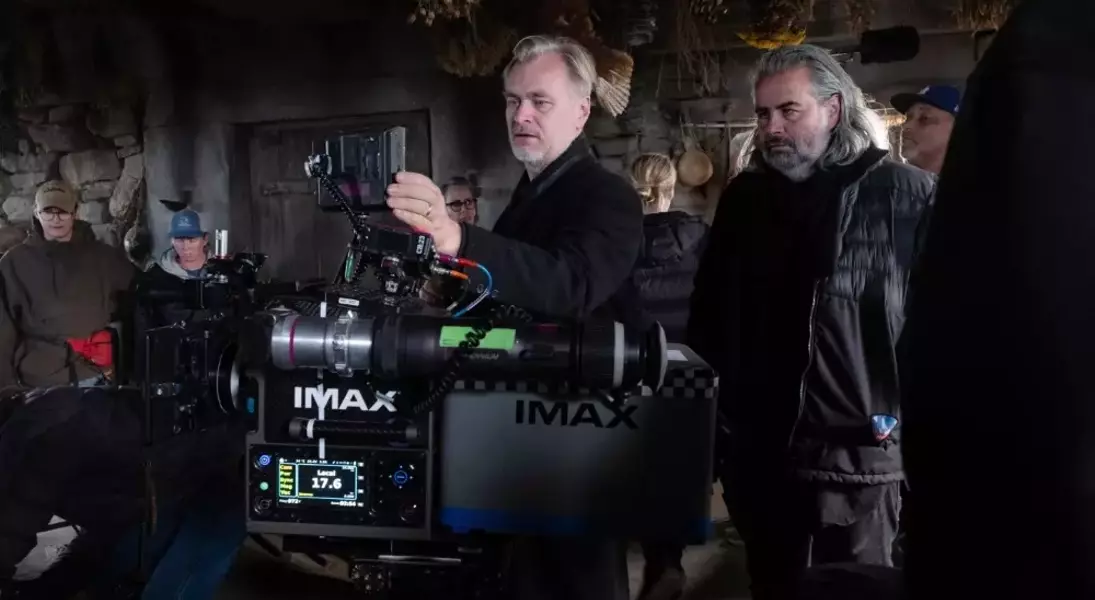
Christopher Nolan, the acclaimed filmmaker, has articulated his perspective on what he sees as a significant shortcoming in informal film criticism. During recent promotional activities for his latest work, 'The Odyssey,' Nolan pointed out that many novice critics tend to dismiss narrative devices merely because they can identify them, asserting that the recognition of a creative method does not automatically negate its artistic value.
Nolan's comments emerged during his press tour for 'The Odyssey,' a film that has garnered considerable attention and financial success, nearing a billion dollars globally and achieving a high critical rating. He discussed this viewpoint with podcaster Zhong Shu, delving into the nuances of film appreciation and the ways in which audiences and critics engage with cinematic storytelling. He stressed that while cinematic language evolves and familiar tropes may need adaptation, the foundational mechanisms of storytelling remain valid. Filmmakers, he noted, build upon a shared understanding of this language with their audiences, who have developed a sophisticated grasp of cinematic conventions through extensive viewing experiences.
The discourse around 'The Odyssey' has been particularly lively, partly fueled by a critique from Emily Wilson, a renowned translator of 'The Odyssey,' who, despite being an inspiration for Nolan's adaptation, expressed dissatisfaction with the film's perceived lack of profound depth in a review for the London Review of Books. This critical assessment subsequently drew a defense of Nolan from author Joyce Carol Oates, who publicly characterized Wilson's critique as employing 'crude language,' further intensifying the debate surrounding the film and its reception.
Nolan's observations underline a broader discussion about the interaction between creators and critics. He posits that the ability to dissect a film's techniques should not diminish the emotional impact or artistic integrity of those techniques. His argument suggests that some amateur critics mistakenly equate understanding a storytelling 'mechanism' with invalidating its power, overlooking the fundamental role these elements play in engaging an audience. This perspective invites a deeper reflection on how we consume and evaluate cinematic narratives, emphasizing the collaborative unspoken agreement between filmmakers and viewers regarding the grammar of film.
