Maria Grazia Chiuri's much-anticipated return to Fendi in Milan, following her celebrated tenure at Dior, marks a significant moment in contemporary fashion. Her debut collection, infused with the powerful ethos of "Less I, more us," presented a thoughtful and grounded vision. This showcase not only honored Fendi's enduring legacy, built by five pioneering sisters, but also reaffirmed Chiuri's commitment to creating apparel that empowers and resonates deeply with the wearer's life. The runway became a canvas for meticulously designed garments that transcend momentary fads, focusing instead on timeless appeal and intrinsic value, solidifying a narrative of sophisticated simplicity and wearable elegance.
Embracing Enduring Elegance: Chiuri's Vision for Fendi
A Reverent Nod to Heritage and the Power of "Us"
Maria Grazia Chiuri's inaugural collection for Fendi in Milan commenced with a clear declaration, emblazoned across the runway: "Less I, more us," articulated in both English and Italian. This foundational principle guided the collection, drawing inspiration from Fendi's storied past, particularly the five Fendi sisters. These visionary women transformed their parents' humble fur and leather enterprise in the 1940s into a globally recognized fashion empire, fueled by a formidable female dynasty. Chiuri's own professional journey is deeply intertwined with this heritage; her career began at Fendi before she made history as the first woman to lead Dior in 2016.
The Philosophy of Subtlety: Craftsmanship Over Ostentation
For her return to Fendi, after a decade steering Dior, the collection's guiding principle could succinctly be distilled into "Less is more." What unfolded on the runway was a series of exquisitely constructed garments that sought genuine appreciation rather than fleeting digital attention. While a striking tiger print coat subtly punctuated the predominant theme of understated elegance, the overall presentation exuded a quiet confidence and sophisticated restraint.
Opening with Austerity: A Symphony of Black and White
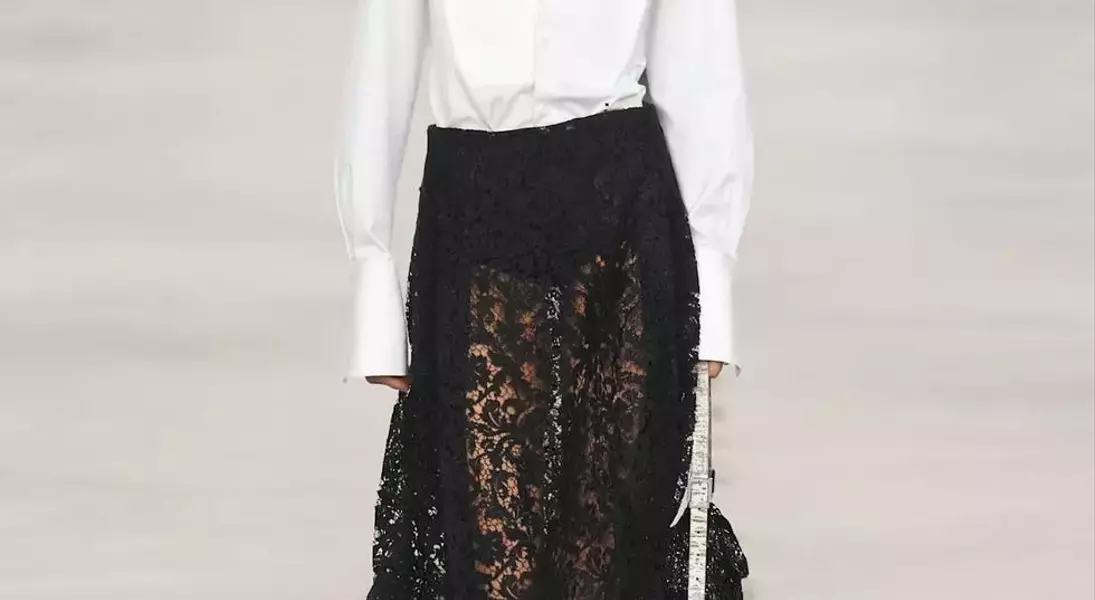
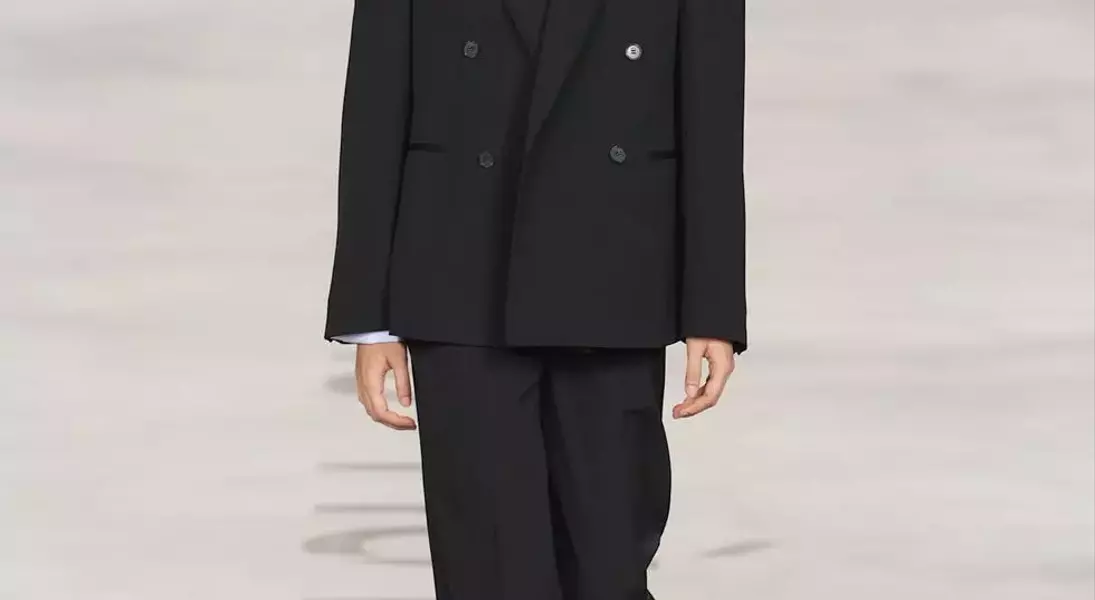
The show commenced with a powerful all-black ensemble: a chevron-patterned organza shirt dress featuring a pleated skirt, elegantly layered beneath an oversized blazer cinched by a barely discernible diagonal belt. This was followed by a cohesive range of tailored suits for both men and women, alongside delicate, ankle-length lace dresses designed for the latter. The palette remained strictly black and white until the eighteenth look, which introduced a subtle khaki coat. Color was used sparingly, appearing as a football jersey under a blazer, a printed baguette bag, and a singular red slip dress.
Evolution and Playfulness: Exploring Texture and Form
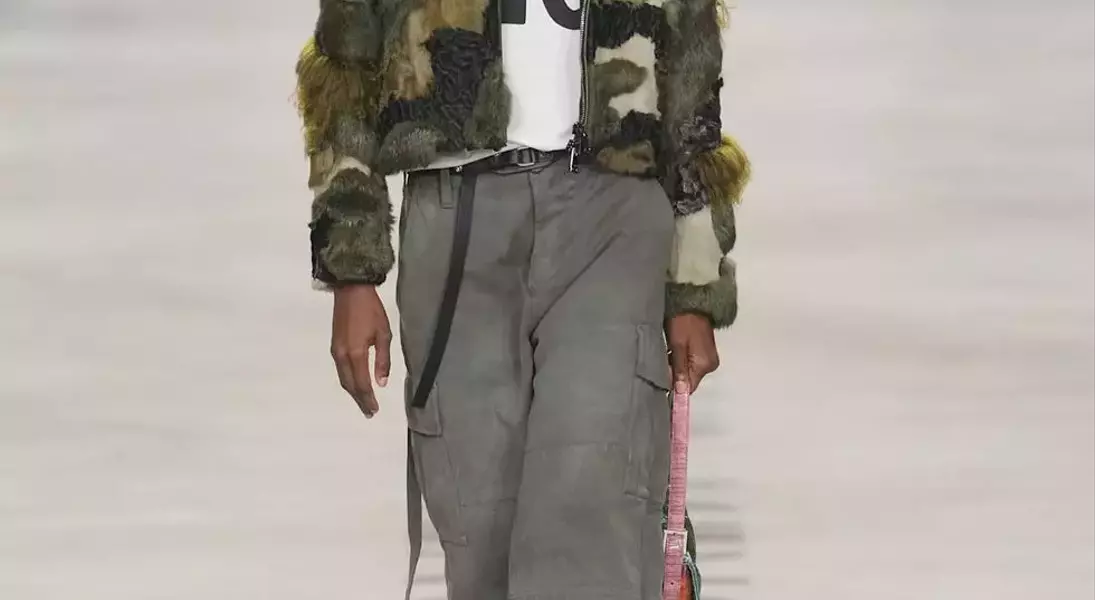
As the collection progressed, Chiuri allowed for greater creative exploration. A particular ensemble, featuring a fur-trimmed vest, a graphic T-shirt, and knee-length cargo shorts, accessorized with sheer socks, platform heels, and a baguette bag, was reinterpreted in several variations. One notable iteration replaced the vest with a camouflage jacket. Fendi's heritage as a furrier was evident in various coats, vests, and subtle fur accents on collars throughout the collection. Flight suits with diagonal zippers and 'Canadian tuxedos'—denim ensembles in indigo and cream, paired with Western boots—also made an appearance. Accessories showcased a playful edge, including lariat necklaces and detached tuxedo collars, some crafted from fur.
Chiuri's Distinctive Mark: Tailoring, Slogans, and Empowerment
Tailoring, often presented with a relaxed silhouette, was central to Chiuri's Fendi vision, a signature element of her design philosophy. Her debut collection clearly echoed motifs from her impactful tenure at Dior, which spanned from 2016 until the previous summer. Examples included a tuxedo shirt paired with a full, lace skirt, a silhouette reminiscent of her decade-long work. Chiuri's affinity for impactful slogans also remained, manifest in scarves bearing the word "impact," a T-shirt emblazoned with "NO," and the runway itself, recalling her iconic "We should all be feminists" T-shirts from Dior.
Fashion for the Modern Woman: Comfort, Expression, and Inclusivity
Chiuri's distinguished career, from her collaborations with Pierpaolo Piccioli at Valentino to her leadership at Dior, has consistently championed fashion that genuinely serves women. In a landscape where female designers at major fashion houses are still a rarity, her emphasis on creating garments that are effortlessly wearable is truly refreshing. These designs celebrate the natural form rather than imposing artificial constraints for the sake of novel concepts. As articulated in the show notes, these clothes are intended to "bear witness to a life lived," functioning as "dresses called on to accompany our lives, our emotions, our desires." Post-show, Chiuri highlighted the collection's focus on functional wardrobing and the deliberate blurring of gender boundaries in apparel, stating simply that "a great black blazer is a great black blazer, no matter your gender."
