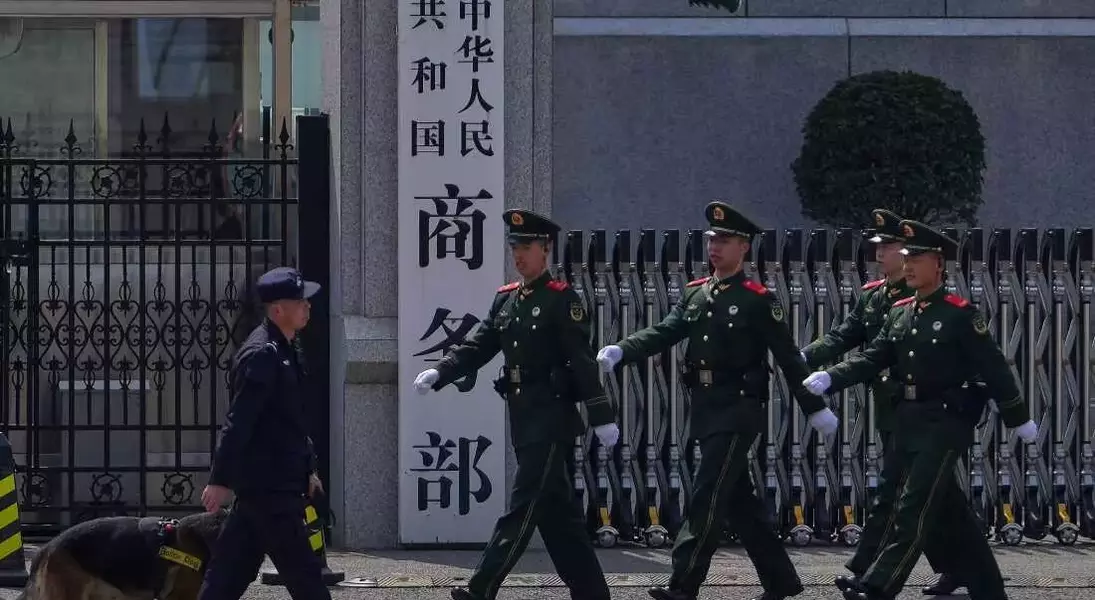
China has recently escalated diplomatic tensions with Japan by imposing export restrictions on 40 Japanese entities. Beijing justifies these measures by accusing the targeted companies of contributing to Japan's alleged "remilitarization." This move comes in response to comments made by Japanese Prime Minister Sanae Takaichi, who in November suggested Japan might intervene if China were to use military force against Taiwan, an island Beijing considers its own territory. The restrictions, which largely focus on dual-use items that can serve both civilian and military purposes, have drawn strong condemnation from Tokyo, which has formally protested China's actions, calling them unprecedented and unacceptable.
China's Export Restrictions and Their Justification
China has imposed new export restrictions on 40 Japanese entities, citing concerns over Japan's alleged "remilitarization" and nuclear ambitions. These measures specifically target companies involved in dual-use goods—items with both civilian and military applications. Twenty Japanese firms have been placed on an export control list, prohibiting them from importing such goods from China, while another twenty are on a watchlist, requiring Chinese exporters to apply for individual licenses and provide risk assessments for any dual-use items. Beijing has defended these actions as legitimate and necessary, emphasizing that they are aimed at a small number of entities and will not disrupt normal economic exchanges between the two nations, despite Japan's strong objections and claims that the restrictions deviate from international norms.
The Chinese Commerce Ministry's announcement delineates two categories of targeted entities: an export control list and a watchlist. Companies on the former, including subsidiaries of Mitsubishi Heavy Industries, Kawasaki Heavy Industries, and Fujitsu, are barred from importing dual-use goods from China, with foreign entities also prohibited from supplying China-origin dual-use items to them. The latter group, comprising companies such as Subaru Corporation and Mitsubishi Materials Corporation, faces stricter export license requirements, including comprehensive risk assessments and written assurances that the items will not be used by Japan's military. Beijing asserts that these measures are designed to curb Japan's military development and nuclear aspirations, labeling them as "legitimate, reasonable, and legal," while stressing that they will not impact broader trade relations between China and Japan.
Japan's Response and Diplomatic Fallout
In response to China's newly implemented export restrictions, Japan has lodged a formal protest, categorizing the actions as "absolutely unacceptable" and largely deviating from established international practices. Masaaki Kanai, head of Japan's Asian and Oceanian Affairs Bureau, emphasized that these measures, which specifically target Japanese entities, will not be tolerated. Deputy Chief Cabinet Secretary Kei Sato also voiced strong condemnation, urging China to lift the controls and indicating that Japan would examine the full scope of the measures, including potential implications for critical resources like rare earths, before determining appropriate countermeasures. This diplomatic standoff underscores the escalating tensions between the two nations following Japan's Prime Minister's remarks on Taiwan.
The Japanese Foreign Ministry officially conveyed its strong objections to China's Deputy Chief of Mission, Shi Yong, highlighting the discriminatory nature of the restrictions that exclusively target Japan. Japanese officials, including Masaaki Kanai and Kei Sato, unequivocally stated that such actions are deplorable and demanded their immediate cessation. While acknowledging that some targeted Japanese companies, such as Yashima Denki Co. and NOF Corp., claimed minimal impact due to limited trade with China, the broader implications of these restrictions for Japan's economy and national security remain a significant concern. The incident further exacerbates the already strained relations between China and Japan, particularly in light of China's repeated criticisms of Japan's stance on Taiwan and its alleged "remilitarization" efforts.
