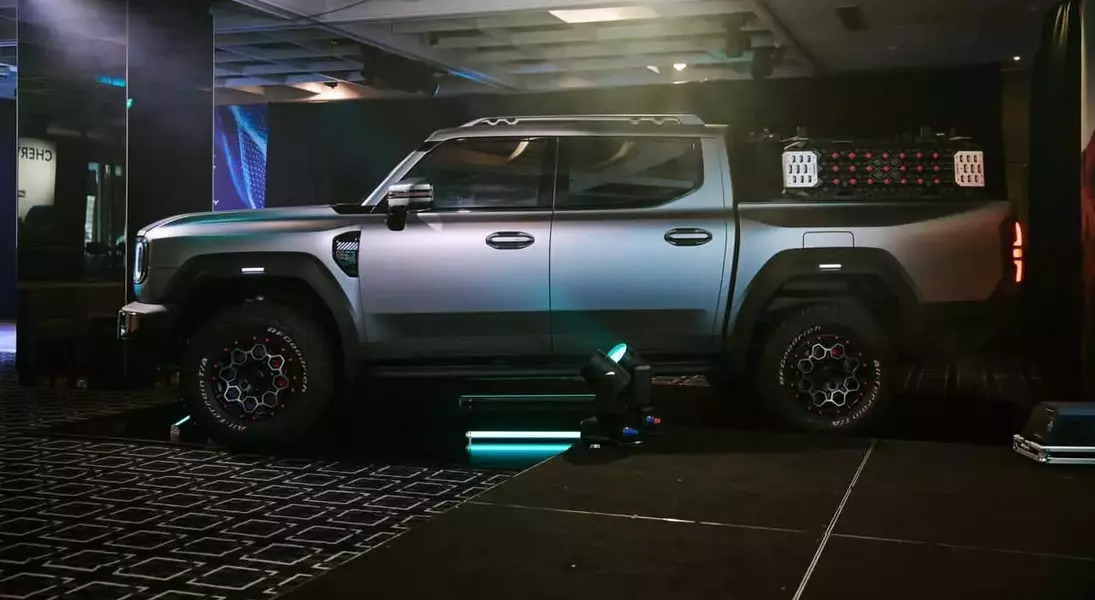
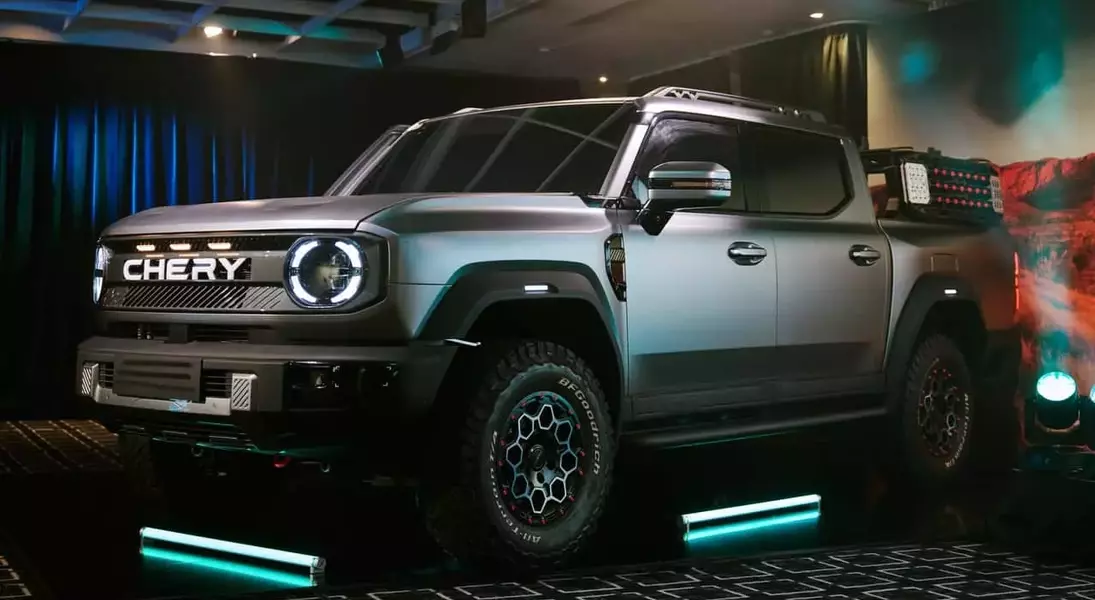
Chery Automotive is set to make a significant entry into the Australian market with its latest innovation, the KP31 truck concept. This vehicle distinguishes itself with a unique plug-in hybrid diesel powertrain, a first in the dual-cab ute segment, and is anticipated to go on sale in Australia later this year. The KP31's introduction marks a notable advancement in hybrid technology for robust utility vehicles, emphasizing both power and efficiency.
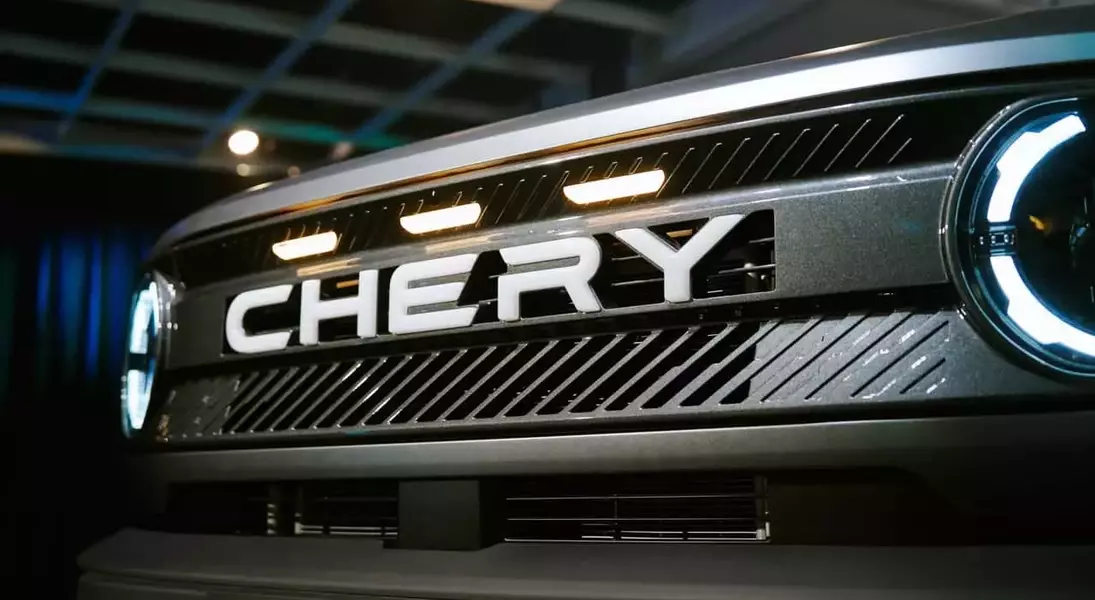
While many technical specifications remain undisclosed, it is confirmed that the KP31 will feature a turbocharged 2.5-liter four-cylinder engine integrated with a plug-in hybrid system. Visually, the concept is closely related to the Rely P3X, which debuted in China last year, sporting a rugged design with a flat front, circular headlights, protective plastic fender cladding, and an upright cabin. Its off-road readiness is highlighted by a snorkel, 285/70 R17 all-terrain tires, and a bed rack equipped with recovery tracks, signaling its capability for challenging terrains.
Chery asserts that this diesel plug-in hybrid system offers a 10 percent improvement in fuel efficiency compared to conventional diesel powertrains, alongside an impressive 47 percent thermal efficiency and a 30 percent reduction in vibrations. The concept model measures 220.9 inches in length, 75.6 inches in width, and 75.8 inches in height, though the production version is expected to be slightly shorter at 214.6 inches. With a substantial towing capacity of 7,700 pounds and a payload limit of 2,205 pounds, the KP31 is engineered for demanding tasks. Additionally, Chery plans to release a plug-in gasoline hybrid version of the truck in 2027, further expanding its eco-friendly lineup.
The automotive industry is continuously evolving, embracing innovative solutions like plug-in hybrid diesel powertrains to address environmental concerns while meeting the performance demands of diverse vehicle segments. Chery's KP31 embodies this progressive spirit, demonstrating how sustainability and utility can coalesce. This forward-thinking approach not only contributes to a greener future but also pushes the boundaries of vehicle design and engineering, inspiring other manufacturers to explore similar paths toward efficiency and capability.
