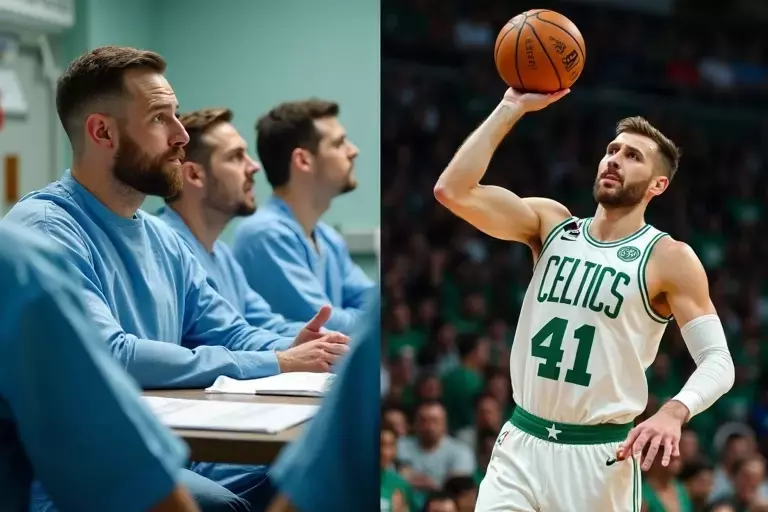





The Boston Celtics are facing significant financial decisions and on-court challenges, prompting them to actively explore trade scenarios involving their versatile big man, Kristaps Porzingis. This strategic move comes as the team grapples with substantial luxury tax obligations and Porzingis’s recent health setbacks, which have cast a shadow over his future in Boston. The organization's goal is to maintain competitive strength while managing a complex salary cap situation, particularly with key player Jayson Tatum also sidelined by a long-term injury.
As the Celtics navigate the complexities of their roster construction and financial constraints, the potential departure of Porzingis signals a pivotal moment. His unique skill set and contractual status make him an intriguing asset on the trade market, drawing attention from various teams seeking to bolster their lineups. However, his injury history and inconsistent playoff performances present a delicate balancing act for Boston's front office, who must weigh the benefits of shedding salary against the impact on the team's immediate and future competitive standing.
Navigating Financial Headwinds and Roster Flexibility
The Boston Celtics are diligently working to reduce their substantial salary commitments, with Kristaps Porzingis emerging as a prime candidate in trade discussions. Even after their recent move to send Jrue Holiday to the Portland Trail Blazers, a deal aimed at cutting costs, the Celtics find themselves approximately $20 million above the second luxury tax apron and an additional $20 million beyond the standard tax line. This financial burden is prompting the organization to consider further roster adjustments, with Porzingis's name frequently surfacing in these trade talks due to his substantial contract and the flexibility it could offer.
Porzingis's current contract, which is in its final year, carries a cap hit of $30.7 million. This expiring deal makes him a valuable asset for teams looking to create salary cap space in the upcoming 2026 offseason, as acquiring him would allow them to take on a significant contract that will soon come off their books. For the Celtics, this provides an opportunity to shed a large salary and gain some much-needed financial relief, potentially allowing them to restructure their roster more efficiently in the future. The decision to trade Porzingis would directly address their pressing luxury tax concerns and provide greater financial maneuverability moving forward.
Addressing Injury Concerns and On-Court Impact
Kristaps Porzingis's recent postseason performance raised significant concerns regarding his durability and overall impact, leading to questions about his trade value. During the playoffs, he averaged a modest 7.7 points and 4.6 rebounds across 11 games, with a shooting percentage of just 31.6% from the field. His playing time was notably limited, as he managed to log more than 20 minutes in only one of Boston's second-round matchups against the New York Knicks, a consequence of ongoing illness that affected his conditioning and availability throughout the series.
Adding to these concerns, Porzingis underwent retinaculum surgery in June 2024, further highlighting his persistent injury issues and casting doubt on his long-term health. His limited availability during the 2024-25 regular season, where he played in only 42 games, underscores the challenges teams might face regarding his consistent presence on the court. Despite these setbacks, the Latvian big man demonstrated his capabilities when healthy, averaging 19.5 points and 6.8 rebounds per game with an efficient 48.3% shooting. His unique ability to stretch the floor with his shooting and provide rim protection makes him an attractive short-term acquisition for playoff-contending teams looking for a strategic boost without committing to long-term salary obligations, despite the inherent risks associated with his health.
