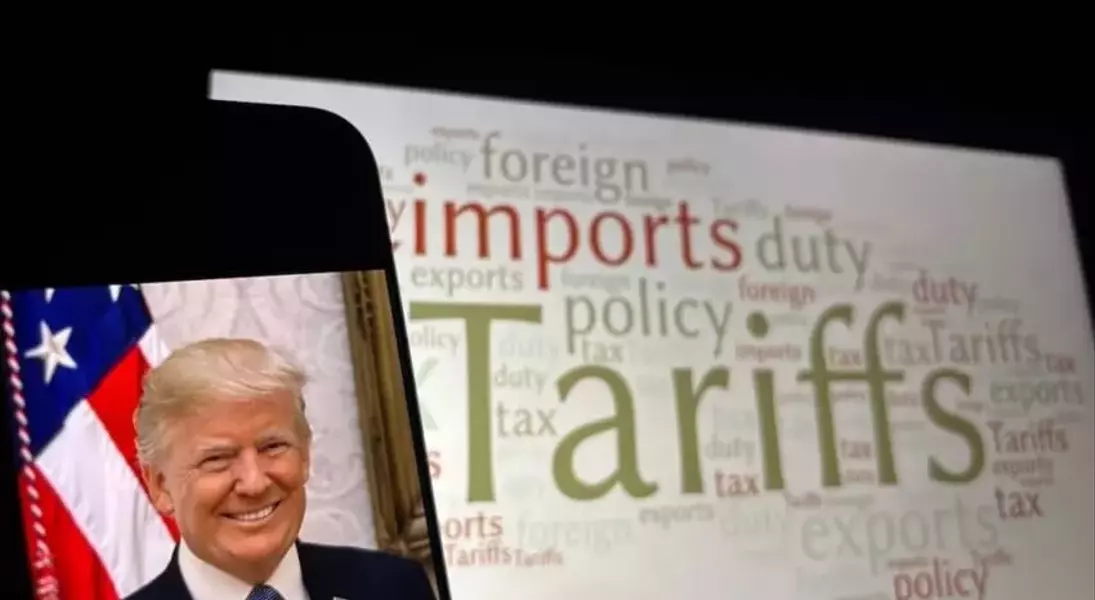
ARK Invest CEO Cathie Wood views the recent Supreme Court decision overturning federal tariffs as a mere 'yawn' from the equity markets, yet a pivotal moment for economic expansion in the United States. She anticipates that eliminating these 'tax increases' will serve as a significant catalyst, stimulating growth and potentially driving inflation towards zero.
The Supreme Court's Tariff Ruling: A Catalyst for Economic Revival
On February 23, 2026, the financial community observed ARK Invest CEO Cathie Wood's analysis of the Supreme Court's ruling against federal tariffs. Wood noted that the market's reaction was surprisingly muted, attributing any initial Friday volatility not to fundamental economic shifts but to high-frequency trading algorithms. While certain aggressive growth portfolios experienced minor adjustments, the broader market remained largely unaffected. Wood has consistently maintained that tariffs functioned as a burden on American consumers and corporations. With their removal, she foresees a reversal of the recent economic slowdown. She emphatically stated that tariffs are akin to 'tax increases,' and their elimination effectively acts as a 'tax cut,' poised to 'accelerate growth' in the coming months. As evidence of the tariff regime's detrimental effects, Wood cited the disappointing 1.4% real GDP growth in the fourth quarter, arguing that these duties failed to improve the trade deficit and instead introduced 'distortions' into the economy. A core component of Wood's forecast is the ongoing decline of inflationary pressures. With the tariffs now rescinded, she believes that headline inflation in the U.S. could plummet towards zero or even enter negative territory within the next three to six months. She asserted that the actual inflation rate, based on ARK's internal monitoring of 10,000 consumer prices, is currently below 1%. Wood dismissed former President Trump's subsequent remarks about a potential 10% to 15% across-the-board tariff as a strategic move to maintain 'negotiating leverage,' rather than an imminent economic reality. She reiterated her conviction that the decrease in tariffs will 'accelerate growth.' As of Friday’s market close, the Dow Jones index had appreciated by 2.57% year-to-date, the S&P 500 was up 0.74%, while the Nasdaq Composite index had seen a 1.50% decline in 2026.
This development underscores the intricate relationship between legal decisions, economic policy, and market dynamics. Wood's perspective highlights how governmental actions, even those with broad economic implications, can sometimes be met with an unexpected calm by market participants who have already factored in such eventualities. The long-term impact of this tariff reversal will be a crucial indicator for future economic trends, particularly concerning inflation and consumer spending. It also prompts a deeper discussion about the effectiveness of tariffs as a policy tool and their true cost to an economy. The financial world will undoubtedly watch closely to see if Wood's optimistic predictions about accelerated growth and suppressed inflation come to fruition in the wake of this significant legal and economic shift.
