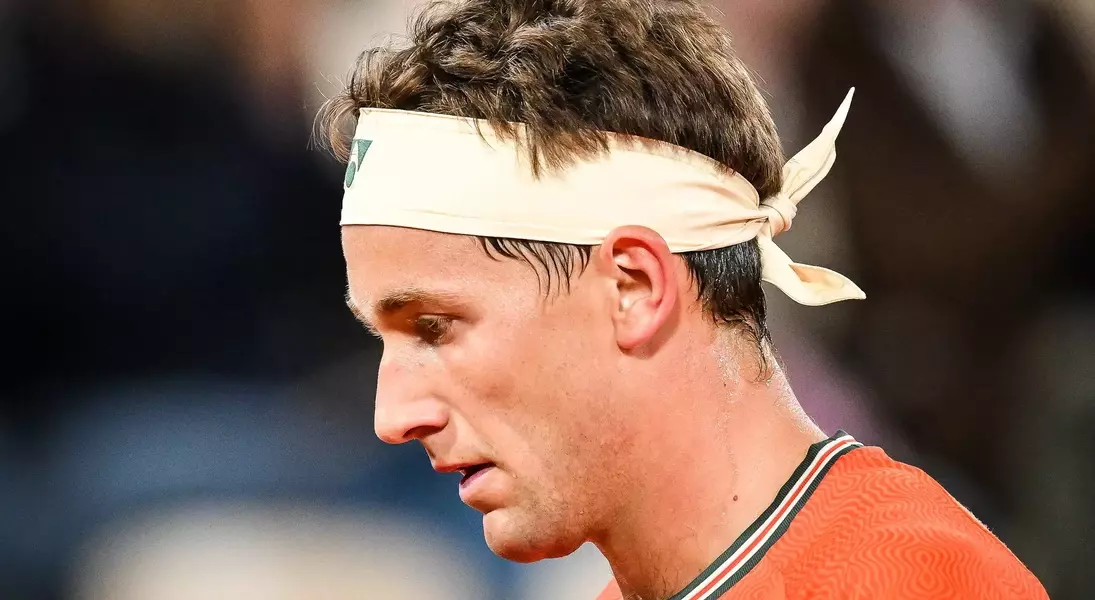
Casper Ruud, the prominent Norwegian tennis player, will be conspicuously absent from Wimbledon this year, having officially pulled out of the prestigious tournament. This unfortunate development stems from a persistent knee injury that has plagued him for several months. His withdrawal is a significant blow to his season, as he was slated to enter as the 15th seed, and it inevitably reshapes the competitive landscape of the men's singles draw, potentially paving the way for other players like Matteo Berrettini to secure a seeded position. This decision underscores the challenges athletes face in managing chronic injuries and the difficult choices they must make to prioritize their long-term health and career sustainability.
Ruud's struggles with his knee have been ongoing since the Monte-Carlo Masters in early April, impacting his performance and forcing him to reconsider his playing schedule. Despite his efforts to recover and prepare, including opting out of the Mallorca Open to focus on Wimbledon, his condition has not improved sufficiently for him to compete at the elite level required for a Grand Slam event. This sequence of withdrawals highlights the delicate balance between competitive ambition and physical well-being, especially for professional athletes navigating demanding tour schedules.
Injury Sidelines Ruud from Grass-Court Season
Casper Ruud's prolonged battle with a knee injury has culminated in his withdrawal from Wimbledon, marking the end of his entire grass-court season. The Norwegian athlete, aged 26, has been managing this ailment since the Monte-Carlo Masters in early April, a condition that contributed to his unexpected early exit at the French Open. This setback means Ruud will miss a significant portion of the competitive calendar, impacting his rankings and overall season trajectory. His absence from Wimbledon, where he was anticipated to be the 15th seed, creates a ripple effect in the tournament's draw, offering an opportunity for other players to advance into a seeded position. Ruud's primary focus now shifts towards rehabilitation and preparing for the clay-court season, with the Gstaad Open being his next targeted return to competitive play before transitioning to the hard-court events in North America.
The journey of recovery for Ruud has been challenging, marked by strategic decisions to withdraw from preparatory tournaments in an attempt to be fit for Wimbledon. Following his disappointing second-round defeat at the French Open, where he explicitly mentioned his ongoing knee issues, hopes were high for his return at the Mallorca Open. However, his physical condition necessitated another withdrawal, underscoring the severity and persistence of his injury. Ruud expressed his regret to fans and organizers, emphasizing the need to prioritize his body's recovery despite his eagerness to compete. This series of withdrawals, including the French Open, Mallorca Open, and now Wimbledon, signifies a cautious and necessary approach to ensure full recovery and prevent further damage. The tennis community awaits his return to the court, hopeful that this period of rest and rehabilitation will allow him to regain his peak form and health for future tournaments.
Implications for Wimbledon and Beyond
Casper Ruud's withdrawal from Wimbledon due to his knee injury carries significant implications for both the tournament and his immediate future in professional tennis. As a top-seeded player, his absence not only impacts the competitive balance of the men's singles draw but also opens up a valuable seeded spot. This has a direct consequence for players on the cusp of seeding, such as Matteo Berrettini, who now has a strong chance of entering the main draw as a seeded competitor. Furthermore, the reshuffling of player positions could potentially extend to Alexander Bublik, depending on the outcome of the Halle Open. Beyond Wimbledon, Ruud's decision to skip the entire grass-court season underscores a strategic shift towards prioritizing his recovery and preparing for the upcoming clay-court tournaments, beginning with the Gstaad Open, before transitioning to the North American hard-court swing. This careful management of his return to play suggests a long-term perspective on his career, aiming to avoid exacerbating his injury.
The cumulative effect of Ruud's persistent knee issues, which first surfaced at the Monte-Carlo Masters, has led to a series of withdrawals from key events, including the Geneva Open, the Mallorca Open, and now, most notably, Wimbledon. This pattern indicates a more serious and protracted recovery period than initially anticipated. For the tournament itself, the departure of a player of Ruud's caliber, alongside Arthur Fils, another withdrawn seeded player, inevitably alters the dynamics of the competition. The path to the later stages of Wimbledon might become less predictable, creating opportunities for unseeded players or those who were previously lower-ranked to make a deeper run. For Ruud, the focus is squarely on healing and regaining full fitness. His statement regarding needing to 'listen to my body' highlights the physical toll professional tennis takes on athletes and the necessity of making difficult decisions to safeguard their health. His projected return on clay courts at the Gstaad Open suggests a deliberate attempt to ease back into competition on a surface generally considered less demanding on the joints than grass, setting the stage for his eventual participation in the hard-court events in North America.
