The holiday season, often associated with joy and festive spirit, also serves as a subtle barometer for economic trends. This analysis delves into the intriguing question of whether the demand for professional Santas can provide insights into the broader economic landscape, particularly concerning the possibility of a recession. By examining shifts in seasonal employment, and specifically the market for Father Christmas appearances, we seek to understand the delicate interplay between festive traditions and economic stability.
Ho-Ho-Horrible Economy? Santa's Bookings as a Recession Indicator
The Seasonal Employment Landscape Beyond the North Pole
As the holiday period approaches, American retail sectors typically boost their workforce with an influx of temporary staff. Historically, this surge has accounted for approximately half a million roles, encompassing various positions from sales assistants and cashiers to warehouse operatives and delivery personnel. These seasonal opportunities are crucial for many individuals seeking temporary income during the festive rush.
The Iconic Figure of Holiday Work: Santa's Role in the Economy
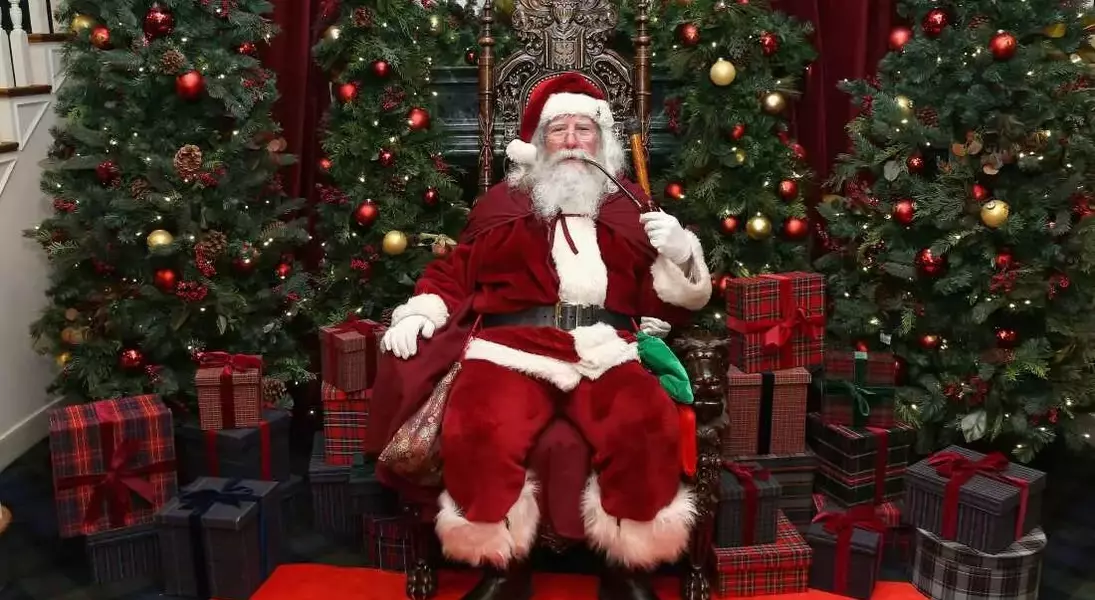
Among the diverse array of seasonal occupations, the role of Santa Claus stands out as particularly emblematic. Beyond his mythical duties on Christmas Eve, professional Santas are hired for numerous engagements at shopping centers, corporate functions, and private gatherings throughout December. These appearances are a significant part of the holiday spectacle, generating considerable economic activity.
A Chill in Santa's Schedule: Declining Demand and Economic Worries
This year, however, observations suggest a potential decrease in engagements for professional Santas. This reduction is not isolated, but rather part of a wider trend indicating a downturn in the demand for seasonal workers across various sectors. Such a shift prompts inquiry into how the Santa market interacts with economic cycles and whether this cooling demand could signal an impending economic contraction in the U.S.
Mitch Allen's Insight: A Veteran "Head Elf" on Market Trends
Mitch Allen, the founder of Hire Santa, a prominent agency supplying Santas globally, notes a significant dip in booking inquiries. Allen, affectionately known as the "Head Elf," oversees a network of thousands of professional Santas. His company serves as a bellwether for the industry, reporting a substantial decline in leads compared to previous years, indicating a weakening market for Santa appearances.
The Peak Season for Claus: When Demand Soars and Subsides
While occasional requests for "Christmas in July" events occur, the peak period for Santa bookings consistently falls between early November and Christmas Eve, reaching its zenith in the weeks leading up to the holiday. Allen highlights that demand sharply drops off after midnight on December 24th, underscoring the highly seasonal nature of this unique profession.
Measuring the Economic Pulse: Santa Demand as a Leading Indicator
Allen's data reveals a nearly 27% decrease in inquiries year-over-year, following a similar decline the previous year. This consistent reduction in demand for Santa services could be an early warning sign for the economy. Personal anecdotes, such as a family's local Santa event being canceled, further reinforce the anecdotal evidence of this trend.
Navigating Economic Uncertainty Amidst Data Blackouts
The current economic climate is characterized by mixed signals, further complicated by a recent government shutdown that hindered the collection and release of official economic statistics. This data vacuum makes it challenging to accurately assess the nation's economic health. In such uncertain times, unconventional indicators like the demand for Santa become increasingly relevant.
Alternative Economic Signals: From Santa to Seasonal Hiring Reports
The observed decline in Santa demand aligns with broader reports of a cooling labor market. For instance, a human resources firm, Challenger, Gray & Christmas, projected the lowest seasonal retail hiring figures since the 2009 recession. This suggests that the issues facing the Santa market are symptomatic of larger economic shifts, rather than isolated incidents.
Structural Changes and Economic Slowdown: The Interplay of Online Retail and Labor Markets
While the rise of online shopping might account for some reduction in brick-and-mortar retail seasonal hiring, many experts believe the current downturn reflects a more widespread economic slowdown. Recent reports of increased layoffs by major companies, including online retailers and delivery services, corroborate this view, indicating a weakening overall labor market.
Is the Demand for Santa Immune to Economic Downturns?
The National Bureau of Economic Research defines a recession as a significant and prolonged decline in economic activity. Given the scarcity of current official data, the question arises: is the demand for Santa resilient to economic recessions? Or does it ebb and flow with the broader business cycle?
Unpacking Santa's Resilience: Insights from a Post-Recession Era
Since Hire Santa launched after the Great Recession, direct historical data linking Santa demand to economic downturns is limited. However, Mitch Allen offers a theory: certain segments of the Santa market are more recession-proof than others. For example, businesses often use Santa appearances as a "loss leader" to attract customers, a practice that tends to persist even in tough economic times.
The Vulnerable Segments of the Santa Market: Private Events and Personal Choices
Conversely, private events, such as company parties and home visits, are more susceptible to economic pressures. Allen suggests that consumers and companies are scaling back on these discretionary expenses, opting for more budget-friendly alternatives like visiting public Santa displays. This shift reflects a broader trend of tightened belts and more cautious holiday spending.
A Subtle Warning: Santa's Decreased Appearances as a Recessionary Signal
The observed decline in private Santa bookings, coupled with rising consumer credit card debt and corporate layoffs, paints a picture of consumers and businesses adjusting to economic realities. Thus, a significant drop in Santa appearances could indeed serve as a tangible, albeit unconventional, indicator of an economic downturn.
A Glimmer of Hope: Santa Still Comes to Town
Despite the overall decline in demand, Allen reassures that requests for Santa remain substantial. This indicates that while the festive economy may be contracting, the spirit of Santa endures. It simply means that families might need to seek out Santa in different venues, as fewer personalized or high-end engagements may be available this holiday season.
